
Trump Wants to Fix College-Athlete Pay by Executive Order. Legal experts say it would bring chaos, not clarity.
President Donald Trump (R) has decided that the chaotic, litigated, pay-for-play state of college athletics is a problem the federal government should solve from the Oval Office. After conversations with former Alabama coach Nick Saban and former coach turned Sen. Tommy Tuberville (R-AL), he floated an executive order in spring 2025, signed one titled “Saving College Sports” on July 24, 2025, and signed a second, broader order in April 2026 directing the NCAA to cap eligibility, limit transfers, and rein in booster payments.
The diagnosis is widely shared. The remedy is where the trouble starts. From the moment the idea surfaced, sports-law analysts at Sportico warned that an executive order trying to govern how a half-million college athletes are paid would collide with antitrust law, a freshly approved $2.8 billion court settlement, Title IX, and unresolved questions about whether athletes are employees at all.
Their verdict, in Sportico’s own framing, was blunt: the plan “would bring legal chaos.” This page lays out exactly what Trump did and when, what the orders direct, and why the experts — not us — say the cure may deepen the disease, source by source.
- July 24, 2025 — the date Trump signed the first executive order, 'Saving College Sports,' after floating the idea that spring · Source: White House presidential action; Saul Ewing LLP
- $2.8 billion — the House v. NCAA antitrust settlement an executive order would have to avoid disrupting — approved by a federal judge June 6, 2025 · Source: ESPN; WilmerHale
- $20.5 million — the per-school revenue-sharing cap for 2025–26 set under that settlement, the first time schools can pay athletes directly · Source: ESPN; congressional analysis
- 5 years / 1 transfer — the eligibility and transfer limits the April 2026 order directs the NCAA to impose by Aug. 1 · Source: ESPN; CBS Sports
- Federal funding — the enforcement lever — agencies told to weigh whether rule-breaking schools are unfit for federal grants and contracts · Source: Front Office Sports; ESPN
- “Legal chaos” — how Sportico's Michael McCann characterized the likely result, citing antitrust, labor, and state-law conflicts · Source: Sportico (May 3, 2025)
Accuracy matters here, because the timeline has been blurred in the retelling. There were three distinct steps, not one. First, in spring 2025, Trump floated the idea of an executive order after talking with Nick Saban and Sen. Tommy Tuberville (R-AL); reporting at the time said he was “weighing” the move but had not signed anything. Second, on July 24, 2025, he signed an executive order titled Saving College Sports. Third, in April 2026, he signed a broader order,Urgent National Action to Save College Sports, that put hard rules and a deadline on the page.
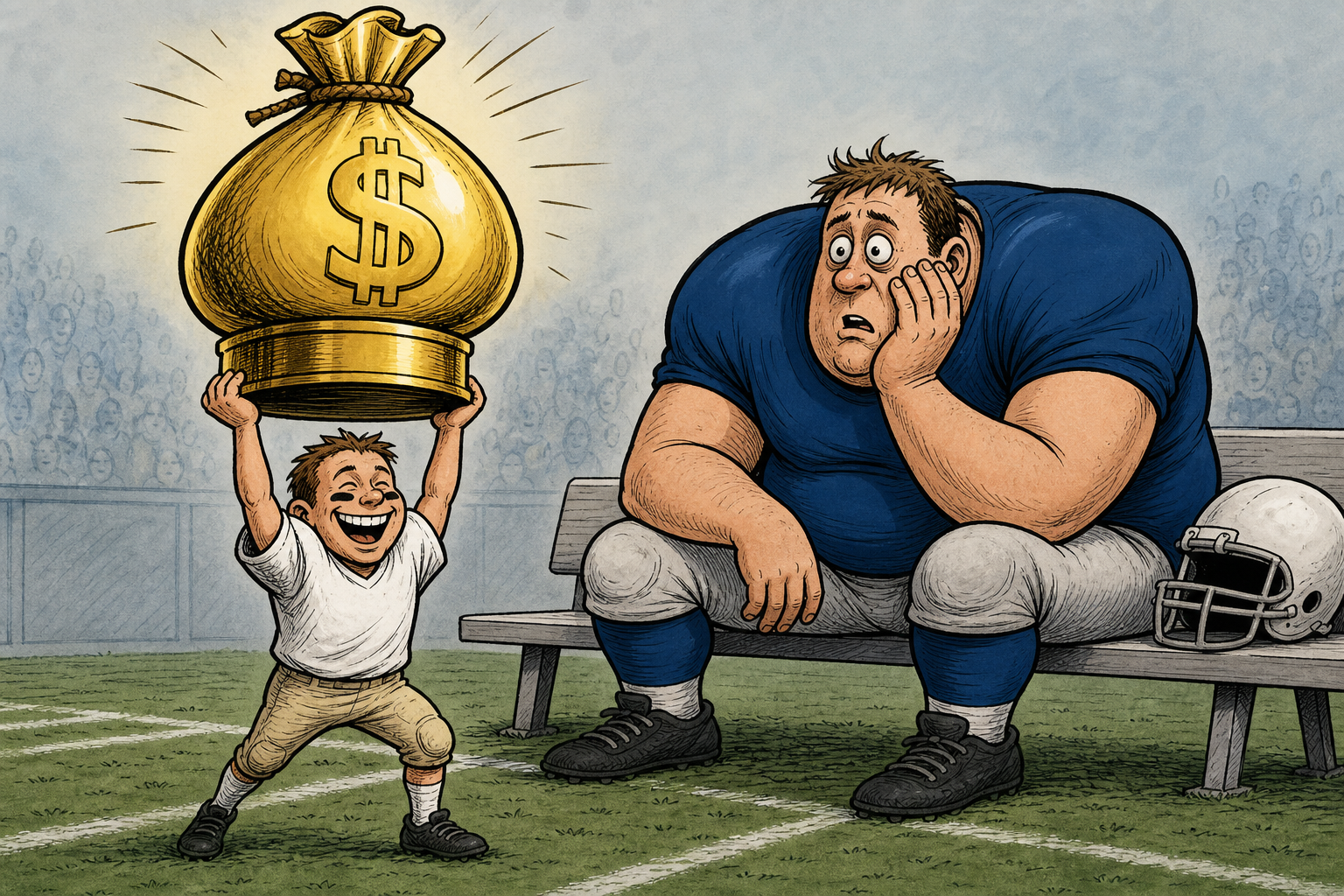
The White House framed it as rescue, not regulation: college sports, the fact sheet said, support more than 500,000 student-athletes, drive local economies, provide nearly $4 billion in scholarships, and fuel U.S. Olympic dominance — all of it, the administration argued, threatened by litigation, a patchwork of state NIL laws, and unregulated booster cash. The July order directed the Secretary of Labor and the NLRB to “clarify the status of student-athletes,” told the Attorney General and FTC to act to protect athletes’ rights, and ordered revenue-sharing implemented “in a manner that protects women’s and non-revenue sports.” It also prohibited “third-party, pay-for-play payments” while preserving “legitimate, fair-market-value” endorsements.
“Any executive order that restricts athletes, schools, conferences or the NCAA would encounter a bevy of problems, since it would interact, and possibly conflict, with multiple areas of federal and state laws.”
Michael McCann, Sportico legal analyst — 'Trump Idea on College Athlete Pay Would Bring Legal Chaos' (May 3, 2025)
The April 2026 order is where the abstractions became commands. It directs the NCAA to limit athletes to a five-year window, allow only a single transfer without a forced sit-out year (a second transfer would trigger an automatic redshirt), bar booster-funded pay-for-play while protecting brand endorsements, stand up a national agent registry, and require athletic departments above set revenue thresholds to maintain or expand scholarships for women’s and Olympic sports. The rule changes were scheduled to take effect Aug. 1.
The enforcement mechanism is the part that drew the sharpest intake of breath. Rather than create a penalty the NCAA itself would levy, the order tells federal agencies to evaluate whether a school that violates the new rules should be deemed unfit for federal grants and contracts. That is the same funding-cutoff lever the administration has tried to use against universities on other fronts — an approach courts have repeatedly questioned, which critics point to as a warning sign for this order.
New: A Trump executive order on college-athlete pay would collide with antitrust law, the House v. NCAA settlement, Title IX, and unresolved labor questions — bringing legal chaos, not clarity. Our analysis of why the President can't fix this from the Oval Office.
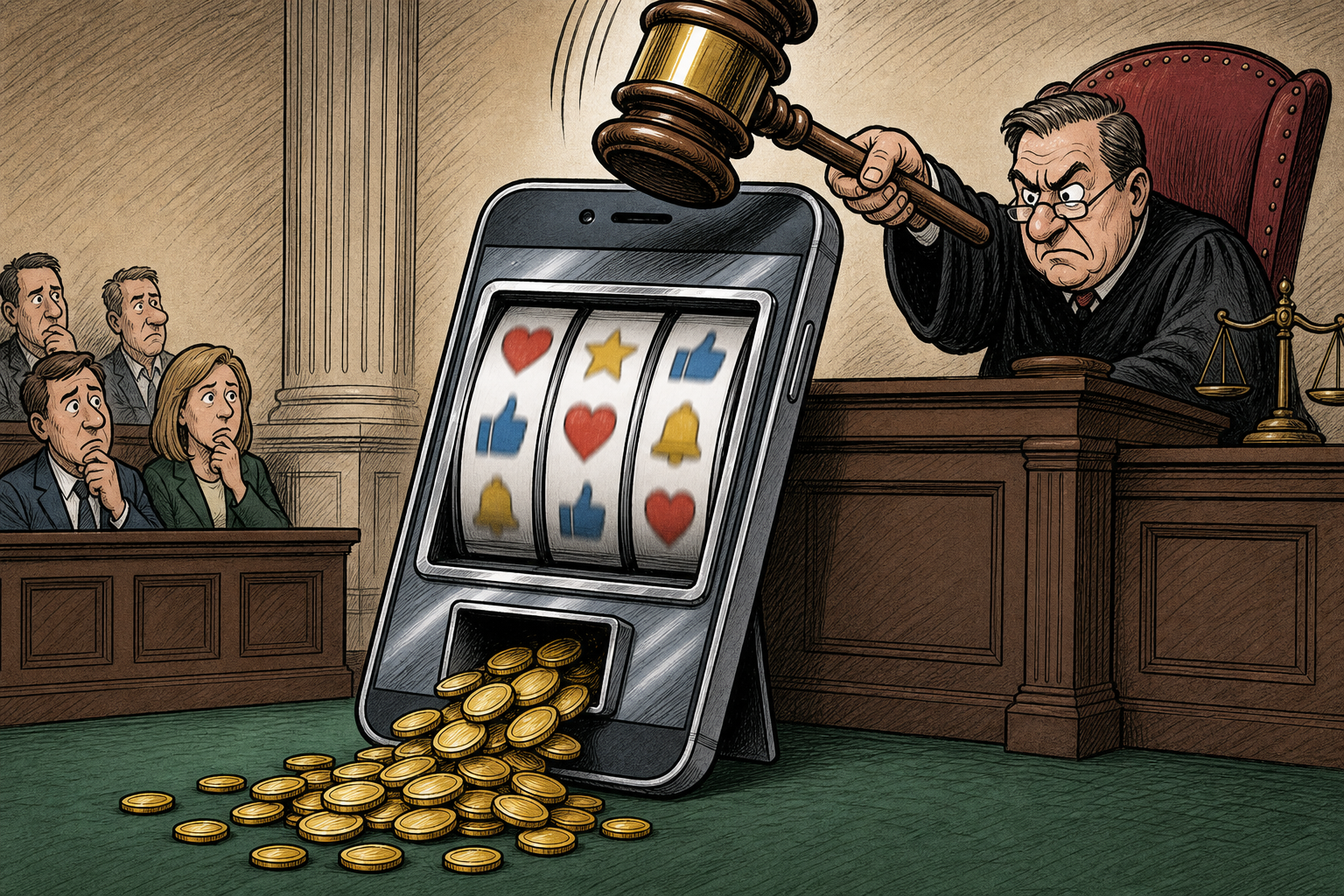
An executive order can't cast away state claims or states' rights, and it's vulnerable to challenges that the President lacks authority to regulate this without Congress. On NIL it could even upend a key term of the House settlement's independent-review model.
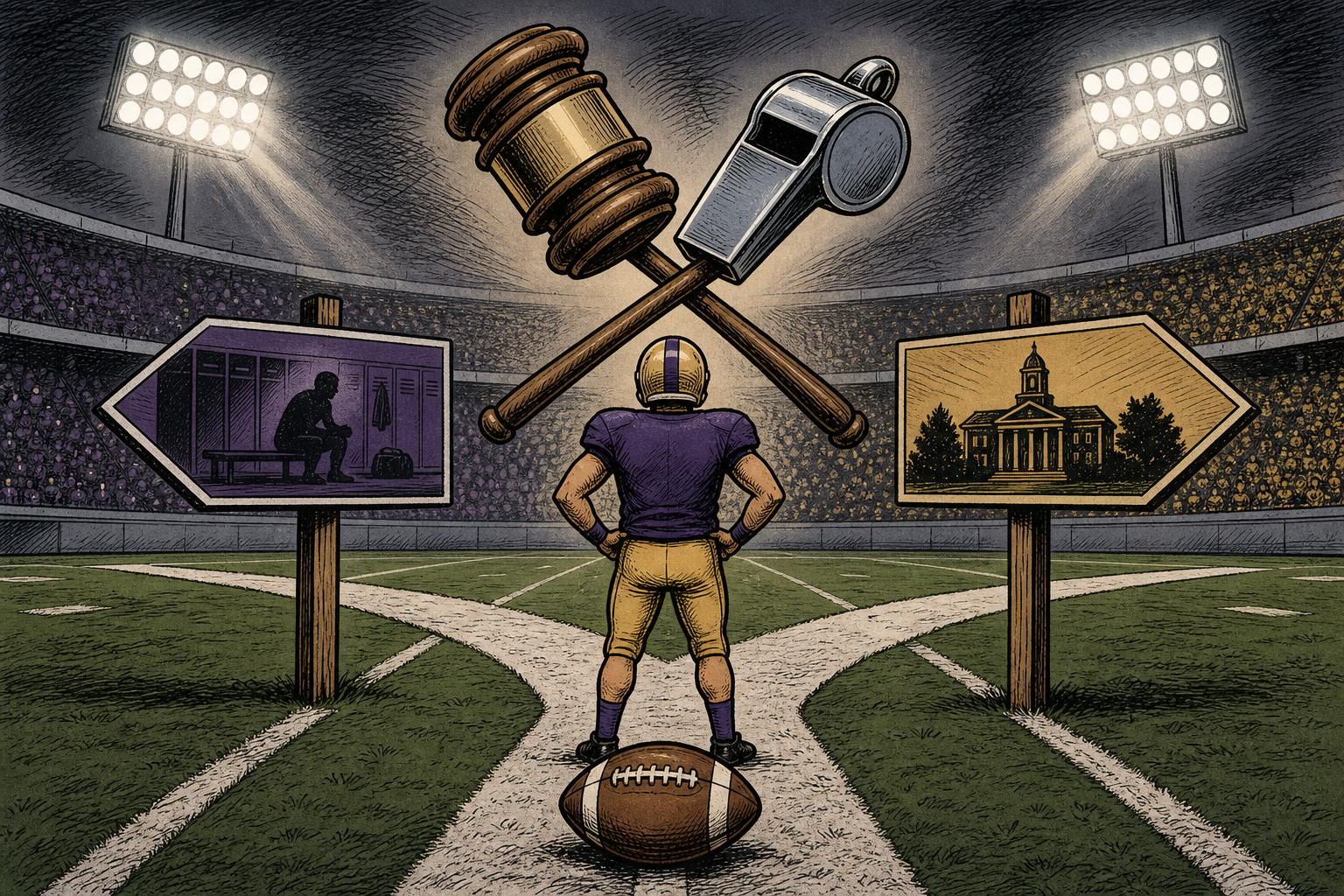
The “chaos” framing is not ours; it is Sportico’s, and it rests on four named collisions. Antitrust: the Supreme Court’s 2021 decision in NCAA v. Alston held the NCAA is not owed deference under antitrust law, and an order propping up NCAA pay limits invites the same scrutiny that has repeatedly gone against the association. The House settlement: the $2.8 billion deal approved June 6, 2025 set up an independent NIL-review system and a $20.5 million revenue-sharing cap; an order that conflicts with that review model could “upend a key settlement term,” per Sportico.
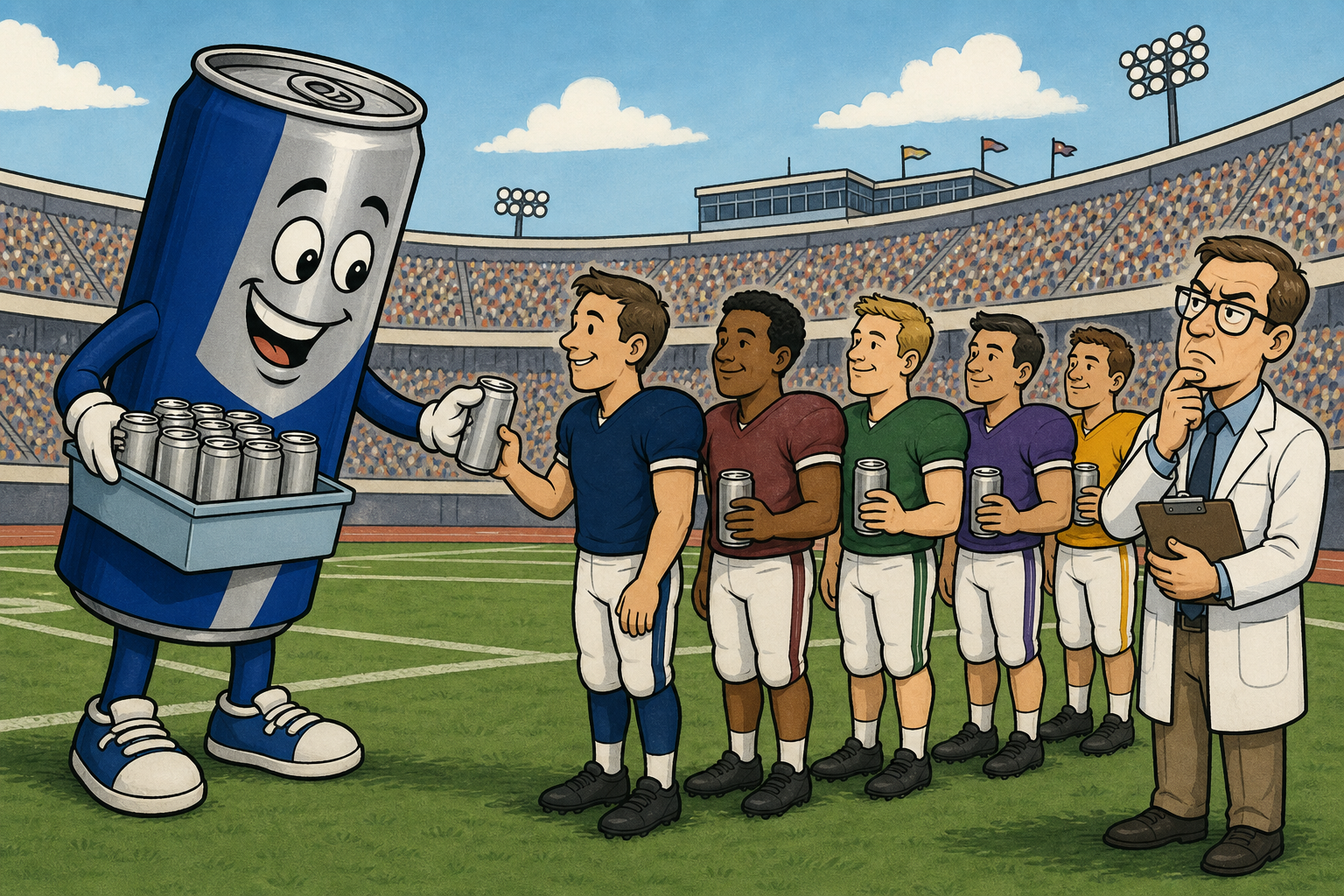
Employment status: in Johnson v. NCAA, athletes argue they are employees owed wages under the Fair Labor Standards Act and state laws in New York, North Carolina, Connecticut, and Arizona — questions an executive order cannot settle and may worsen. Title IX and the states: the order leans on protecting women’s sports, but an order cannot “cast away state claims or accompanying states’ rights,” and several state NIL laws point in the opposite direction. When Sportico later reported that U.S. Attorney Jay Clayton — the former SEC chairman — had drafted the April 2026 order, its headline said it was “sure to face legal challenges,” noting that “the president can’t unilaterally rewrite a statute” that Congress controls.
Antitrust — NCAA v. Alston (2021) stripped the NCAA of antitrust deference; pay caps backed by an EO invite the same losing fights.
The House settlement — a $2.8B court-approved deal with an independent NIL-review system an order could disrupt.
Employment status — Johnson v. NCAA tests whether athletes are FLSA/state-law employees; an EO can’t decide it.
States’ rights & Title IX — an order can’t override conflicting state NIL laws or settle Title IX revenue questions.
The skepticism is not confined to plaintiffs’ lawyers. NCAA President Charlie Baker — himself a former Republican governor of Massachusetts — welcomed the order’s direction but was candid about its limits. “There’s a bunch of things in there that are pretty consistent with the things we’ve been talking to them and to Congress about,” he said, before adding the catch: “We need congressional action to sort of seal the deal on a number of these things.” The courts route, he warned, “takes a really long time, and it creates a lot of uncertainty.”
On the ground, the reaction was blunter. One college general manager, quoted by ESPN, dismissed the whole exercise: “It’s just going to lead to more lawsuits and BS… It changes absolutely nothing to me.” That is the practical fear the experts describe — not that the order is meaningless on paper, but that it adds a new federal layer on top of a $2.8 billion settlement, dozens of state laws, and a live employment-status fight, inviting fresh litigation rather than ending the old kind. The durable fix, nearly everyone agrees, runs through Congress, where bills like the SCORE Act have stalled.
Our great College Sports are being DESTROYED by out-of-control NIL chaos and endless lawsuits. I signed an Executive Order to SAVE COLLEGE SPORTS — protecting our athletes, our women's and Olympic sports, and the American tradition. We will not let the lawyers ruin it!
Paraphrased commentary · not a verbatim post
Trump's framing of the college-sports orders — paraphrased and labeled as commentary, not a verbatim post.
Nobody should be paying these crazy, booster-driven, pay-for-play schemes that have nothing to do with real education. We're bringing back FAIRNESS and COMMON SENSE to College Sports, and protecting the student-athletes who built it.
Paraphrased commentary · not a verbatim post
Trump on the pay-for-play ban at the center of the orders — paraphrased and labeled as commentary, not a verbatim post.
An honest account keeps the lines clean. The problem Trump is responding to is real: the post-NIL, post-House landscape genuinely is chaotic, with bidding wars, transfer churn, and a patchwork of state laws that even reform advocates want fixed. The order’s stated goals — protecting women’s and Olympic sports, curbing naked pay-for-play — are popular across the aisle. And the “chaos” charge is a prediction about legal vulnerability, not a finding; no court has yet struck the orders down, and parts of them may survive or be folded into NCAA rules.
But the load-bearing facts are not in dispute. Trump did float, then sign, then expand executive orders on college-athlete pay. Sportico’s legal analysts did warn, by name, that the approach would collide with antitrust precedent, the House settlement, Title IX, and labor law. The NCAA’s own president said it needs Congress to “seal the deal.” And the enforcement lever — cutting federal funding — had already been blocked once in court. One can support the goal and still recognize the experts’ point: an executive order is a fragile instrument for a problem Congress and the courts have spent years failing to settle.
Trump moved to fix college-athlete pay the way presidents reach for hard problems they can’t get Congress to touch: by executive order. He floated the idea in spring 2025, signed “Saving College Sports” on July 24, 2025, and expanded it in April 2026 with eligibility caps, transfer limits, a booster-pay ban, and a federal-funding enforcement threat. Sportico’s legal analysts — and the NCAA’s own president — say the orders run straight into antitrust law, a $2.8 billion settlement, Title IX, and an unresolved fight over whether athletes are employees. The likely result, they warn, is not order but litigation. We’ll track the lawsuits, any court rulings on the orders, and whether Congress finally acts.
- 1.Sportico (Michael McCann) — 'Trump Idea on College Athlete Pay Would Bring Legal Chaos,' May 3, 2025 (legal analysis of the floated executive order)
- 2.The White House — Presidential Action: 'Saving College Sports' (Executive Order), signed July 24, 2025
- 3.The White House — 'Fact Sheet: President Donald J. Trump Saves College Sports,' July 2025
- 4.The White House — Presidential Action: 'Urgent National Action to Save College Sports' (Executive Order), April 2026
- 5.The White House — 'Fact Sheet: President Donald J. Trump Takes Urgent National Action to Save College Sports,' April 2026
- 6.ESPN — 'Executive order aims to limit NCAA athletes to 5 years, 1 transfer,' April 3, 2026 (provisions; lawyers say it is likely unconstitutional if challenged)
- 7.CBS Sports — 'President Trump signs executive order aimed at college sports, targeting transfers and eligibility'
- 8.CBS Sports — 'Trump executive order aims to reset NCAA transfer and eligibility rules; skepticism is widespread'
- 9.Sportico — 'Wall Street Cop Drafts Trump NCAA Order Sure to Face Legal Challenges,' April 3, 2026 (order drafted by U.S. Attorney Jay Clayton; conflicts with NCAA v. Alston)
- 10.Front Office Sports — 'Trump Signs Executive Order Targeting Transfers, Eligibility, Revenue Sharing' (federal-funding enforcement mechanism)
- 11.ESPN — 'Judge OK's $2.8B settlement, paving way for colleges to pay athletes,' June 6, 2025 (House v. NCAA final approval; $20.5M revenue-sharing cap)
- 12.WilmerHale — 'Final Approval for House v. NCAA Settlement Brings New Era, More Litigation,' June 13, 2025
- 13.Saul Ewing LLP — 'Saving College Sports: What You Need to Know About the July 24, 2025 Executive Order'
- 14.Crowell & Moring LLP — 'Trump's Saving College Sports Executive Order: New Federal Policy on Collegiate Athletic Scholarships and Opportunities'
- 15.House v. NCAA — case background and settlement terms (Wikipedia, with primary citations)
Last updated June 24, 2026