
College Athletes Now Sign Real Contracts. An AD Explains How the Money Actually Moves.
For more than a century the bedrock rule of college sports was that the players did not get paid. That rule is gone. After the House v. NCAA settlement was approved in June 2025, schools can now pay their athletes directly — out of the athletic department’s own budget — under a league-wide salary cap that started at $20,500,000 per school for the 2025–26 year. The era has a name in the industry: revenue sharing, or “Rev Share.”
One of the administrators steering a department through the change is Wren Baker, the athletic director at West Virginia University. In interviews with On3’s WVSports and other outlets, Baker walked through the plumbing of the new system: how the cap works, how athletes now sign enforceable agreements, how a new clearinghouse vets every outside endorsement, and why the donor “collective” model that powered the early NIL years is the explicit target of the settlement.
This is a governance-and-money story, not a partisan one. The point is to show a general reader exactly what changed, who is paying, and where the tension sits — because the dollars are now real, the contracts are now enforceable, and the rules are being written and tested in real time.
- $20,500,000 — the per-school revenue-sharing cap for 2025–26 — the most a school may pay its own athletes directly · Source: CBS Sports; College Sports Commission
- $2,800,000,000 — the back-pay damages in the House settlement, paid over 10 years to roughly 184,000 former Division I athletes · Source: ESPN; CRS
- $600 — the threshold above which every third-party NIL deal must be submitted to the clearinghouse for approval · Source: On3; College Sports Commission
- 22.5% — share of average Power Five athletic revenue that sets the cap, which rises ~4% a year toward an estimated $32,900,000 by 2035 · Source: CBS Sports
- 337 of 364 — Division I schools that have opted into revenue sharing — participation is optional · Source: nil-ncaa.com; Sportico
On June 6, 2025, U.S. District Judge Claudia Wilken granted final approval to the House v. NCAA settlement, ending the rule that barred schools from paying players. Two things flow from it. First, $2,800,000,000 in back-pay damages, spread over a decade, to athletes who competed from 2016 onward and were denied name, image and likeness earnings under the old rules. Second, and bigger for the future: schools that opt in may now share revenue directly with current athletes, up to a capped amount, starting July 1, 2025.
The cap for 2025–26 is $20,500,000 per school, pegged at roughly 22.5% of average Power Five athletic revenue and set to climb about 4% a year. This is the number that reorganized college sports overnight — a de facto salary cap for an enterprise that, a year earlier, insisted it had no salaries at all.

“The old system of donors just throwing money into one big collective bundle, and then making up some reason to pay for play, is very much the target of the settlement implementation. They want to eliminate that.”
Wren Baker — Athletic Director, West Virginia University (On3 / WVSports)
The single most useful thing Baker and the rule-writers clarify is that athletes now get paid through two separate channels. The first is institutional revenue sharing — money paid directly by the school out of its athletic budget, capped at $20,500,000. The second is third-party NIL — endorsements, sponsorships and social campaigns paid by outside businesses, with no dollar cap at all.
The catch on that second channel: every outside deal worth more than $600 must be submitted to the new clearinghouse, where it is checked against a “valid business purpose” standard and a fair-market range. As Baker put it, describing the vetting tool: “You just put the deal in and it’ll kick you out a range of compensation.” The aim is to stop sham deals — a booster paying $200,000 for an appearance worth a fraction of that — from functioning as disguised pay-for-play.
House attorneys asked the NCAA and power conferences to retract the College Sports Commission's guidance that booster-backed NIL collectives must meet a "valid business purpose." Collectives say they're preparing legal action if it isn't altered.
West Virginia AD Wren Baker on the new era: the days of donors bundling money into a collective and inventing a reason to pay for play are exactly what the House settlement is built to end. Real deals, vetted deals, are the future.
In the early NIL years, an athlete’s “deal” was often a wink — a collective promising money with little binding either side. Revenue sharing changes the legal character of the arrangement: a school paying an athlete directly is now signing an actual contract, with terms, duration and obligations on both sides. That is the quiet revolution inside the headline numbers. Schools are now employers in everything but name, and the agreements can be enforced, disputed, and arbitrated.
The enforcement teeth are already showing. The College Sports Commission — the independent body the power conferences stood up to police the settlement — has rejected NIL deals it judged outside fair value, set up a tip line for reporting violations, and seen its rulings tested in arbitration. When a group of Nebraska football players challenged rejected deals, an arbitrator upheld the Commission’s ruling. The structure is no longer theoretical.
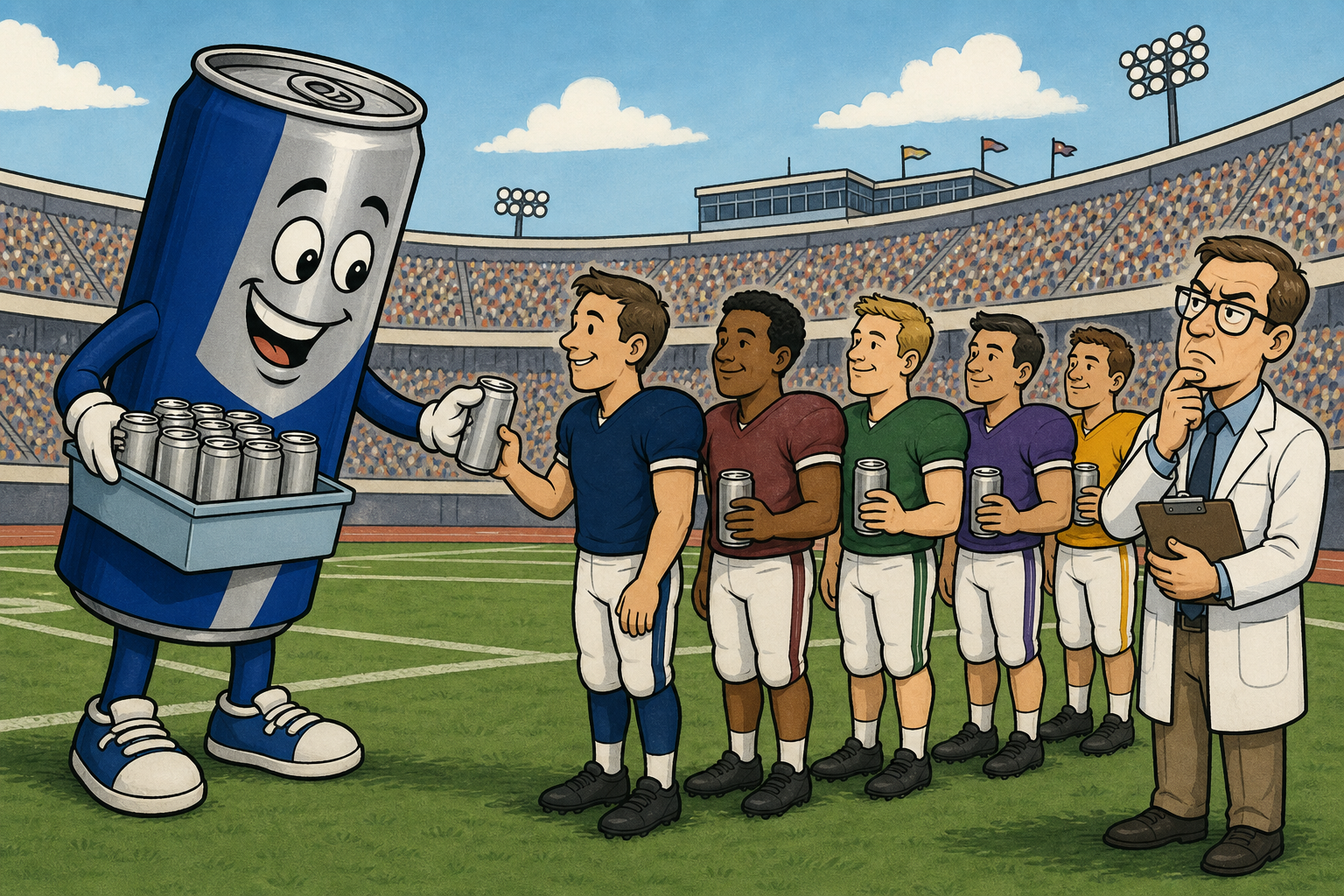
A capped pool forces a brutal question every AD now has to answer in writing: how do you divide $20,500,000 across dozens of teams? At West Virginia, Baker says the answer is revenue-driven — each sport’s share tracks the share of money it brings in, calculated on a rolling average. In his framing, it is the “most non-discriminatory” method he could land on: “What percentage did you contribute?”
In practice that means football and men’s basketball draw the largest shares, because they generate the most. “You can’t have a successful athletic program,” Baker said, “if you don’t have football and men’s basketball performing at a level where you’re bringing in the kind of resources.” The drawback he openly acknowledges: Olympic and non-revenue sports get squeezed, and protecting their scholarships becomes a deliberate budgeting choice rather than an afterthought.
And someone has to fund the pool. WVU reached its full $20,500,000 through a stack of new revenue lines — a Planet Fitness partnership, two craft-beer sponsors, a new $125 “Mountaineer Athletic Advantage” fee projected to raise about $11,000,000 a year, and a roughly 6,000-seat jump in season-ticket sales. In other words, the new athlete pay is being financed by fans, donors and sponsors — the same people who always funded the program, now writing larger checks.
Revenue sharing is paid out of the athletic department’s own budget — not new state money. To fund the $20,500,000 pool, schools like West Virginia leaned on fresh sponsorships, a new per-account athletics fee, and higher ticket revenue. The cap rises about 4% a year toward an estimated $32,900,000 by 2035, so the fundraising pressure compounds annually.
The settlement tried to build a closed system: a capped pool plus a clearinghouse that screens outside deals. The open question is whether the cap holds. Reporting through late 2025 found total spending on players still climbing past the cap’s ceiling, with collectives restructuring rather than disappearing — early signs, in the reporting, that the loopholes were already reshaping the new system. The clearinghouse only sees deals that get submitted, and not everything does.
That is why the litigation hasn’t stopped. House plaintiffs’ attorneys have pushed back on the Commission’s “valid business purpose” guidance; collectives have threatened legal action; and Congress has weighed a federal bill to give the whole structure a legal backstop. Baker’s own framing — treat athletes as legitimate business partners, vet the deals, distribute by revenue — is one administrator’s attempt to run a clean operation inside rules that are still being fought over.
The takeaway for a general reader is simple: college athletes are now paid, on real contracts, with real money, under a real cap — and administrators like Wren Baker are the ones building the machinery to do it legally. The school pays directly up to $20,500,000; outside endorsements are uncapped but vetted above $600; and the back-pay tab runs to $2,800,000,000 over a decade. Whether the cap and the clearinghouse can actually contain the market is the live question — and the one worth watching as the numbers climb toward an estimated $32,900,000 per school by 2035.
- 1.On3 — 'Wren Baker discusses NIL in new revenue sharing world' (WVSports)
- 2.The Dominion Post — 'WVU reaches full revenue sharing, AD Wren Baker dealing with drawbacks,' Aug. 23, 2025
- 3.WV Sports Now — 'Wren Baker Details How WVU Will Distribute Money in New Era'
- 4.WBOY (Gold and Blue Nation) — 'EXCLUSIVE: AD Wren Baker discusses revenue sharing, CFP and more'
- 5.ESPN — 'Judge OK's $2.8B settlement, paving way for colleges to pay athletes,' June 6, 2025
- 6.CBS Sports — 'House v. NCAA settlement approved: Landmark decision opens door for revenue sharing'
- 7.College Sports Commission — 'Revenue Sharing' (official explainer)
- 8.Congress.gov / CRS — 'College Athlete Compensation: Impacts of the House Settlement'
- 9.On3 — 'College Sports Commission creates "snitch line" to report NIL rules violations'
- 10.On3 — 'Arbitrator upholds College Sports Commission's ruling in Nebraska NIL case'
- 11.Sportico — 'College Sports Revenue-Sharing: Which D-I Schools Opted in and Out?'
- 12.247Sports — 'WVU extends athletic director Wren Baker's contract,' July 2025
Last updated June 21, 2026