Trump Says the Navy Has Mine-Swept the Strait of Hormuz. Iran Says It’s Not Reopening.
- 100% control of the Strait of Hormuz President Trump claimed for the U.S. Navy on Aug. 10, calling the naval blockade “infallible” — a “steel wall” — Jerusalem Post (Reuters); Korea JoongAng Daily
- 6 Vessels transited the strait Sunday, Aug. 9 — down from 15 on Friday and an 11-vessel, 10-day average; pre-war traffic ran 130–140 ships a day — Al Jazeera; Jerusalem Post (Reuters)
- 55 commercial vessels CENTCOM says it has redirected under the U.S. naval blockade of Iran as of Aug. 9, up from 44 a week earlier — The Tribune (India); CENTCOM
- 6 Conditions Iran set for reopening the strait, issued by its outgoing security council secretary days before Iran’s supreme leader replaced him — TIME; The National
- $84.22 Brent crude's price per barrel Aug. 10, as traders weighed Trump's claim against Iran's refusal to reopen the strait — Sunday Guardian Live, citing Reuters market data
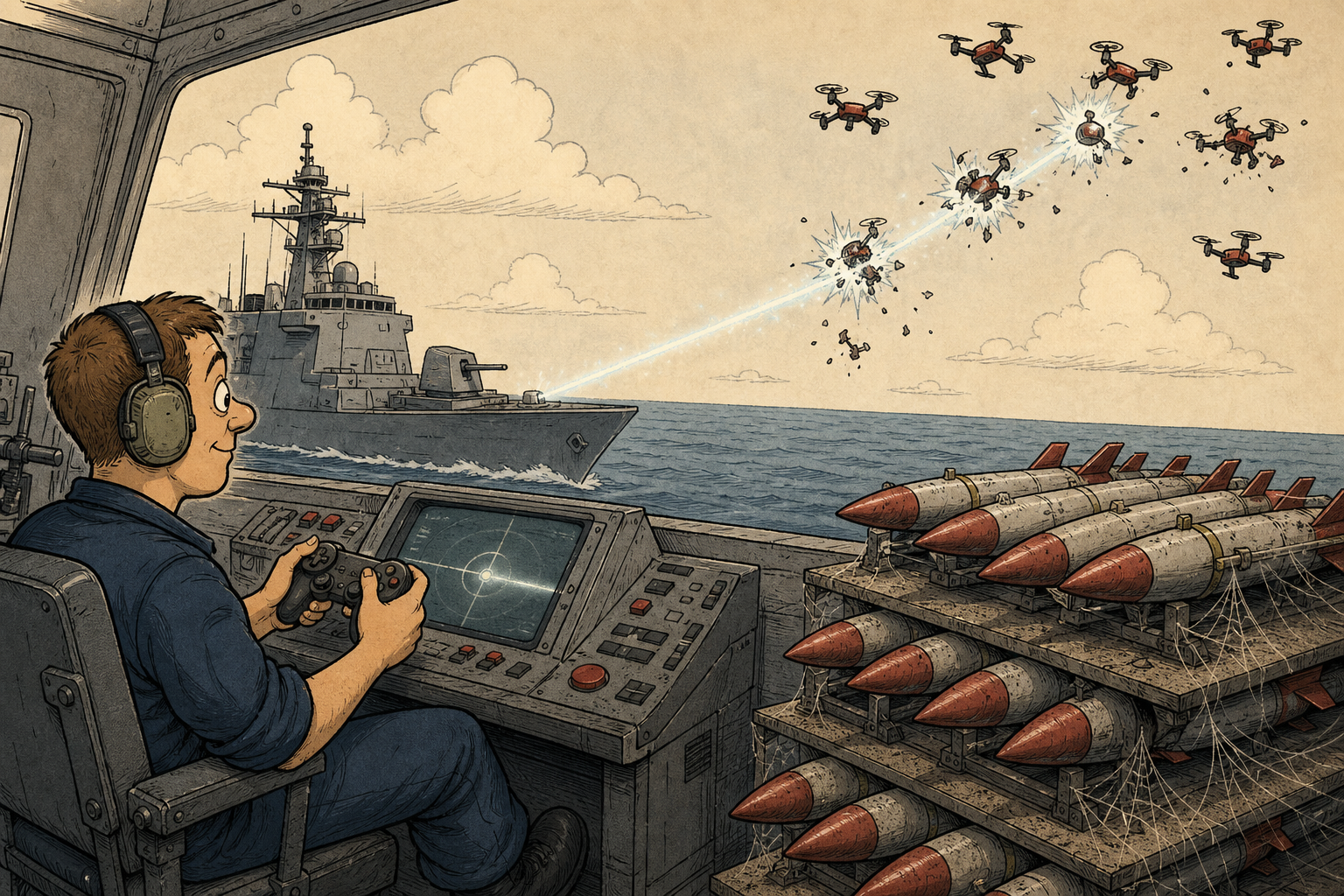
On August 10, 2026, President Donald Trump (R) told reporters in the Oval Office that the U.S. Navy has cleared the Strait of Hormuz of mines entirely and now controls the waterway outright. “Look, the only one that has control of the Strait of Hormuz right now is the United States Navy,” Trump said. “We’ve mine-swept the entire strait… We control the strait 100 percent.”
Iran did not agree. Within hours, Tehran repeated its position that the strait — the channel carrying roughly a fifth of the world’s seaborne oil — stays closed until Washington meets a list of conditions, including war reparations and an end to the U.S. naval blockade. No CENTCOM release, Navy statement, or wire service independently confirmed a completed, strait-wide minesweeping operation, and shipping-traffic data published the same day showed weekend transits running a fraction of pre-war norms.
That gap between a political claim and the confirmable military record isn’t unusual in a war that has run for five months on dueling announcements out of Washington and Tehran — it’s the ordinary lag between a statement and the reporting that verifies it. What is confirmed: actual U.S. strikes on Iran have been paused for more than a week, replaced by a slower blockade-enforcement campaign, and both governments remain far from an agreement to reopen the strait for good.
Trump’s Oval Office remarks stacked several claims on top of each other: the strait is “open now,” the Navy’s blockade is “infallible” and “a steel wall,” and the U.S. holds “100 percent” control — though he added the strait is “open for others” while still closed to Iran itself. He also allowed, unprompted, that Iranian forces “will, on occasion, drop a mine, and we find the mine” — a qualifier that underscores how incomplete independent verification of the claim still is.
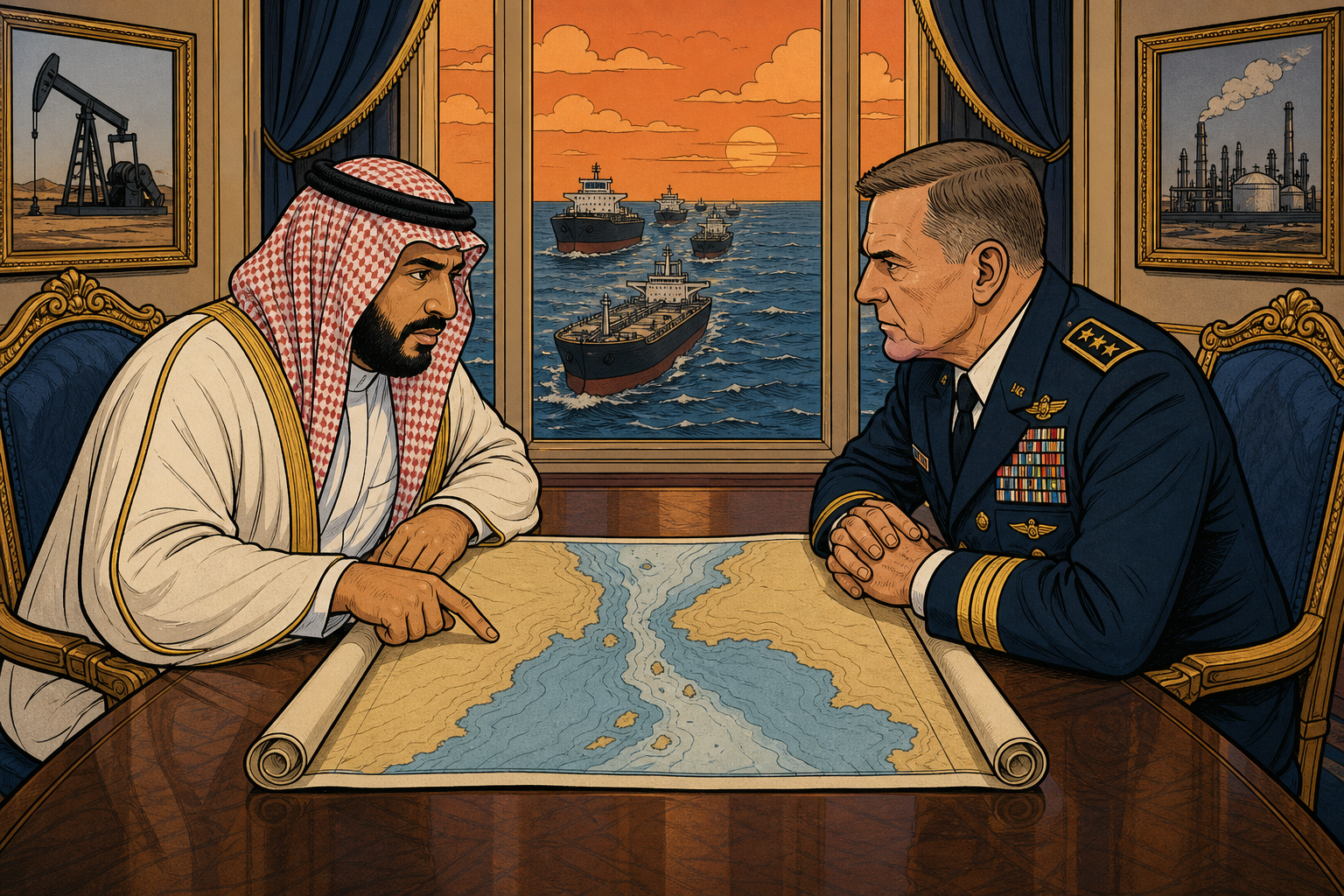
Iran’s foreign ministry took a milder public tone than the military rhetoric might suggest. Spokesman Esmaeil Baghaei said talks with Oman over a shipping-lane arrangement were “progressing smoothly and constructively” — while still insisting Washington end what Tehran calls an act of aggression: the naval blockade. Separately, Iran’s Supreme National Security Council, then still led by outgoing secretary Mohammad Bagher Zolghadr, set out six conditions for reopening the strait for good, detailed below.
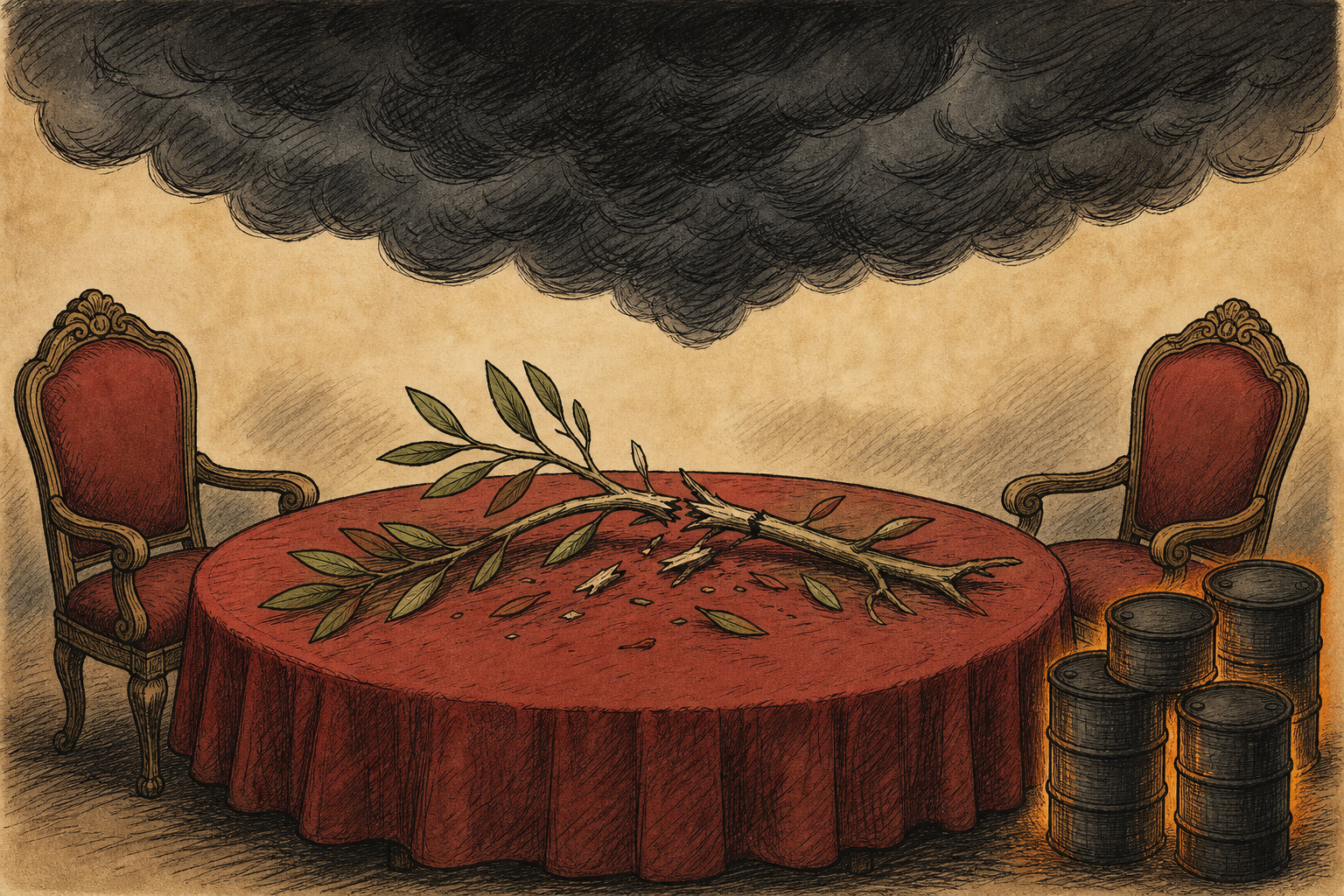
This site reported in mid-June that clearing the strait’s mines could take 40 to 50 days, per five Western maritime-security sources cited by Reuters at the time. Trump’s Aug. 10 claim lands roughly eight weeks past that forecast — long enough that real, substantial de-mining progress is entirely plausible. What’s missing is independent confirmation that the job is finished, from CENTCOM, the Navy, or a wire service on the water. That absence is normal wartime reporting lag, not evidence the claim is false; operational verification of a cleared minefield takes longer, and moves through fewer public channels, than a press availability.
The traffic numbers are the clearest gauge available. Maritime-intelligence firm Kpler said strait traffic remained “subdued” through the week of Aug. 10 and “weakened further into the weekend” — six vessels Sunday against an 11-vessel, ten-day average. Lloyd’s List Intelligence’s own Aug. 5 brief assessed the strait as not yet safe for normal commercial transit, citing continued attacks on alternative routes and “conflicting signals from Washington and Tehran.” Maritime-security expert Ian Ralby, head of Auxilium Worldwide, told RFE/RL that ships attempting the U.S.-protected corridor without Iranian permission face “a very strong likelihood… of getting attacked” — a safety judgment that runs on Iranian behavior, not a U.S. minesweeping tally.
The manifest development paired with Trump’s claim — CENTCOM “self-defense” strikes with the ceasefire “still in place” — is a live pattern this site has tracked since May, but it is not a new bombing run this week. The most recent confirmed CENTCOM strike came the night of July 29, after the Islamic Revolutionary Guard Corps fired ballistic missiles at U.S. forces on July 28; all were intercepted, and CENTCOM said it struck “dozens” of IRGC command centers, missile and drone facilities, and coastal-surveillance sites in response. That strike followed a formal recommendation from CENTCOM commander Adm. Brad Cooper three days earlier: after two weeks of nightly strikes had exhausted the designated target list, he told the Pentagon, the Joint Chiefs, and the White House there was little point continuing absent a decision to escalate to major combat operations — a recommendation relayed up through Secretary of War Pete Hegseth (R).
CENTCOM forces continue to strictly enforce the U.S. blockade against Iran. As of Aug. 9, CENTCOM has redirected 55 commercial vessels, disabled 2, and boarded 2.
Trump called off a larger threatened campaign on Aug. 1 after Iran and regional governments asked him to hold off, citing progress toward a deal framework. Since then, no U.S. or Israeli strike inside Iran has been confirmed by CENTCOM — an eighth consecutive night without a strike as of Aug. 6–7. Iranian state media reported explosions on Qeshm Island near the strait’s entrance the night of Aug. 6, describing armed forces “confronting” unspecified “hostile enemy targets.” CENTCOM made no statement addressing the episode, and a Hormozgan provincial official denied any strike had occurred — an unresolved, single-sourced claim this site is flagging rather than reporting as fact.
What has continued without interruption is the blockade. CENTCOM said it had redirected 44 commercial vessels as of Aug. 3 and 55 as of Aug. 9, with two vessels disabled and two boarded throughout. More than 20 U.S. warships remain deployed to the region, including the carrier strike group built around the USS Abraham Lincoln. That enforcement posture — not a resumed bombing campaign — is the actual current shape of “self-defense” in this war: holding a blockade line while diplomats negotiate its removal.
1. The U.S. must stop threatening Iran and end language Tehran calls insulting.
2. End military operations against Iran and Iran-aligned forces in Lebanon, Yemen, and Iraq.
3. Lift the naval blockade and withdraw U.S. forces from around Iran.
4. Compensate Iran for damages from the war, “without reduction.”
5. Remove U.S. economic sanctions on Iran.
6. Unconditionally release frozen and seized Iranian assets.
— Mohammad Bagher Zolghadr, then-secretary, Iran’s Supreme National Security Council, via TIME
Trump rejected the framing outright. Posting to Truth Social the same day, he turned Iran’s reparations demand back on Tehran:
I see that Representatives of the Islamic Republic of Iran are asking for compensation for the damage done to them during the last five-month Military Conflict, even though it was never mentioned in any of our negotiations or meetings! I am likewise demanding compensation from Iran, for all of the people that they have killed and gravely wounded with their roadside bombs and many conflicts.
Secretary of State Marco Rubio (R) has been working a parallel, quieter track. Days before Trump’s Oval Office remarks, Rubio met UK Foreign Secretary Ed Miliband and posted that the two “reaffirmed our shared commitment to open transit in the Strait of Hormuz and ensuring Iran never obtains a nuclear weapon” — diplomatic language notably calmer than Trump’s “100 percent control.”
In my meeting with UK Foreign Secretary @Ed_Miliband, we discussed the need for Europe to take a greater role in its own security. We also reaffirmed our shared commitment to open transit in the Strait of Hormuz and ensuring Iran never obtains a nuclear weapon.
Iran, meanwhile, reshuffled its own negotiating leadership days before Trump spoke. Supreme Leader Mojtaba Khamenei replaced Zolghadr with Mohsen Rezaei, a 71-year-old former IRGC commander, as security council secretary on or around Aug. 9. Both men are hardliners; regional analysts described the move as consolidation rather than a policy shift toward compromise, with Rezaei cast as “an obedient soldier” who will carry out Khamenei’s decisions rather than reshape them. That instability on Iran’s side of the table is worth naming plainly: it is Tehran’s internal hardliner-versus-pragmatist fight, not a Washington decision, that is currently narrowing the odds of a near-term deal.
Oil markets are already pricing the uncertainty rather than the announcement. Brent crude traded near $84.22 a barrel Aug. 10, up on the week, as traders weighed Trump’s claim against Iran’s refusal to reopen the strait and against continued reports of near-misses on alternative routes. A confirmed, verified reopening — not a press-availability claim — is what would move that price meaningfully. Trump is leaning on that same economic pressure rather than further strikes, arguing Tehran’s finances leave it little room to hold out: “They have no money. Iran is broke, totally broke, and they are not paying their soldiers.”
Iran has no money. Their currency is trash.
Paraphrased commentary · not a verbatim post
Posted alongside a chart of the Iranian rial's decline — part of Trump's argument that economic pressure, not further strikes, is what's forcing Tehran back to the table.
For the ceasefire, the practical state of play is a pause, not a resolution: no confirmed U.S. strike inside Iran since July 29–30, a blockade that keeps tightening by CENTCOM’s own numbers, and a negotiating track running through Oman on shipping lanes while the harder issues — reparations, sanctions, frozen assets, troop withdrawal — remain unresolved on both sides. For regional security, Iran heading into this stretch with a freshly installed, hardline security chief is the detail worth watching most closely in the weeks ahead.
President Trump told reporters the U.S. Navy has cleared the Strait of Hormuz of mines and controls it “100 percent” — a claim no CENTCOM statement, Navy release, or wire service has independently confirmed as of this writing. That gap is ordinary wartime reporting lag, not evidence of dishonesty: this site’s own June reporting put the de-mining timeline at 40 to 50 days, and Monday’s claim lands roughly eight weeks past that forecast, well within range for real progress. What is confirmed: actual U.S. strikes have been paused since Trump called off a larger campaign on Aug. 1, the last confirmed strike came July 29 under Adm. Brad Cooper’s command, CENTCOM’s blockade has redirected 55 commercial vessels as of Aug. 9, and Iran — now negotiating under a newly installed, hardline security chief — says the strait stays closed until Washington meets six conditions, starting with the blockade Trump just called “infallible.”