
The Inspectors Are Coming Back to Iran — Tehran Says Not Yet.
On day 119 of the war Al Jazeera labels the “US–Israel war on Iran,” the world’s nuclear watchdog drew a line. Speaking in Tokyo, International Atomic Energy Agency Director-General Rafael Grossi said his inspectors will return to Iran to verify a program much of which they have not laid eyes on since the bombing campaign that struck Iranian nuclear sites. “There is an agreement,” Grossi said, “and to comply with that agreement, the IAEA will have to have access and inspect. We hope to be there soon.”
Tehran answered almost in the same breath. Iranian Deputy Foreign Minister Kazem Gharibabadi said access to the bombed sites would “solely be examined and resolved within the framework of a final agreement” with the United States — and only after Washington lifts sanctions. Grossi himself called it what it is: a “war of statements” over what the two governments actually signed.
This page sorts the verifiable from the contested. It lays out exactly what Grossi said, where the U.S. and Iranian accounts diverge, what remains physically unaccounted for, and what else happened on a day that also saw Israeli strikes in southern Lebanon and fresh friction in the Strait of Hormuz — reported neutrally and sourced line by line.
- Day 119 — of the conflict Al Jazeera dates to February 28, 2026, when Grossi said inspectors will return to Iran · Source: Al Jazeera
- 14-point MOU — the U.S.-Iran memorandum of understanding signed earlier in June, which Grossi says states 'in all letters' that nuclear activities will be supervised by the IAEA · Source: Al Jazeera; CBS News
- 60 days — negotiating window the MOU opened for a broader deal; technical talks were expected to resume in Switzerland around June 29-30, per Secretary of State Marco Rubio · Source: Al Jazeera; CBS News
- Bombed sites still closed — the IAEA has visited some Iranian facilities since the strikes but says Iran has not granted access to the bombed enrichment sites, leaving enriched-uranium stocks unaccounted for · Source: Al Jazeera; IAEA
- Up to ~10 weapons — the amount of weapons-grade material Iran is believed capable of producing from its highly enriched stockpile, should it choose to — a figure cited by wire reporting, not an IAEA finding of intent · Source: NPR / AP
- 2 killed in Lebanon — an Israeli raid on Mayfadoun in southern Lebanon's Nabatieh district killed two and wounded one the same day; the town of Nabatieh al-Fawqa was also struck · Source: Al Jazeera
Grossi made his clearest statement yet at a press conference in Japan, telling reporters that the memorandum of understanding the United States and Iran signed earlier in June states “explicitly” that “the nuclear activities that are going to be carried out with regards to nuclear material facilities will be supervised by the IAEA — in all letters.” The agency, he said, had already begun technical work. What it does not yet have is a date, a place, or a procedure.
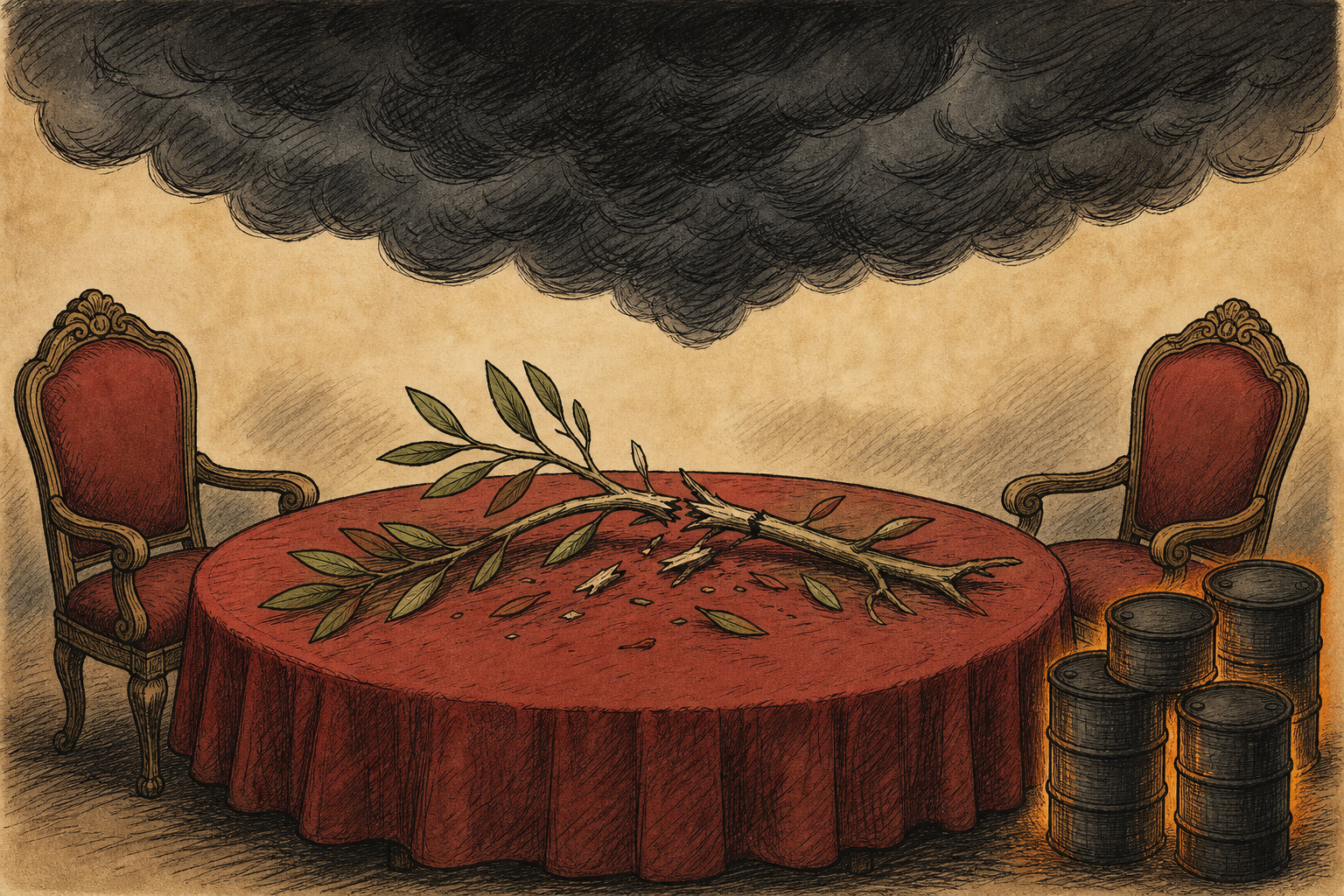
On timing, Grossi was deliberately relaxed. “Whether this happens the day after tomorrow or in one week or in 10 days, it’s important, but not essential,” he said. “This is going to happen.” The modalities — “dates, procedures, places” — would be worked out “very soon” and “in cooperation with the government of Iran.” The message was that the principle is settled even if the schedule is not, a posture aimed at lowering the temperature without conceding the substance.
The reason Grossi had to speak at all is that Washington and Tehran have been describing the same document in opposite terms. President Donald Trump (R) and Vice President JD Vance (R) have said Iran agreed to inspections; Iran has said it agreed to no such thing yet. Trump told reporters he would cut off talks immediately if Iran had not agreed to inspections, and dismissed Tehran’s denials as “protestations and false statements,” insisting Iran had signed on to “the highest level” of nuclear inspections.
Iran’s account is narrower. Gharibabadi said the question of inspectors visiting the attacked sites would be settled “only within the framework of a final agreement and as a result of practical action by the other side to end all sanctions.” Iranian Foreign Ministry spokesman Esmaeil Baghaei said there was no fixed schedule for any visit. The country’s chief negotiator went further still, casting the MOU as a “declaration of US defeat.” The two sides are, in effect, negotiating in public — each describing the deal to its own audience before the deal is finished.
DG Grossi: For any agreement on Iran's nuclear programme to hold, there must be a very strong system of verification in place — as soon as is practicable. Intentions are not enough.
The MOU is explicit: Iran's nuclear activities will be supervised by the IAEA. The inspections are going to happen — we are working on the modalities, and we hope to be there soon.
The hard part is not the diplomacy — it is the rubble. Since the bombing campaign that hit Iran’s nuclear infrastructure, the IAEA says it has been allowed back into some installations, including the Bushehr power plant, but has been blocked from the enrichment sites that were struck. Without access to those facilities, the agency says it cannot independently verify the status of Iran’s enriched-uranium stockpile or the condition of its centrifuge network.
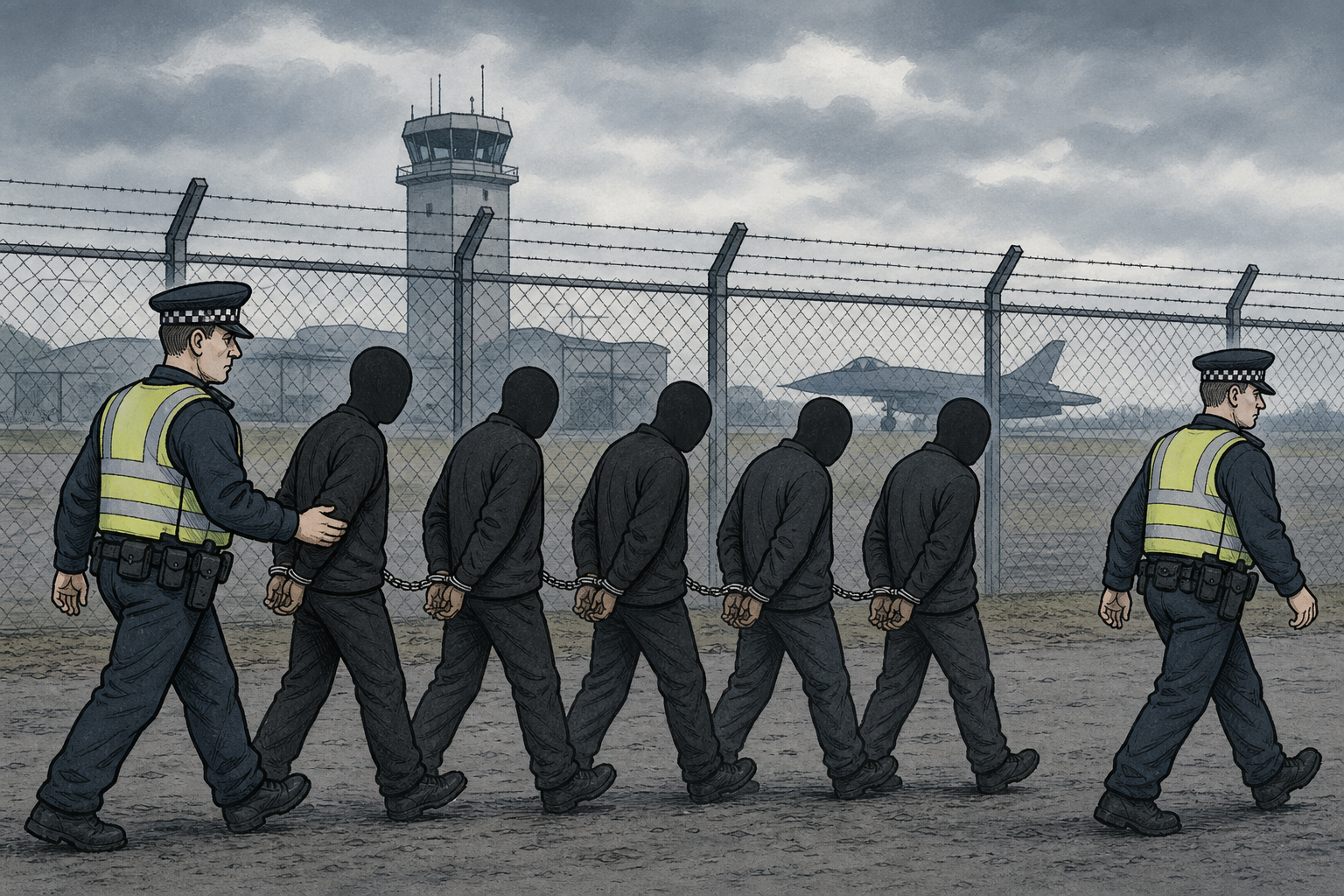
That gap is the whole reason verification matters. Iran is believed to hold enough highly enriched uranium to produce material for up to roughly 10 weapons if it chose to — a figure carried in wire reporting, not an IAEA finding that Tehran has decided to do so. Some reporting has placed a large quantity of enriched material trapped under debris at the Isfahan site; the IAEA’s own position is simpler and more cautious — it cannot confirm what is where until inspectors are physically allowed in. Iran maintains its program is peaceful and calls the weapons accusations fabrications by the U.S. and Israel.
The IAEA / United States — the MOU puts Iran’s nuclear activities under IAEA supervision; inspections “are going to happen”; the agency needs access “as soon as practicable” to verify the enriched-uranium stockpile.
Iran — access to the bombed sites waits for a final agreement and the lifting of sanctions; there is no fixed schedule; the program is peaceful and the weapons claims are fabricated.
Not yet verifiable — the exact condition and location of Iran’s highly enriched uranium, which the IAEA says it cannot confirm without on-site inspection.
The inspections standoff unfolded against a still-active war. On the same day, an Israeli raid on the town of Mayfadoun, in southern Lebanon’s Nabatieh district, killed two people and wounded a third, according to Al Jazeera’s roundup; the nearby town of Nabatieh al-Fawqa was also struck. Prime Minister Benjamin Netanyahu said the Israeli military was “not going to withdraw” from the Lebanese territory it holds — reported at roughly one-fifth of the country — even as Israeli and Lebanese delegations were set to resume talks.
At sea, Iran’s Islamic Revolutionary Guard Corps warned vessels against transiting the Strait of Hormuz without permission, and a UN maritime body paused an escort operation after a reported attack on a ship. There were also signs of the war’s economic pressure easing in places: Al Jazeera reported that Saudi Aramco resumed oil loading after a roughly four-month halt and that India lifted some commercial LPG restrictions. The picture was mixed — diplomacy advancing on one track, force still in play on another.
The deal stands, but Iran and its proxies should not test us. If Hezbollah keeps it up, we will hit Iran very hard again. Nobody wants that — the smart move is to honor the agreement and let the inspectors do their job.
Paraphrased commentary · not a verbatim post
Trump's broader warning over Hezbollah and the war — paraphrased and labeled as commentary, not a verbatim post. Source basis: CBS News; NBC News.
“In order to have certainty, we need to have a very strong system of verification as soon as practicable. Intentions are not enough.”
Rafael Grossi, IAEA Director-General, June 26, 2026
The framework everyone is arguing about is a memorandum of understanding — described as running to 14 points — signed by President Trump and Iranian President Masoud Pezeshkian. It opened a 60-day window for the two sides to negotiate a broader agreement covering Iran’s nuclear program and its uranium stockpile, which the MOU calls to be “downblended” from highly enriched levels, while suspending some U.S.-backed sanctions during the talks. Secretary of State Marco Rubio (R) said technical discussions were expected to resume in Switzerland around June 29–30.
The MOU’s ambiguity is doing a lot of work. It names the IAEA as the supervisor of the nuclear file — which is why Grossi can say inspections are coming — but it does not, on the public record, fix a date for inspectors to enter the bombed sites, which is why Iran can say the question is unresolved. Both governments are reading the same text and emphasizing different clauses to different audiences. The 60-day clock is what forces the issue: if it runs out without a deal, the suspended sanctions and the inspection access both hang in the balance.
Iran agreed to the HIGHEST LEVEL nuclear inspections. Their protestations and false statements don't change the deal. If they hadn't agreed, I would have ended the talks immediately. We are watching VERY closely.
Paraphrased commentary · not a verbatim post
Trump's framing of the inspections dispute — paraphrased and labeled as commentary, not a verbatim post. Source basis: NBC News; Al Jazeera.
Strip away the dueling press conferences and one fact remains: any agreement is only as durable as the ability to check that it is being honored. Grossi’s repeated emphasis — “intentions are not enough” — is the institutional case for inspectors over assurances. The IAEA Board of Governors had already, earlier in June, adopted a resolution urging Iran to cooperate, and Western governments have pushed Tehran to restart full cooperation. The agency’s leverage, though, is limited to what Iran lets it see.
That is the honest tension at day 119. Grossi’s “we hope to be there soon” is a statement of intent, not a confirmed visit. Iran’s “only after a final deal” is a negotiating position, not a refusal in perpetuity. Until inspectors stand inside the struck enrichment halls and count what is there, the central question of the war — how much weapons-usable material Iran holds, and in what state — stays formally unverified. Everything else is, in Grossi’s own word, statements.
The IAEA says it will return to Iran; Iran says not until a final deal and sanctions relief. Both statements are true to the documents each side is reading. What is not in dispute: a 14-point MOU put the nuclear file under IAEA supervision and opened a 60-day negotiating window; the bombed enrichment sites remain closed to inspectors; and Iran’s enriched-uranium stockpile is, for now, unverified. Day 119 layered that standoff over fresh Israeli strikes in southern Lebanon and renewed friction at the Strait of Hormuz. We will track whether Grossi’s inspectors actually get in, what the Switzerland talks produce, and whether the 60-day clock ends in a deal or a relapse — sourced, attributed, and without adopting either government’s spin.
- 1.Al Jazeera — 'Iran war day 119: Israel hits Lebanon as IAEA says it will return to Iran,' June 26, 2026 (originating day-119 roundup; Mayfadoun and Nabatieh al-Fawqa strikes; Grossi 'we hope to be there soon')
- 2.Al Jazeera — 'IAEA demands verification of Iran nuclear ambitions amid "statement war,"' June 26, 2026 (Grossi: 'a very strong system of verification'; 14-point MOU; bombed sites still closed)
- 3.Al Jazeera — 'UN nuclear chief says Iran inspections will happen, Tehran says after deal,' June 24, 2026 (Grossi in Japan; 'modalities — dates, procedures, places'; Gharibabadi response)
- 4.NPR / Associated Press — 'U.N. nuclear chief says inspectors will visit Iran, but Iran says only after final deal,' June 24, 2026
- 5.NBC News — 'U.S. and Iran dispute whether Tehran has agreed to nuclear inspections,' June 2026 (Trump and Vance vs. Tehran; Israel–Lebanon; Hezbollah)
- 6.CBS News — 'Nuclear site inspections will happen, but timing "not essential," IAEA chief says,' June 2026 (Grossi: '...important, but not essential'; MOU signed by Trump and President Masoud Pezeshkian; uranium to be 'downblended')
- 7.The Times of Israel — 'Contradicting Trump and Vance, Iran says no plans for IAEA inspections, asserts sovereignty at Hormuz,' June 2026
- 8.The Times of Israel — 'US-Iran deal grants UN inspectors access to nuclear sites, IAEA chief says,' June 24, 2026
- 9.Fox News — 'Iran nuclear deal hinges on IAEA access to long-blocked atomic weapon sites, experts say,' June 2026
- 10.TASS — 'IAEA hopes to begin inspections of Iran's nuclear facilities soon — Grossi,' June 26, 2026 (Japan National Press Club, Tokyo)
- 11.UN News — 'US-Iran deal: technical work can begin, says atomic energy agency,' June 2026
- 12.Euronews — 'IAEA chief says inspections of Iran's nuclear sites "going to happen,"' June 24, 2026
- 13.CNBC — 'U.S.-Iran peace deal grants access to Tehran's nuclear sites, UN watchdog says,' June 26, 2026
- 14.The Times of Israel — 'Deal a "declaration of US defeat," chief Iran envoy says, as IAEA vows inspections,' June 2026
- 15.CBS News — 'U.S. and Iranian negotiators meet as Trump threatens to "hit Iran very hard again" over Hezbollah,' June 2026 (Israel-Lebanon fighting; MOU; talks)
- 16.IAEA — 'Monitoring and Verification in Iran' (official agency page on inspector access and enrichment status)
- 17.IAEA — 'IAEA and Iran: Chronology of Key Events' (Board of Governors resolution urging cooperation; suspension and partial resumption of access)
Last updated June 26, 2026