
The West Bank Olive Harvest, Under Pressure — What the Numbers Show, and What Each Side Says.
For Palestinian families across the occupied West Bank, the olive harvest is the economic and cultural anchor of the year. In 2026, that harvest — and the daily work of farming and herding around it — has come under intense strain. Al Jazeera, in a June 28 feature, framed it bluntly: “How Israel is making war on West Bank farmers.” That is a pointed characterization from a single, advocacy-leaning outlet — so this page tests it against independent data and presents the Israeli government’s position alongside it.
The underlying facts are corroborated well beyond any one source. The United Nations humanitarian office (OCHA), U.S. broadcasters PBS and CNN, NPR, and the Israeli outlets The Times of Israel and Haaretz all document a sharp rise in settler attacks, land-access restrictions, and displacement of herding communities. The Israeli military’s own figures show settler violence rising.
What follows attributes every contested claim to its source, separates documented numbers from characterization, and gives the Israeli position a full hearing — including the IDF chief’s own condemnation of settler violence and the army’s account of why some harvest access is restricted. A note on the sourcing tension is included near the end.
- ~6 per day — average rate of settler-attack incidents documented across the West Bank in 2026, totaling over 1,000 incidents in 230-plus communities · Source: UN OCHA
- ~2,200 — Palestinians displaced from Bedouin and herding communities in 2026 alone; about 6,100 since January 2023, with 46 communities fully displaced · Source: UN OCHA
- 41,000 olive trees — damaged by settlers or Israel's military in 2026, per the Palestinian Authority's agriculture ministry, as reported by Al Jazeera · Source: Al Jazeera
- +27% — rise in settler-violence incidents in 2025 versus the prior year, with severe 'nationalistic crime' up over 50% — per the IDF's own data · Source: The Times of Israel
- '95% of the territory' — share of the West Bank where the IDF says olive harvesting proceeds without restriction, with coordination required only near Israeli settlements 'for the security of the parties' · Source: IDF statement via The Times of Israel
- 'Unacceptable' — how IDF Chief of Staff Eyal Zamir publicly described settler attacks on Palestinians, calling them 'morally and ethically unacceptable' and a strategic danger · Source: The Times of Israel
Al Jazeera’s June 28 feature reports that Israeli settler violence, military closures, and land seizures have pushed Palestinian agriculture toward collapse. It cites the Palestinian Ministry of Agriculture’s estimate of roughly $103 million in direct losses to the farming sector in 2025, and profiles named farmers — among them Amal Slaibi, who says Israeli bulldozers uprooted her family’s grapevines near Hebron, and Jihad Nawajah of Susya, who turned to beekeeping after settlers poisoned his sheep. Those are Al Jazeera’s accounts and the ministry’s figures, attributed as such.
The broad pattern is not unique to Al Jazeera. PBS NewsHour and CNN both reported from the West Bank during the 2025 olive season, documenting settlers wielding clubs and, in one widely covered case, a Palestinian grandmother beaten unconscious while picking olives. NPR, the Israeli NGO Yesh Din, and UN bodies recorded the same trend lines. Where the sources diverge is in framing and emphasis — not in whether the attacks and access restrictions are happening.
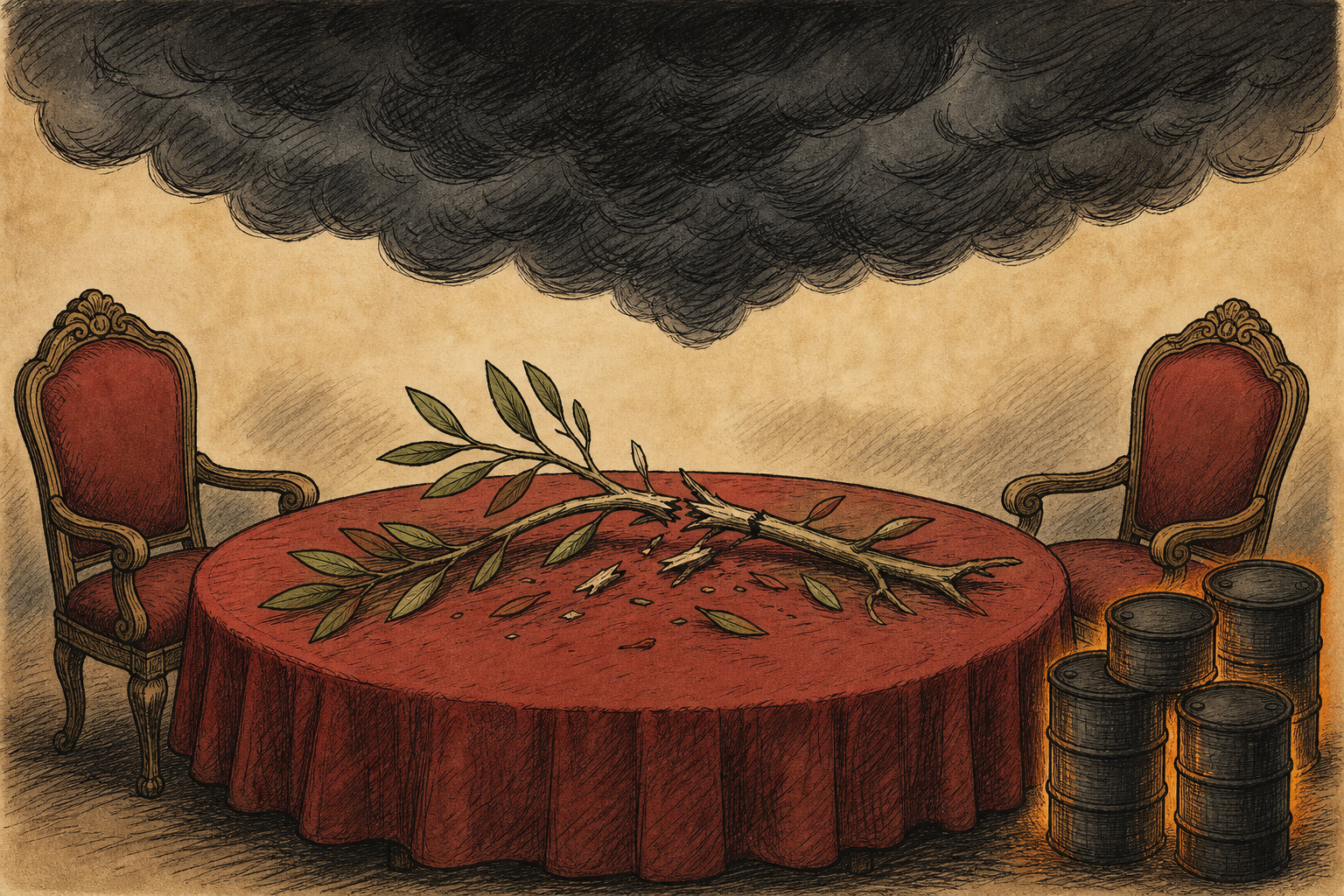
The most authoritative tally comes from the UN’s humanitarian office. Per OCHA, the West Bank saw an average of about six settler-attack incidents per day in 2026 — more than 1,000 incidents involving casualties or property damage across over 230 communities by mid-June. OCHA also reports that roughly 2,200 Palestinians were displaced from Bedouin and herding communities in 2026 alone, part of about 6,100 displaced since January 2023, with 46 communities fully emptied. In late May, OCHA says, 27 Bedouin families — 125 people, including 71 children — left Fer’a in the Hebron governorate after months of reported harassment.
On the agricultural toll, the figures most often cited — about 41,000 olive trees damaged in 2026 and thousands of goats and sheep killed or stolen — originate with the Palestinian Authority’s agriculture ministry and are relayed by Al Jazeera; they should be read as the PA’s accounting rather than an independently audited number. Al Jazeera also reports West Bank livestock falling from about 1.75 million head four years ago to roughly 480,000 today. The directional claim — a collapsing harvest and shrinking herds — is corroborated by UN and Israeli-NGO documentation of tree destruction and grazing loss, even where exact totals come from Palestinian officials.
Settler-related violence and access restrictions continue to drive displacement of Palestinian herding communities across the West Bank, with hundreds of incidents recorded this year and dozens of communities displaced.
The harvest is where the pressure becomes most visible. The UN reported that October 2025 was the most violent month for settler attacks since it began documenting them in 2006, with more than 260 incidents. Palestinian farmers and rights groups, including Yesh Din, say two forces compound each other: physical attacks by settlers, and military closure orders that bar farmers from their own groves — sometimes for the duration of the picking window. PBS NewsHour reported that journalists were among those confronted and assaulted while covering the 2025 harvest.
Palestinian olive-oil output reflects the strain. According to figures cited by Al Jazeera, production fell from roughly 23,000 tons in the 2022 season to about 8,000 tons in the most recent one. Whether the cause is primarily violence, closures, or both is contested — but the decline itself, and the access disputes behind it, are documented by Palestinian, UN, and Israeli sources alike.
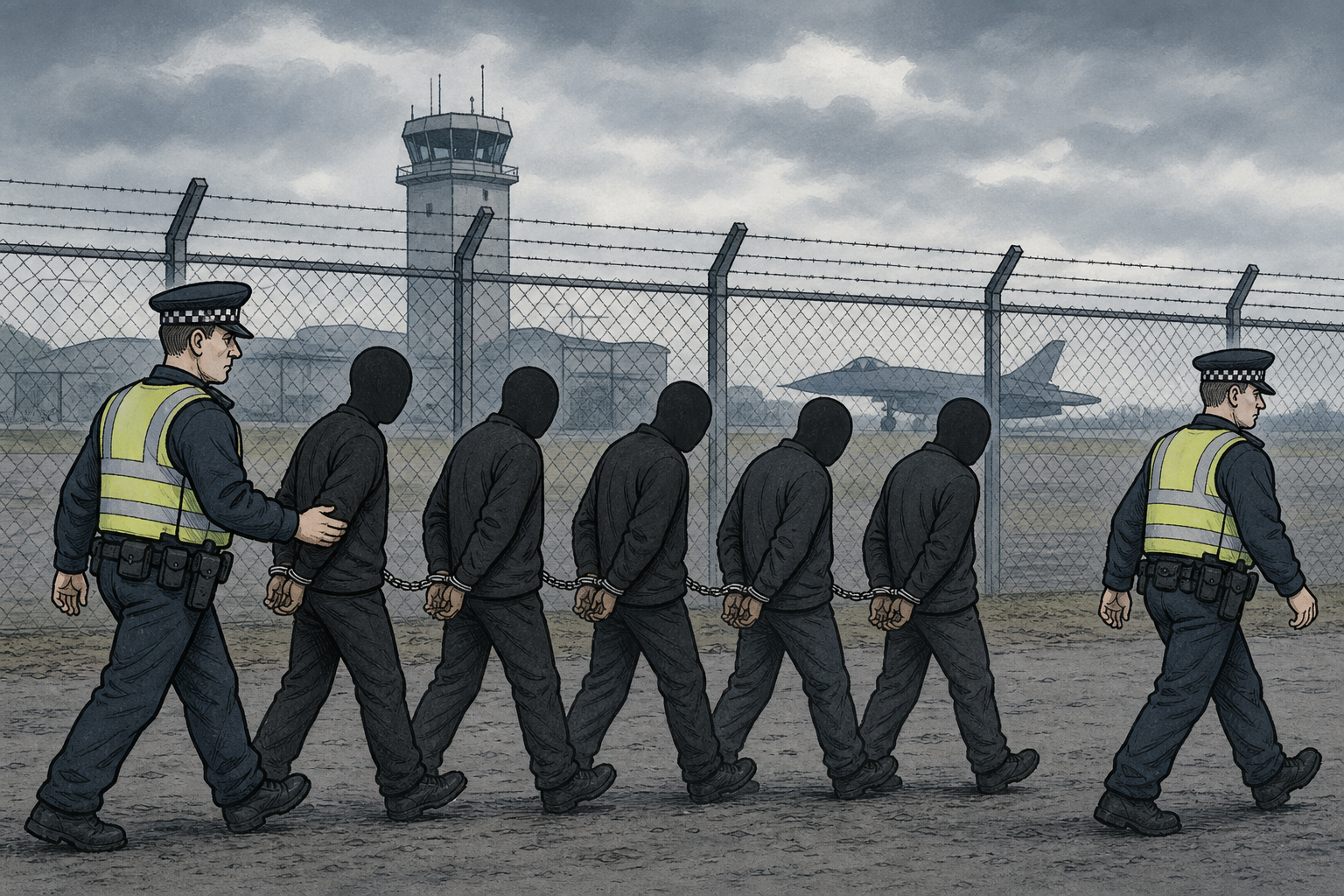
Documented and broadly corroborated: a sharp rise in settler attacks (UN OCHA, IDF data), displacement of herding communities (UN OCHA), military access restrictions during the harvest (Yesh Din, Times of Israel), and a steep fall in olive-oil output.
Attributed to one side, not independently audited: the precise tallies of trees destroyed and livestock lost, and the dollar value of farm losses — all sourced to the Palestinian Authority and relayed by Al Jazeera.
Characterization, not fact: the phrase “making war on farmers.” That is Al Jazeera’s framing of the pattern, not a finding we adopt in our own voice.
The Israeli government does not present a single voice on this. On the harvest itself, the IDF says that olive picking proceeds without restriction in “95% of the territory,” and that where groves sit close to Israeli settlements, harvesting must be coordinated “for the sake of the security of the parties” — framing the closures as a security measure rather than a tool of displacement. Israeli officials also note, per The Times of Israel, that some West Bank violence runs in both directions, including attacks on Israelis.
Notably, some of the sharpest condemnation of settler violence has come from within the Israeli establishment. IDF Chief of Staff Lt. Gen. Eyal Zamir publicly called the attacks “morally and ethically unacceptable” and warned they cause “extraordinary strategic damage,” per The Times of Israel; Haaretz reported a senior officer cautioning the violence could spark a Palestinian uprising. The Times of Israel also reported that Prime Minister Benjamin Netanyahu’s office instructed the army and police to crack down. Yet far-right ministers Itamar Ben-Gvir and Bezalel Smotrich — both settlers — oversee policing and West Bank civil administration, and the Jerusalem Post reported an open clash between Zamir and Ben-Gvir over the issue, underscoring a genuine divide inside the government.
“Settler violence against Palestinians is morally and ethically unacceptable and causes extraordinary strategic damage.”
IDF Chief of Staff Lt. Gen. Eyal Zamir, as reported by The Times of Israel
Olive harvesting in the West Bank takes place without restriction across the large majority of the territory; coordination is required only in areas adjacent to Israeli communities, for the security of all parties.
This is a contested topic with a single advocacy-leaning lead source, so the standard here is higher than usual. Al Jazeera, funded by the government of Qatar, brings a clear editorial perspective to Israeli–Palestinian coverage. We treat its framing as framing, its on-the-ground reporting as reporting to be checked, and its statistics as claims that need a second source. On the core facts — rising settler attacks, harvest disruption, and displacement — that second source exists in abundance: the UN’s OCHA, PBS, CNN, NPR, and the Israeli press, plus the IDF’s own published data on settler violence.
Where corroboration is thinner — the exact counts of trees and livestock, and the dollar value of losses — we have labeled the figures as Palestinian Authority estimates relayed by Al Jazeera, not as settled facts. And we have given the Israeli government’s account its own section rather than a token line. There is a U.S. policy dimension too: in January 2025, President Trump rescinded Biden-era sanctions on individual settlers and settler entities, as NBC News and others reported — a decision Israeli officials welcomed and Democratic senators tried to reverse by statute. Readers can weigh the framing; the documented facts hold.
Strip away the loaded language and a sober picture remains. Settler attacks in the West Bank have risen sharply — the UN counts roughly six incidents a day, and the IDF’s own data show a 27% jump in 2025. Herding communities are being displaced by the thousands. The olive harvest, the backbone of rural Palestinian income, has been disrupted by both violence and military closures, and output has fallen by more than half. The Israeli military says most harvesting is unrestricted and frames closures as security measures — and its own chief of staff calls the settler violence unacceptable. Both things are documented. The precise economic tallies come from Palestinian officials and should be read that way. We will keep tracking the data as the next harvest approaches.


- 1.Al Jazeera — 'Paradise lost: How Israel is making war on West Bank farmers,' June 28, 2026 (lead feature; Palestinian Ministry of Agriculture loss figures and named farmers)
- 2.Al Jazeera — 'Israeli settlers are driving Palestinian shepherds from their grazing lands,' June 3, 2026 (herding-community displacement; livestock figures)
- 3.UN OCHA (Occupied Palestinian Territory) — Humanitarian Situation Report, 19 June 2026 (settler-attack and displacement data; primary humanitarian source)
- 4.UN OCHA — Humanitarian Situation Report, 12 June 2026 (Fer'a displacement of 27 Bedouin families; WASH-structure damage)
- 5.PBS NewsHour — 'Israeli settlers attack Palestinians with impunity, halting West Bank olive harvest' (independent U.S. broadcast reporting and on-the-ground footage)
- 6.CNN — 'Savage beatings and dying trees: How West Bank settler violence is impacting Palestinians' olive harvest,' November 7, 2025
- 7.NPR — 'The struggle to preserve the Palestinian olive and date harvest,' November 2, 2025
- 8.The Times of Israel — 'IDF chief: Settler violence unacceptable, results in extraordinary strategic damage' (IDF Chief of Staff Eyal Zamir's condemnation)
- 9.The Times of Israel — 'Already squeezed by settlers, Palestinians say IDF increasingly blocking olive harvests' (includes the IDF statement that harvesting proceeds in 95% of the territory)
- 10.The Jerusalem Post — 'IDF chief Eyal Zamir, Ben Gvir clash over settler violence in West Bank' (Israeli government internal divide)
- 11.Haaretz — 'Senior IDF Officer Warns of Palestinian Uprising in Response to Jewish West Bank Terrorism,' May 1, 2026 (Israeli newspaper of record)
- 12.Yesh Din (Israeli human-rights NGO) — '2025 Olive Harvest Season: Violence, denied harvest and olive tree destruction' (documentation of access denial and tree loss)
- 13.Amnesty International — 'Israel's ethnic cleansing of West Bank Bedouin and herding communities,' June 2026 (advocacy-organization research report)
- 14.UN OHCHR — 'Israel's settlement expansion drives mass displacement in West Bank,' March 2026 (UN human-rights press release)
- 15.NBC News — 'As Trump lifts sanctions on West Bank settlers, anti-Palestinian violence flares in the occupied area,' January 2025 (U.S. policy context)
Last updated June 29, 2026