
Fistfights at the Pump. Russia sits on some of the largest oil reserves on Earth — and its drivers are brawling on camera over gasoline, waiting 13 hours for half a tank, and living under fuel rationing in 56 regions, while Putin concedes on television that the shortage is real.
The videos are hard to look away from. At a gas station in Serov, in the Urals, two men trade punches over a place in line. In Ryazan, a shoving match spills across the forecourt. In Irkutsk, in Siberia, drivers scream at each other beside pumps that have nothing left to sell. The clips, distributed by the East2West news agency and aired by Fox News on June 30, all document the same national condition: Russia — the world’s second-largest oil exporter — is running out of gasoline.
The reason is not a mystery, and it is not seasonal. Ukrainian long-range drones have spent 2025 and 2026 methodically setting fire to the refineries that turn Russia’s crude into usable fuel. By early June, roughly one-third of Russia’s refining capacity was offline, according to a Carnegie Endowment analysis — and by the end of May, independent Russian outlet Meduza counted every major refinery in European Russia as having been hit at least once. June crude processing fell to its lowest level in more than two decades.
On June 28, the denial phase ended. At a televised meeting with his own ministers, President Vladimir Putin acknowledged what the queues had already established — conceding a “certain shortage” of fuel while insisting it is “not critical.” Fifty-six regions under rationing, a total ban on public gasoline sales in occupied Crimea, and the fastest weekly pump-price jump in twenty years suggest his countrymen may define “critical” differently.
- ~1/3 of refining offline — ≈2.14 million barrels per day of Russian refining capacity knocked out by early June 2026 after Ukrainian drone strikes · Source: Carnegie Endowment
- 56 regions rationing — Russian regions with fuel-purchase restrictions by June 26 — 18 of them with government-mandated caps, commonly ~30 liters per car · Source: Mediazona
- 13 hours in line — how long 29-year-old 'Tanya' told East2West she waited in Siberia for half a tank of gasoline · Source: Fox News / East2West
- +9.8% pump prices YTD — retail gasoline inflation January–June 2026 against 5.85% official inflation — the worst first half since 2011 · Source: Rosstat via Meduza
- Zero public sales in Crimea — occupied Crimea and Sevastopol halted all open gasoline sales to the public on June 21, reserving fuel for emergency services · Source: Mediazona; The Insider
- −45.4% oil-and-gas revenue — the year-over-year collapse in Russia's Q1 2026 oil-and-gas budget receipts as refining burned and export bans bit · Source: Russian Finance Ministry via Meduza
The brawl footage is the crisis stripped of abstraction. In the Serov clip, one driver accuses another of cutting the line; a woman’s voice — “I was in the queue” — is the last thing audible before the first punch. Fox News, which obtained the videos through East2West, reported similar confrontations at stations in Ryazan — a city whose own refinery has been struck repeatedly — and in Irkutsk, deep in Siberia, roughly 4,500 kilometers from the front line. On the M-11 highway between Moscow and St. Petersburg, drivers described three-hour waits to reach a working pump.
The human details read like a country at war with its own fuel gauge. A 29-year-old Siberian woman identified as Tanya told East2West she waited 13 hours for half a tank — and aimed her frustration not at Kyiv but at the Kremlin: “He should stop this senseless conflict and let us live normally.” That sentiment, aired on Russian-language social media and re-broadcast by Western outlets, is precisely the kind of home-front grievance the Kremlin’s censors spent 2025 insisting did not exist.
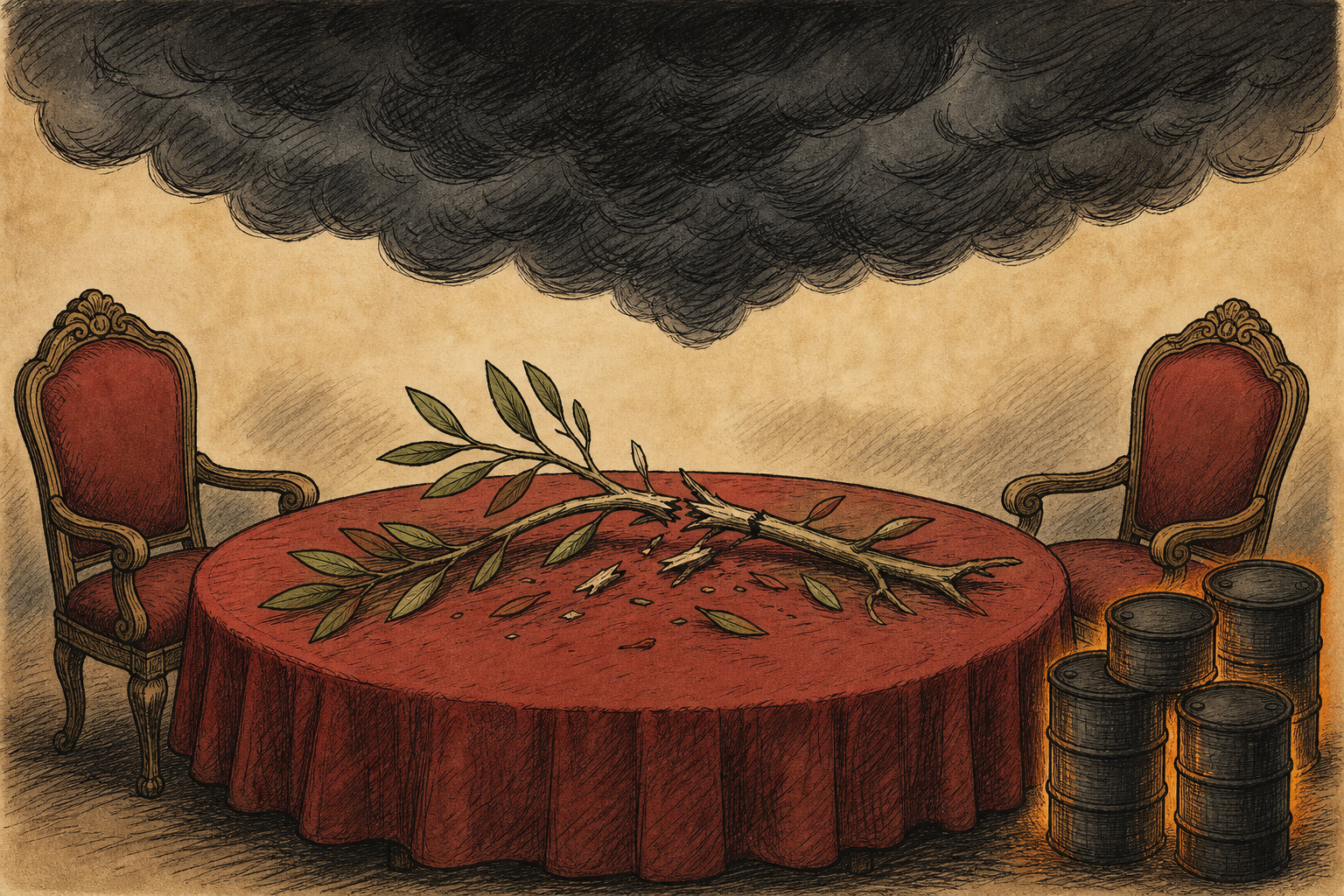
Russians are expecting fights among themselves for gas: "And so it begins - the most terrifying era of our bright near future. Hold tight, brothers. Soon the real carnage will start. The battle for gasoline. We'll be fighting our neighbors over a single canister..."
Ukraine cannot outbuild Russia’s army, so it went after the machine that fuels it. Cheap, long-range one-way drones — launched in waves of dozens — have hit refineries, fuel depots, and pumping stations from the Baltic to the Volga. Meduza’s count: 16 refineries targeted in May 2026 alone, six more in June, and by the end of May, every major refinery in European Russia had been struck at least once.
The individual outages compound. Kirishi — the KINEF plant, one of Russia’s largest at 20 million tons a year — has been fully offline since May 5. The Ryazan refinery suspended operations entirely on May 15. NORSI in Kstovo, the country’s fourth-largest refinery and second-largest gasoline producer, halted. Moscow’s own Kapotnya plant — which supplied roughly 40% of the capital’s fuel — was hit twice in June, on the 12th and the 18th, with repairs projected at three months or more. All three refineries that pipe fuel into Moscow have now been damaged.
The aggregate numbers are the kind Russia’s energy ministry used to publish proudly and now classifies. June crude processing fell to about 3.95 million barrels per day — down 25% year-over-year and the lowest in more than two decades, according to reporting cited by the Washington Times. Gasoline output is running roughly 20% short of domestic consumption, per Reuters estimates cited by Russian independent media. And the campaign has not paused: President Volodymyr Zelensky announced strikes on refineries in Krasnodar Krai and Yaroslavl Oblast overnight on June 28 — the same day Putin went on television to say the situation was under control.
For months the official line held that the fuel problem was Western fiction or routine maintenance. As recently as last October, Energy Minister Sergei Tsivilyov blamed spot shortages on “seasonal demand and scheduled refinery maintenance.” On June 28, at a televised meeting with government ministers, Putin abandoned the script.
“As for strikes against critical infrastructure in general, and energy infrastructure in particular, of course, these attacks on our infrastructure facilities create problems. That's obvious. Right now we're observing a certain shortage, but it's not critical.”
Vladimir Putin — televised meeting with ministers, June 28, 2026 (The Moscow Times; Ukrainska Pravda)
The admission came packaged with a promise: deliveries of AI-95 gasoline to occupied Crimea — where public fuel sales had been suspended outright a week earlier — within two days. The choreography is familiar to Kremlin-watchers: concede the smallest possible version of the problem, attach a deadline, and reframe a strategic failure as a logistics hiccup. But the concession itself was the news. As RFE/RL put it, these are the fuel shortages “the Kremlin can’t hide” — because they are visible at every pump, in every region, on every dashcam.
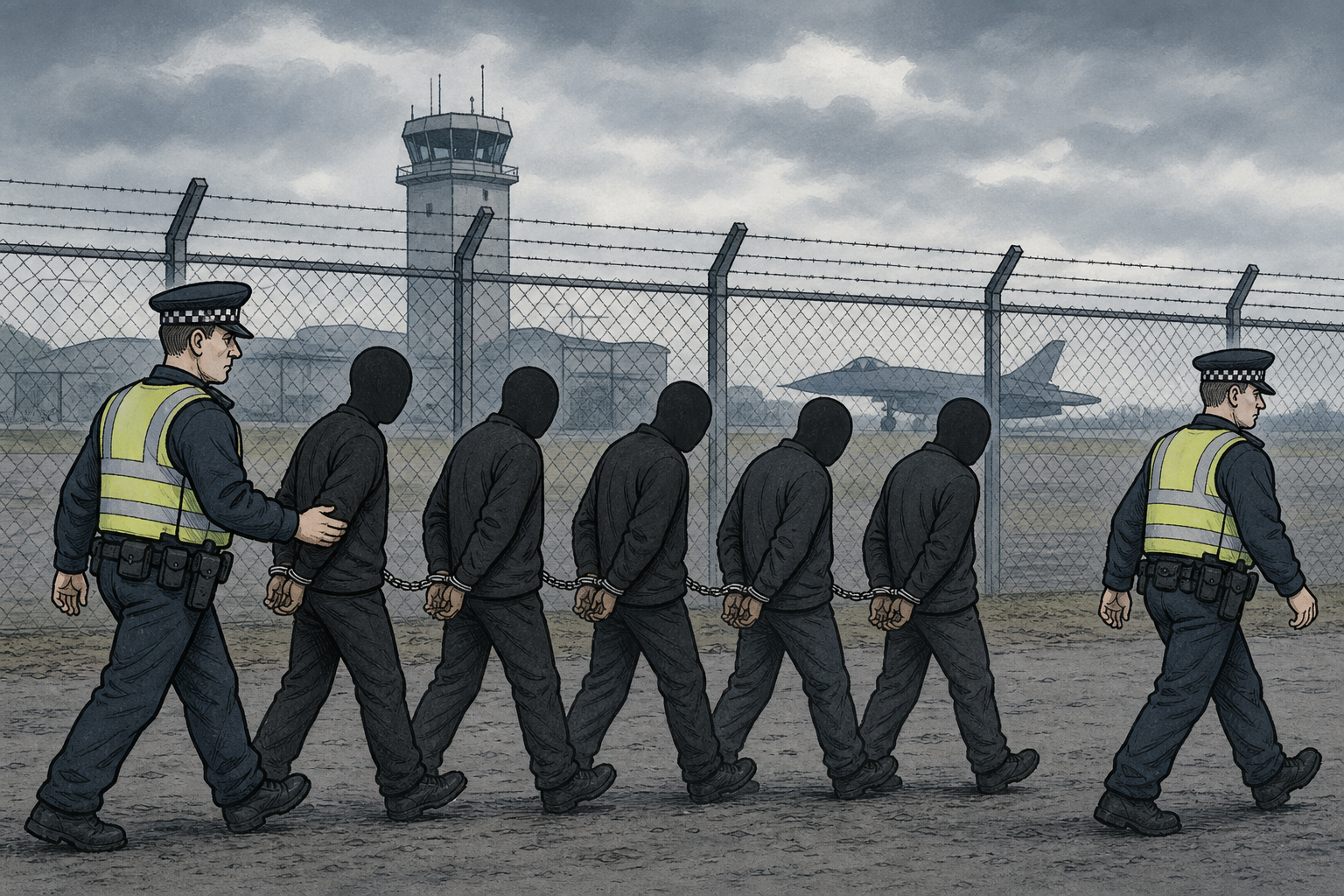
Mediazona’s June 26 survey mapped fuel-purchase restrictions across 56 Russian regions — two-thirds of the country — with 18 regions imposing government-mandated caps, most commonly around 30 liters per car per visit, and some as tight as 20 liters of gasoline or 50 of diesel. Two days earlier, a slightly narrower Moscow Times count had put it at 55 of 83 federal entities — two independent tallies converging on the same picture. In Chita, near the Chinese border, the mayor announced daily fuel limits for individual drivers; regional authorities advised residents to simply drive less.
Occupied Crimea got the harshest version: on June 21, the peninsula and Sevastopol halted all open fuel sales to the public, reserving supply for emergency services, police, and public transit. Prices did what prices do under rationing — Rosstat recorded Sevastopol pump prices up roughly 30%, while the national average climbed 9.8% in the first half of the year against official inflation of 5.85%, the worst run since 2011. In the week of June 16–22 alone, retail gasoline jumped 3% to 71.20 rubles (about $0.95) per liter — the biggest weekly increase in more than twenty years, per Bloomberg.
"There's no gasoline in Moscow... Moscow has no gasoline..." Russia, a 'gas station country,' is gradually turning into a country without gasoline or autogas.
The fuel crisis is not just a consumer story — it is a fiscal wound. Oil and gas receipts, the backbone of the federal budget, fell 45.4% year-over-year in the first quarter of 2026 and were down 30% for January through May, per Finance Ministry data reported by Meduza. The first-half budget deficit reached 6 trillion rubles — about 160% of the full-year target — six months into the year.
The policy responses have escalated in lockstep. Moscow re-imposed a gasoline export ban on producers on April 1, running through July 31. On June 23, Deputy Prime Minister Alexander Novak said the government was weighing a “total ban” on diesel exports on top of it. And in the detail that best captures the inversion: CBC reported that Russia — one of the world’s top oil producers — is now moving to import fuel. The gas station of the world, as Russia’s economy has long been described, is asking the neighbors for a fill-up.
Russia has been fighting aimlessly for three and a half years a War that should have taken a Real Military Power less than a week to win... it is very much making them look like 'a paper tiger.' Putin and Russia are in BIG Economic trouble, and this is the time for Ukraine to act.
Paraphrased commentary · not a verbatim post
Condensed from President Trump's (R) widely reported September 23, 2025 Truth Social post after meeting President Zelensky at the UN — the 'paper tiger' post that predicted exactly the economic squeeze now playing out at Russian pumps. Source: reporting by The Hill, Newsweek, Al Jazeera.
I am ready to do major Sanctions on Russia when all NATO Nations have agreed, and started, to do the same thing, and when all NATO Nations STOP BUYING OIL FROM RUSSIA.
Paraphrased commentary · not a verbatim post
From President Trump's (R) September 2025 Truth Social letter-post to NATO nations, conditioning major U.S. sanctions on allies ending Russian oil purchases. Source: reporting by Time, Reuters.
Wars are lost in fuel lines as often as in trenches. Russia still holds the front; its army still grinds forward in the east. But the home front is now visibly paying the war’s bill — in 13-hour queues, 30-liter caps, punches thrown on forecourts, and a president explaining on television that the shortage his ministers denied for a year is real, just not “critical.” Ukraine’s bet is that a petro-state that cannot fuel its own cars will eventually struggle to fuel its own war. The queues in Serov, Ryazan, and Irkutsk are the early returns on that bet.
• Roughly one-third of Russia’s refining capacity is offline; every major refinery in European Russia has been hit at least once. June crude processing was the lowest in 20+ years.
• 56 regions are rationing fuel; occupied Crimea halted public gasoline sales entirely on June 21. Pump prices are rising at nearly double the official inflation rate — the worst run since 2011.
• Putin admitted the shortage on June 28 — “a certain shortage, but it’s not critical” — after months of official denial. Oil-and-gas budget revenue fell 45.4% year-over-year in Q1 2026, and Russia is moving to import fuel.
- 1.Fox News — 'WATCH: Fights break out at Russian gas stations as Putin admits fuel shortages,' June 30, 2026
- 2.Fox News Video — 'Videos show Russians fighting at gas stations as Putin admits Ukraine strikes are causing fuel problems,' June 30, 2026
- 3.The Moscow Times — 'Putin Admits Ukrainian Strikes Driving Fuel Shortages,' June 29, 2026
- 4.CNBC — 'Putin admits Russia is facing fuel shortages as Ukraine's drone strikes hit refineries,' June 29, 2026
- 5.Ukrainska Pravda — 'Putin acknowledges fuel shortages and refinery damage from Ukrainian strikes,' June 29, 2026
- 6.RFE/RL — 'Ukraine's Strikes On Russian Refineries Spark Fuel Shortages The Kremlin Can't Hide,' June 2026
- 7.RFE/RL — 'The Only Thing They're Talking About: Russia's Fuel Crisis Reaches Deep Into The Regions,' June 2026
- 8.Mediazona — 'No more than 30 liters per car: mapping the fuel rationing now covering 56 Russian regions,' June 26, 2026
- 9.The Moscow Times — 'Regions Calling: As Fuel Crisis Widens, Russia's Regions Brace for the Worst,' June 25, 2026
- 10.Bloomberg — 'Gasoline Price Spike Adds to War's Economic Toll for Russians,' June 24, 2026
- 11.Bloomberg — 'Russian Gasoline Prices Rise Again After Ukraine Hits Refineries,' July 1, 2026
- 12.Meduza — 'Russia: gasoline and diesel prices rose again in late June, Rosstat data show,' July 2, 2026
- 13.Meduza — 'Ukrainian drones have struck nearly every major Russian refinery. Which facilities have yet to be hit?' June 29, 2026
- 14.Carnegie Endowment (Politika) — 'Russia's New Refinery-Strike Problem' (≈2.14M bpd — about one-third of refining capacity — offline in early June), June 2026
- 15.Kyiv Independent — 'Putin acknowledges gas station queues, fuel shortages as Russia works to stabilize supply,' June 28, 2026
- 16.Kyiv Independent — 'Oil refinery burns in Russia's Krasnodar Krai following Ukrainian attack,' June 28, 2026
- 17.The Moscow Times — 'Russia Bans Producers From Exporting Gasoline Until July 31,' April 2, 2026
- 18.The Washington Times — 'Drone attacks by Ukraine on oil refineries plunge Russia into summer fuel crisis,' July 1, 2026
- 19.The Insider — 'Putin promises to increase fuel supplies to Crimea amid rationing,' June 2026
- 20.CBC News — 'Russia, one of the world's top oil producers, is now moving to import fuel,' June 2026
- 21.Wikipedia — '2025–2026 Russian fuel crisis' (aggregated timeline of export bans, rationing, and refinery strikes)