Trump Pivots to ‘Low-Keying’ Iran as Tehran Tables Formal Demands to Reopen Hormuz.
- 5 days since Civic Intelligence's last dispatch, when Iran's Foreign Ministry was still denying any direct contact with Washington — CI coverage, Aug. 5, 2026; CBS News, Aug. 9-10
- 5 formal conditions Iran's Supreme National Security Council listed for reopening the Strait of Hormuz — NOTUS; Fortune, Aug. 8, 2026
- Semi-negotiating how President Trump himself now describes the US posture toward Iran, choosing economic pressure over new strikes — CBS News, Aug. 9-10, 2026
- $84.58 Brent crude's price per barrel as of Aug. 10 — moved on Iran's demands list and Trump's strategy shift — Al Jazeera, Aug. 10, 2026
- $79.28 WTI crude's price per barrel over the same session — Al Jazeera, Aug. 10, 2026
Five days ago, Civic Intelligence reported that the Dow had rallied on Iran-deal optimism while Tehran’s Foreign Ministry flatly denied that any direct talks with Washington were taking place. That denial has not survived the week.
On August 9, Iranian officials confirmed to reporters that “messages were being exchanged” with Washington through Omani intermediaries — still declining to call it negotiation, but no longer denying contact exists. A day earlier, Tehran had done something it hadn’t done in five months of closure: it put a specific, itemized list of demands on the record for reopening the Strait of Hormuz.
President Donald Trump (R) met that shift with one of his own. Days after floating that a deal could land “today or tomorrow,” he told Axios the US is now “low-keying” the conflict and “only semi-negotiating” — leaning on Iran’s cash crunch rather than ordering new strikes, while keeping the military option loaded in reserve.
The baseline is worth restating precisely, because the gap between it and this week is the story. On August 2, Iran’s Foreign Ministry spokesman said Tehran was “not currently negotiating with the United States.” Trump answered on Truth Social the same week, calling Iran’s leadership “unbelievably duplicitous.”
Iranian Leadership is unbelievably duplicitous!
Paraphrased commentary · not a verbatim post
Posted the same week Iran's Foreign Ministry publicly denied any direct talks with Washington were underway — the baseline CI's Aug. 5 story cited.
Secretary of State Marco Rubio (R) had already said on August 4 that progress had been made in the Oman-mediated channel “but not finality yet,” warning that any Iranian control over the waterway would set “a dangerous precedent.” That was the state of play when CI last covered this story: optimism on the US side, denial on Iran’s.
By August 9, the denial itself had changed shape. Iranian officials acknowledged that messages were moving through Omani channels — still resisting the word “negotiations,” but no longer disputing that contact was happening. Vice President JD Vance (R) had framed it a day earlier, on Fox News, as unfinished business rather than deadlock:
“I'm trying to remind people that we really are in the middle of the game here. This thing is not over.”
Vice President JD Vance (R), Fox News 'Saturday in America,' Aug. 8, 2026
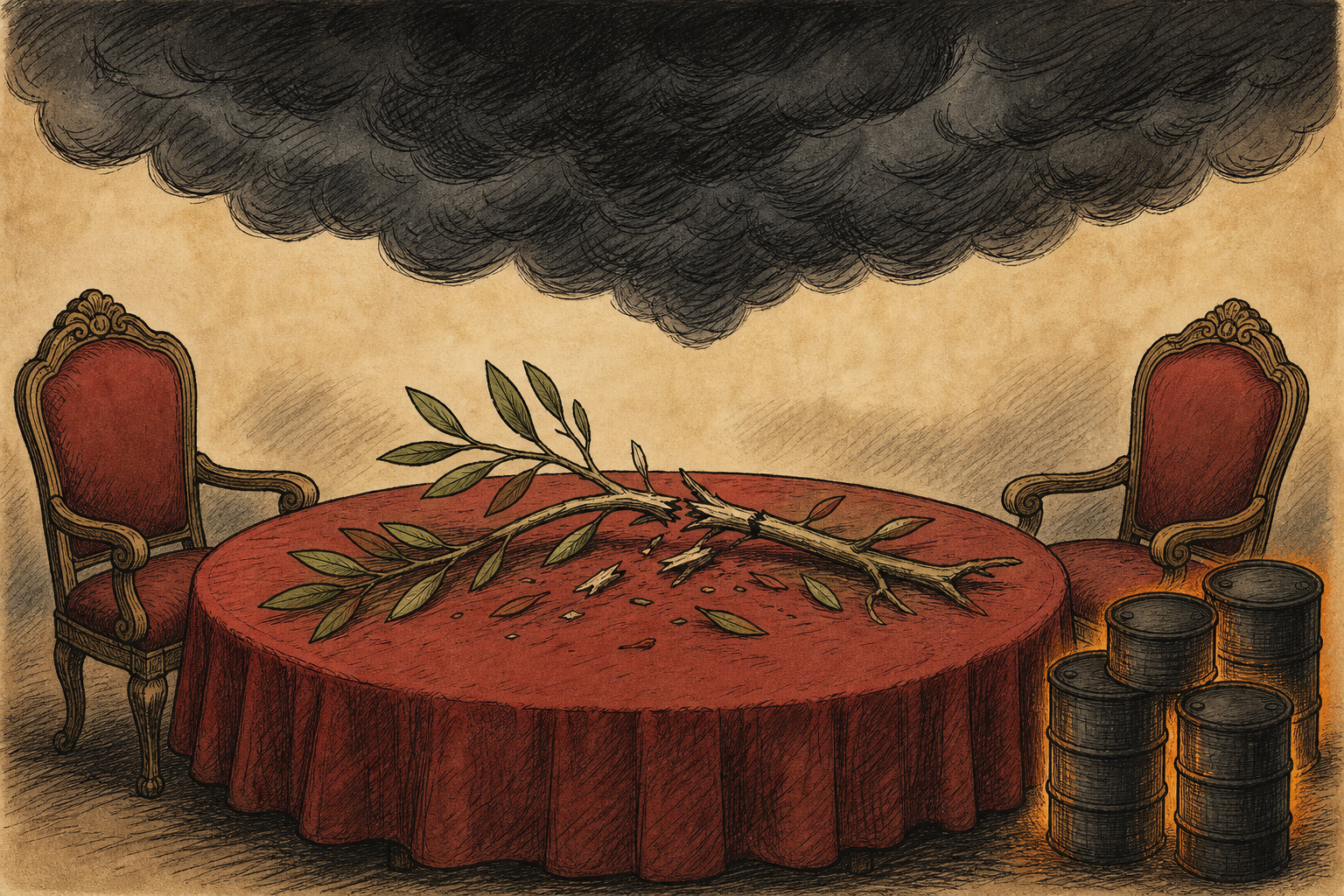
What changed on August 8 is what makes this week different from every prior round of Hormuz optimism: Iran finally said, specifically, what it wants. Mohammad Bagher Zolghadr, secretary of Iran’s Supreme National Security Council, listed five conditions for reopening the waterway — an end to hostilities against Iran and its allies in Lebanon, Yemen and Iraq; the lifting of the US Navy blockade in place since April; an end to sanctions; release of frozen Iranian assets; and compensation for what Tehran calls Washington’s violation of the June ceasefire memorandum.
Foreign Minister Abbas Araghchi described how close the narrower, Oman-brokered framework actually is, while making clear it doesn’t settle everything:
“Subject to other conditions and compensation for the violation [of the June ceasefire memorandum].”
Foreign Minister Abbas Araghchi, on the terms for full reopening
Iran’s military establishment drew its own line the same week. Gen. Hossein Mohebbi, the Islamic Revolutionary Guard Corps spokesman, said reopening the Strait is “completely separate” from the Oman talks and depends entirely on Tehran’s own conditions being met — a reminder that Iran’s negotiators and its military command aren’t necessarily speaking with one voice.
US and Iran have fundamentally different interpretations of the ongoing negotiations — the US delegation is pursuing a narrower deal than the full political and economic settlement Iran wants.
Trump’s response to Iran’s list, delivered to Axios on August 9, was a deliberate downshift from the “today or tomorrow” optimism he’d voiced days earlier. He is betting that Iran’s own economy will do more work than another round of strikes.
“We are only semi-negotiating with them. We are just watching Iran with its huge inflation and the fact they have no money.”
President Donald Trump (R), Axios interview, Aug. 9, 2026
Trump says 'we are only semi-negotiating' with Iran, per an Axios report on the President's latest remarks on the Strait of Hormuz standoff.
Oil markets moved on the shift. Brent crude rose to $84.58 a barrel and WTI to $79.28 on August 10 as traders priced in a longer standoff rather than an imminent reopening — the opposite direction from the sell-off that followed Treasury Secretary Scott Bessent’s (Trump administration) optimistic comments five days earlier.
Part of Trump’s leverage argument rests on what Iran is not demanding. Vance told Fox News that Iranian officials have privately signaled they have no plans to charge tolls for passage through the Strait — a concession of sorts, since a toll regime is the arrangement Tehran had floated repeatedly earlier in the standoff.
JD Vance on Iran: 'The Iranians have told us they have no plans to toll the Strait of Hormuz.'
Trump’s economic-pressure strategy comes with an explicit backstop, and this week is the first time reporting has tied it directly to the current impasse rather than treating it as a separate, standing threat. Trump has repeated his warning that the US would strike “Pickaxe Mountain,” the underground nuclear complex Iran maintains near Natanz, if talks collapse.
“We're going to eliminate Pickaxe Mountain. Tell the Iranians to be ready.”
President Donald Trump (R), remarks reported by the Jerusalem Post, Aug. 10, 2026
That is the frame Trump wants Tehran negotiating inside: economic squeeze now, with a named military target held in reserve if the Oman channel produces nothing. Rubio’s “dangerous precedent” warning from earlier in the week points at the same logic from the diplomatic side — letting Iran control the terms of reopening, he argued, is a concession the US shouldn’t make lightly, with or without a strike behind it.
This is not the first time a resolution has looked close. In mid-June, Trump declared on Truth Social that “the Deal with the Islamic Republic of Iran is now complete” and authorized the toll-free reopening of the Strait alongside removal of the Navy’s blockade.
The Deal with the Islamic Republic of Iran is now complete... I hereby fully authorize the toll free opening of the Strait of Hormuz.
Paraphrased commentary · not a verbatim post
An earlier announcement of resolution that did not hold — the naval blockade it promised to lift is the same one Trump now credits as leverage.
That blockade never came down. It is still in place as of this week, and Trump now describes it — alongside Iran’s inflation and its difficulty paying its own troops — as exactly the leverage his “semi-negotiating” strategy is built on. What’s genuinely new this week is not another prediction of an imminent deal. It’s that, for the first time, Iran has put its actual price on paper, and Washington has said plainly it isn’t paying it in full yet.
Five days after Iran flatly denied direct talks with Washington, Tehran has confirmed indirect contact through Oman and, for the first time, listed five specific conditions for reopening the Strait of Hormuz: an end to regional hostilities, the lifting of the April naval blockade, an end to sanctions, release of frozen assets, and compensation for the collapsed June ceasefire. Trump has answered by dialing back his own optimism, telling Axios the US is “only semi-negotiating” while betting Iran’s economic distress does the work — with a strike on Iran’s Pickaxe Mountain nuclear facility still on the table if the Oman channel fails.