OpenAI Asked the Public How AI Should Behave. Every Answer Stayed Optional.
- $1,000,000 OpenAI's total commitment to its 2023 “Democratic Inputs to AI” grant program — ten teams, $100,000 each, chosen from nearly 1,000 applicants — OpenAI, “Democratic inputs to AI,” May 25, 2023
- 1,000+ people OpenAI surveyed across 19 countries in August 2025 to compare public opinion with its Model Spec — the largest input round three years into the program — OpenAI, “Collective alignment,” Aug. 27, 2025
- 900M+ ChatGPT's weekly active users as of mid-2026 — the audience that August survey sampled at roughly one ten-thousandth of one percent — Noema Magazine, Hélène Landemore, Aug. 4, 2026
- $200,000,000 the Pentagon contract OpenAI signed in June 2025, the same year it ran its largest public-input survey, to prototype “frontier AI” for defense use — CNBC, June 16, 2025
- Zero binding commitments OpenAI has made to act on any public-input finding — every adoption decision remains the company's alone — TIME, Sept. 2023; Odyssean Institute, Sept. 29, 2025
On May 25, 2023, OpenAI announced it would pay ten teams $100,000 each to figure out how ordinary people could have a say in how ChatGPT behaves — a program it called Democratic Inputs to AI. Head of Global Affairs Anna Makanju framed the question the program was meant to answer: “What are the most viable mechanisms for giving people say in how these systems behave?”
Three years, a dedicated internal team, and at least one seven-figure research effort later, the fullest answer OpenAI has produced is a survey. In August 2025, the Collective Alignment team — the unit that grew directly out of that 2023 grant program — published results from a poll of roughly 1,000 people across 19 countries, compared their answers to its published behavior rulebook, the Model Spec, and adopted some of what they wanted changed.
What “adopted some of what they wanted” means is the entire argument. OpenAI decides which findings become policy. No participant, grant team, or outside reviewer has ever had the power to bind the company to anything the process produced.
OpenAI’s call for applications asked something genuinely open-ended: design, build, and test a democratic process — any democratic process — for deciding what rules an AI system should follow, within the bounds of the law. Applications closed at 9 p.m. Pacific on June 24, 2023; nearly 1,000 came in. Winners had to build a working prototype, test it with at least 500 participants, and publish a public report by October 20, 2023.
The ten winners, drawn from twelve countries, ranged from a chat-elicited “moral graph” for fine-tuning models to a DAO-style governance platform centering underserved communities to a joint effort between Taiwan’s citizen-deliberation platform vTaiwan and the London think tank Chatham House.
Source: OpenAI grant program materials, GitHub — github.com/openai/democratic-inputs
One team was led by Audrey Tang, Taiwan’s former digital minister, who had spent a decade before OpenAI came calling building the citizen-deliberation tools the company was now borrowing.
OpenAI’s own October 2023 write-up of what came back was candid about the limits. Teams that resurveyed the same people weeks apart found opinion moved “day-to-day.” Recruiting genuinely diverse participants across the digital divide proved a harder problem than any team fully solved. And distilling thousands of individual opinions into one coherent recommendation required exactly the kind of editorial judgment call that concentrates power rather than distributing it — the opposite of the stated goal.
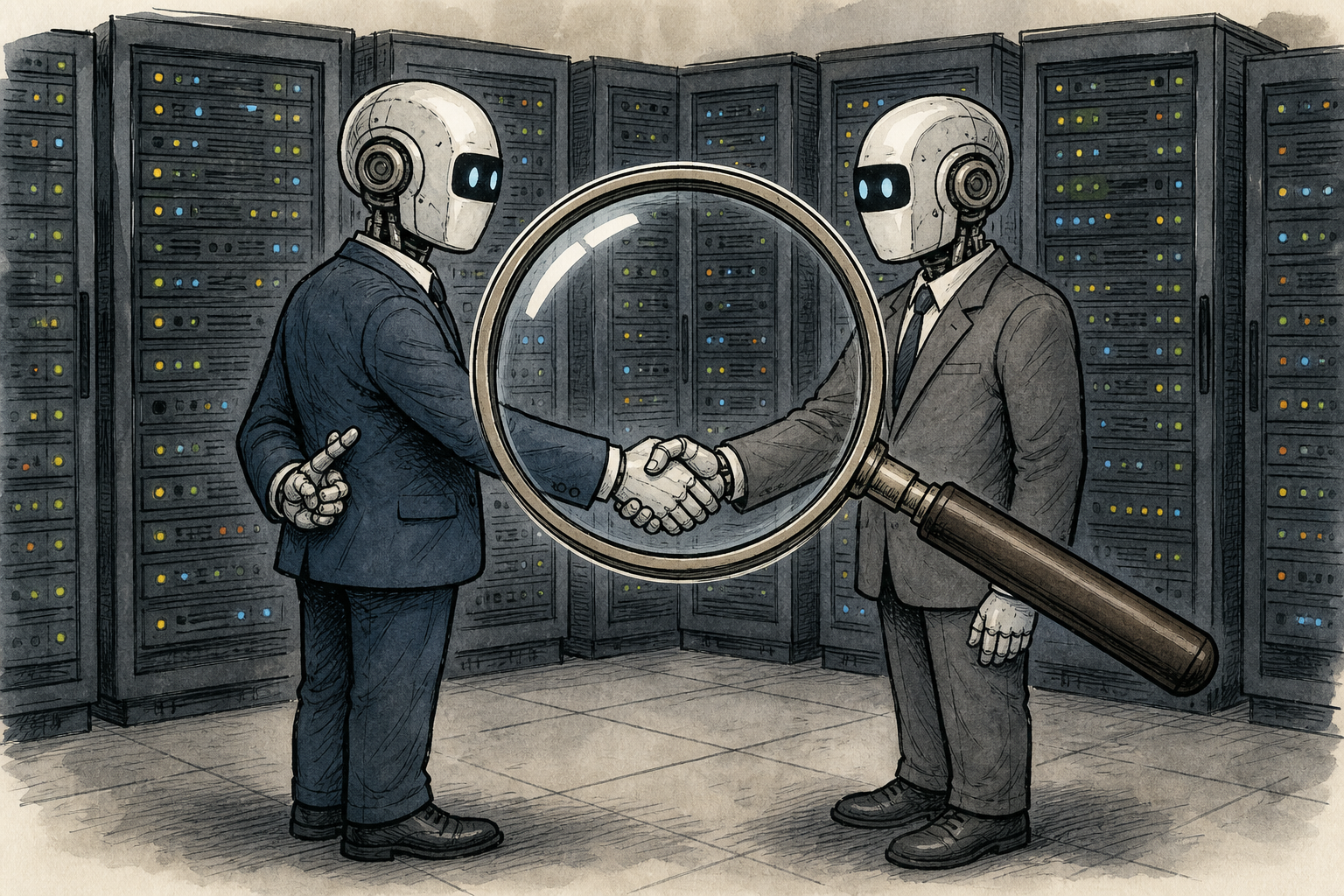
The clearest test of what “democratic input” buys came in August 2025, when Collective Alignment published its first head-to-head comparison of public opinion against the Model Spec. Researcher Tyna Eloundou announced the results directly:
No single person or institution should define ideal AI behavior for everyone. Today, we're sharing early results from collective alignment, a research effort where we asked the public about how models should behave by default.
The survey mostly confirmed what OpenAI had already written: participants largely agreed with the existing Model Spec. Where they diverged, OpenAI says it adopted some changes. But the single specific divergence the company has detailed in public runs the other way. Many participants said they wanted ChatGPT to generate more tailored, persuasive political content. OpenAI declined, citing the risk of large-scale individualized political manipulation — and noting it was not clear participants had weighed that risk themselves.
That single example captures the entire structure. OpenAI polled the public, the public gave an answer, and OpenAI overruled it — reasonably, on the merits of that specific case, but unilaterally all the same. Product manager Teddy Lee, who co-leads Collective Alignment, had described the team’s goal a year earlier as ensuring “a representative portion gets a say in how [AI models] behave.” The August results show that having a say and having a vote are not the same thing.
Every outside expert who has examined the program — including several OpenAI paid to advise it — arrives at the same distinction. Andrew Konya, founder of Remesh and one of the ten grant recipients, has called his own team’s safeguards “duct-tape remedies” that reduce failures statistically without eliminating them. Colin Megill, co-founder of the deliberation platform Polis and an early adviser to OpenAI on the program, says the company uses the word “democracy” more loosely than he would.
“Democracy is about constraints... The difference between a consultation and a referendum is one is advisory, and one is binding.”
Alex Krasodomski, Chatham House, via TIME, Sept. 2023
Academic reviewers who studied all ten grant projects directly reached a harsher formal conclusion. In a May 2025 paper in the journal Patterns, David Moats (King’s College London) and Chandrima Ganguly identified six unstated assumptions baked into the program’s design — that participation must scale to a single generic model, that opinions must resolve into consensus, that statistical representativeness substitutes for accountability — and concluded the exercise functioned as “participation washing.”
“We should not expect OpenAI ... to police or regulate itself.”
David Moats & Chandrima Ganguly, Patterns, May 2025
Researcher Jacob Haimes of the Odyssean Institute put the mechanism plainly: participation in OpenAI’s program “is purely advisory; governance power still lies with the lab itself,” making the entire effort “market research masquerading as a public good.” POPVOX Foundation co-founder Marci Harris reduced the same point to two words: without something binding at stake, it is “market research.”

CEO Sam Altman pitched the ambition behind all of this in a November 2023 interview: “We have a new ability to do mass-scale direct democracy that we’ve never had before,” he told TIME, describing a future where AI “can just chat with everybody and get their actual preferences.” OpenAI even published a mockup of a GPT-4-powered version of Konya’s Remesh platform, consulting a representative public sample and producing a policy document meant to represent “informed public consensus.”
Three years later, ChatGPT has more than 900 million weekly users. The survey behind the company’s most recent public Model Spec update sampled about 1,000 of them. Yale and Oxford political theorist Hélène Landemore, writing in Noema this month, called the gap the real story — not that OpenAI asked the wrong questions, but that it asked so few people:
“[OpenAI's Democratic Inputs to AI initiative] never amounted to anything close to what OpenAI's reach could support ... the infrastructure to ask hundreds of millions of people or more the same question in the same week already exists.”
Hélène Landemore, Yale/Oxford, Noema Magazine, Aug. 4, 2026
Divya Siddarth and Saffron Huang of the Collective Intelligence Project, whose “alignment assembly” methodology OpenAI has drawn on since the program’s first year, argue the deeper problem is that most of the tech industry “doesn’t think about democracy in terms of directly involving people in decisions” at all — treating public input as a data source to be sampled rather than an authority to be answered to.
The institutional apparatus around “democratic” AI has proven less durable than the surveys themselves. Collective Alignment survived a February 2026 reorganization that hit OpenAI’s separate, external-facing Mission Alignment team — formed in September 2024 to communicate the company’s mission internally and externally. Six or seven staff were reassigned; its leader, Joshua Achiam, was promoted to “chief futurist.” OpenAI called the move a routine reorganization.
OpenAI has been considerably less patient with outside critics who took its stated commitment to public accountability at face value. In August 2025, around the same time it was lobbying Gov. Gavin Newsom (D-CA) to soften a state AI transparency law, it subpoenaed Nathan Calvin, general counsel of Encode — a three-person AI-policy nonprofit that had helped write that law — demanding his private communications on the bill. Calvin went public with the subpoena that October.
The same year OpenAI ran its largest public-input survey to date, it also signed a $200 million Pentagon contract to prototype “frontier AI” for national-security use, and had its chief product officer, Kevin Weil, sworn in as an Army Reserve lieutenant colonel alongside executives from Meta and Palantir. Neither decision went out for public comment.
OpenAI’s own Model Spec documentation acknowledges the stakes directly: training models to decide which instructions to follow based on “OpenAI’s own view of what is good for society” would mean “adjudicating morality at a very broad level” — a power the company says it does not want and has not claimed. Newsletter analyst Carlo Iacono’s reading of that admission, alongside Anthropic’s parallel acknowledgment that its own AI Constitution gave employees “an outsized role” in setting model values: “The confession has been filed. No hearing has been scheduled. The systems continue to ship.”
OpenAI has spent three years and more than $1 million building an elaborate apparatus — a grant program, a dedicated internal team, a 1,000-person international survey — to ask the public how its AI should behave. On the one specific disagreement the company has detailed in depth, it heard what participants wanted and did the opposite. Every stage of the process remains advisory: OpenAI alone decides which findings become policy, and nothing produced by any of it legally binds the company to anything. The same year it ran its largest public-input round, OpenAI signed a $200 million defense contract and commissioned an executive into the Army Reserve — decisions that, unlike Model Spec wording, never went out for public comment at all.