The Day the US Closed an AI Model,
China’s Zhipu Opened One.
On July 11, Tang Jie — co-founder and chief scientist of Beijing-based Zhipu AI, and the Tsinghua University computer scientist behind its GLM model line — sent employees an internal memo titled “The Wave Has Arrived.” Bloomberg, which reviewed the letter, published its account the next day: the technical founder of China’s most prominent publicly traded AI lab told his staff that frontier AI should stay open to everyone, because “genuine safety is not built on technological closure and barriers, but on broad co-construction.”
The memo reads less like a mission statement than a victory lap over a single date. On June 13, the US government ordered Anthropic to cut off foreign access to its two most capable models, Fable 5 and Mythos 5. The same day, Zhipu released GLM-5.2 — a 744-billion-parameter model that roughly matches that class of system at about a fifth of the price — under an MIT license that lets anyone on Earth download it, modify it, and sell it.
Eighteen days later, Commerce Secretary Howard Lutnick reversed the order. Now Beijing is weighing whether to restrict overseas access to China’s own models, per Reuters — the American government closed a model, a Chinese company opened one, and China may close its champions’ models next. The open-versus-closed question at the heart of the AI race is being settled in real time, and so far not the way Washington planned.
- 744B parameters — in GLM-5.2, released June 13, 2026 under the MIT license — free for anyone to download, deploy, and commercialize · Source: CNBC; Zhipu release notes
- ~1/5 the cost — of comparable closed US frontier models, per posted per-token rates — RAND puts the broader Chinese open-weight discount at one-sixth to one-quarter · Source: CNBC; RAND
- 41% — of global Hugging Face model downloads (Feb 2025–Feb 2026) went to Chinese open-weight models, versus 36.5% for US models · Source: MIT Technology Review
- 18 days — between the US order restricting foreign access to Fable 5 and Mythos 5 and Commerce Secretary Lutnick's reversal of it · Source: Forbes
- +~1,328% — Zhipu's Hong Kong share price gain since its January 8, 2026 IPO, with market capitalization topping HK$1 trillion on June 22 · Source: Bloomberg TV; market data
The author matters. Tang Jie is not Zhipu’s chief executive — that is Zhang Peng, the other co-founder, who makes his own public case for open source. Tang is the chief scientist: the Tsinghua professor whose Knowledge Engineering Group spun out the GLM models that became Zhipu, known overseas as Z.ai. When the person who builds a frontier lab’s models writes to staff about strategy, it reads as doctrine, not marketing.
“Genuine safety is not built on technological closure and barriers, but on broad co-construction.”
Tang Jie, Zhipu co-founder and chief scientist — internal staff memo, July 11, 2026, via Bloomberg
The memo, translated in full by the newsletter Geopolitechs, frames openness as a safety argument, not a concession: more eyes on the weights, fewer surprises. Tang described GLM-5.2’s terms with a barb buried in the sentence — “Anyone can download, deploy, and commercialize it, with no restrictions based on entity type.” The phrase entity type is not an accident. Zhipu has sat on the US Commerce Department’s Entity List since January 16, 2025, added over concerns its technology could aid Chinese military modernization — a designation the company says “lacks a factual basis.” A blacklisted firm now distributes a frontier model with fewer restrictions than the American labs it competes with.
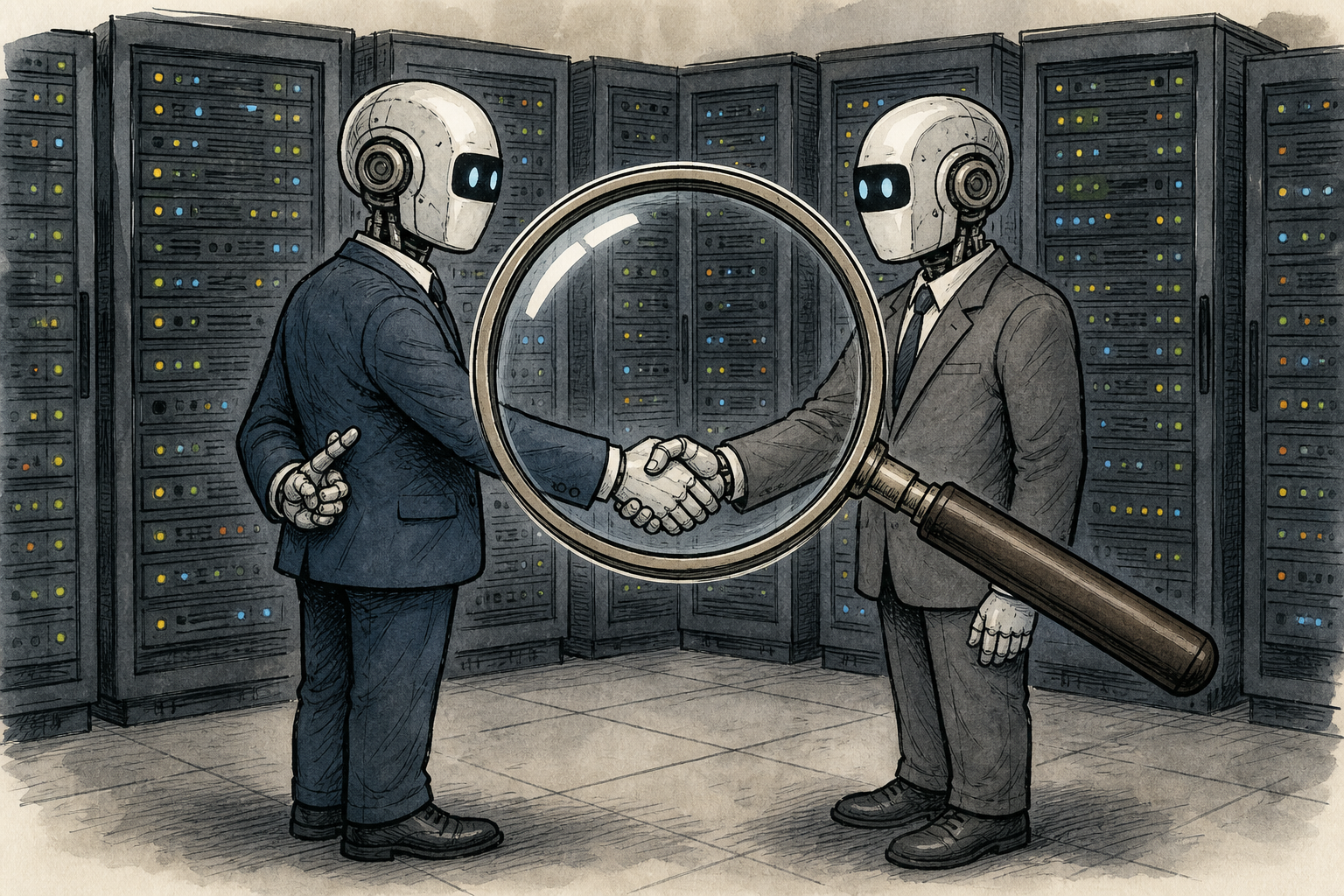
The date the memo celebrates deserves the scrutiny. On June 12, Anthropic launched Fable 5 and Mythos 5, its most capable models to date. On June 13, according to Bloomberg and Anthropic’s own statement, the US government ordered the company to disable access to both for foreign nationals. That same day, Zhipu published GLM-5.2’s weights: a 744-billion-parameter mixture-of-experts model with roughly 40 billion parameters active per query, a one-million-token context window, and an MIT license — the most permissive mainstream license in software.
The engineering carries its own geopolitical payload. Zhipu says the model was trained on roughly 100,000 Huawei Ascend 910B chips — zero Nvidia hardware — a direct answer to years of US export controls. GLM-5.2 benchmarks in the class of Claude Opus 5.7–5.8 and sits second on Code Arena’s front-end leaderboard, behind only Fable 5. OpenRouter lists it at about $1.40 per million input tokens and $4.40 per million output, against $5 and $30 for GPT-5.5 and $5 and $25 for Claude Opus — roughly a fifth of the cost of the systems it trails by single-digit margins.
June 12: Anthropic launches Fable 5 and Mythos 5, its most capable models to date.
June 13: the US government orders Anthropic to disable both models for foreign nationals, per Bloomberg and Anthropic’s statement.
June 13, same day: Zhipu open-sources GLM-5.2 — 744B parameters, MIT license, trained on 100,000 Huawei Ascend chips, no access restrictions of any kind.
July 1: Commerce Secretary Howard Lutnick reverses the licensing requirement after Anthropic agrees to a self-monitoring regime — 18 days after the order, per Forbes.
July 11–12: Tang Jie’s “The Wave Has Arrived” memo goes to staff; Bloomberg reports it the next day.
The American half of the ledger did not hold. On July 1, Lutnick lifted the requirement after Anthropic agreed to monitor its own deployments — a reversal Forbes’ Craig Smith headlined “Washington Blinked.” The wall stood for 18 days. The MIT license on the other side is permanent: published weights cannot be recalled by anyone — including, as it turns out, by Beijing.
Tang’s confidence rests on numbers that predate his memo. From February 2025 to February 2026, Chinese open-weight models took 41% of global Hugging Face downloads against 36.5% for US models, per MIT Technology Review — and Alibaba’s Qwen passed Meta’s Llama in cumulative downloads. On OpenRouter, where developers pay by the token, Chinese models served roughly 61% of all token traffic by May 2026. These are not sentiment surveys; they are usage meters.
The venture data points the same way. Martin Casado, the a16z general partner leading the firm’s case for American open-weight leadership, estimates 20–30% of startups pitching the firm build on open-source models — about 80% of those on Chinese ones, or roughly 16–24% of all pitches. RAND’s cost analysis explains why: Chinese models price at one-sixth to one-quarter of comparable US offerings, and its 135-country traffic study found them becoming the developing world’s default.
Of the startups pitching us, on the order of 20-30% are building on open-source models — and roughly 80% of those are building on Chinese open-source models. If that doesn't focus minds in Washington, nothing will.
The American open flank, meanwhile, has thinned. In April 2026, Meta’s Superintelligence Labs shipped its first frontier model, Muse Spark, as a proprietary release — Chief AI Officer Alexandr Wang closing Llama’s open era. OpenAI’s gpt-oss, released August 5, 2025 under Apache 2.0, remains the flagship US open-weight answer. The July 2025 White House AI Action Plan called for ensuring “America has leading open models founded on American values,” and former Trump White House AI czar David Sacks, now co-chair of the administration’s science advisory council, still argues open source is an American asset to win. A year on, the download charts say the open lane belongs to China.

Here the story stops being a simple open-beats-closed parable. On July 7, Reuters reported that China’s Ministry of Commerce has been talking with Alibaba, ByteDance, and Zhipu’s Z.ai about restricting overseas access to their most advanced models under a tiered framework — Beijing contemplating the same door-closing Washington just tried and abandoned. The result is a three-way contradiction: the US closed a model its own company built, a blacklisted Chinese company opened one, and the Chinese government may now close what its champions opened.
Zhipu now sits inside two export-control regimes at once: an American Entity List entry restricting what it can buy, and a prospective Chinese framework restricting what it can give away. Congress is building oversight machinery for models it cannot recall — a June 4 House Homeland Security subcommittee hearing on frontier models and cybersecurity wrestled with exactly that. Kyle Chan, the Brookings-affiliated China-industry researcher, argues the deeper point: China’s open-weight surge is industrial strategy working as designed, not an accident of licensing.
Chinese open-source AI models are only getting more attractive to the US as API costs for closed frontier models and token usage both surge.
The strongest case against Tang’s position deserves its strongest form, and it comes from Anthropic’s Dario Amodei: published weights cannot be patched, monitored, or withdrawn once a dangerous capability is discovered in them. In a June 2026 essay he proposed FAA-style pre-release evaluations for frontier systems — a regime that only works if models pass through a gate before release, which open publication bypasses entirely.
“Open source models could take us to a very dangerous place.”
Dario Amodei, CEO, Anthropic
The debate has even reached Elon Musk. When an X user asked when Chinese AI would match Anthropic’s best, Musk answered “Probably Q1 [2027]… even Q1 would be very impressive,” according to the South China Morning Post — and Tang Jie replied publicly with four words.
“Won't take that long.”
Tang Jie, replying to Elon Musk on X — exchange quoted via the South China Morning Post
Markets have rendered an interim verdict. Zhipu listed in Hong Kong on January 8, 2026 — the first foundation-model company to go public anywhere — raising about HK$4.35 billion (roughly $560 million) at a valuation near $9 billion. After GLM-5.2, the stock jumped 42% in a session on June 22, pushing its market value past HK$1 trillion, up roughly 1,328% from its debut; a second listing on Shanghai’s STAR Market, targeting about 15 billion yuan, is in the pipeline. The revenue underneath is small but steep: 724 million yuan (about $105 million) in 2025, up 132%, API revenue up 293%, more than 12,000 enterprise clients including nine of China’s ten largest internet firms. Analysts project roughly 3.54 billion yuan for 2026 — a 389% jump, though that is an analyst estimate, not company guidance. The next test comes fast: the World Artificial Intelligence Conference opens in Shanghai on July 17, a stage China’s open-weight labs now headline.
On a single June day, Washington locked its best models behind a door and Zhipu threw its own door off the hinges. The American order lasted 18 days; the MIT license is forever. With Chinese open-weight models at 41% of global downloads, roughly 61% of OpenRouter traffic, and a fifth of the price of their closed rivals — and Beijing now weighing walls of its own — the open-versus-closed argument is no longer a philosophy debate. It is a market share table, and the side Tang Jie bet on is currently winning it.