
In California, a $104,200 Salary Is Now Officially “Low Income.”
A single person in Orange County, California, can now earn up to $104,200 a year and still qualify as “low income” for state housing assistance. That figure is not a typo or a partisan talking point. It is the official 2026 income limit published by California’s Department of Housing and Community Development, effective May 29, 2026.
The number jumped from $94,750 a year earlier — a single-year increase of nearly $9,450. And Orange County is not alone. Four Bay Area counties carry “low income” thresholds in the same six-figure neighborhood, the byproduct of a housing market so expensive that the federal and state formulas have to bend a six-figure salary down to “needs help.”
This is a measurement, not an accusation — the limits are calculated by formula, not invented by any one official. But the formula is reading a real condition, and the condition is the story: in the nation’s most expensive housing market, a wage that would buy a comfortable middle-class life almost anywhere else now reads, on paper, as poverty-adjacent. That is the cost of living crisis stated in the government’s own arithmetic.
- $104,200 — the 2026 “low income” limit for a one-person household in Orange County — the official state threshold for housing assistance · Source: California HCD; LAist
- $94,750 — the same one-person Orange County limit a year earlier — a jump of nearly $9,450 in twelve months · Source: California HCD
- ~$95,000 — roughly the median household income in Orange County — meaning the “low income” ceiling now sits above the typical household · Source: U.S. Census Bureau QuickFacts
- ~1/3 — the share of the new $104,200 limit that a full-time minimum-wage worker actually earns · Source: California HCD; CA Dept. of Industrial Relations
- 4 Bay Area counties — also carry $100k-ish “low income” thresholds; six-figure salaries stretch least in San Francisco and Oakland · Source: California HCD; LAist
California’s Department of Housing and Community Development (HCD) publishes income limits every year. They set who qualifies for income-restricted apartments, down-payment programs, and other housing assistance. The 2026 tables, effective May 29, put the “low income” ceiling for a single-person household in Orange County at $104,200 — up from $94,750 the year before. The limits scale with household size, so a family’s ceiling is higher still.
HCD does not pull these numbers from thin air. They are derived from the federal income limits the U.S. Department of Housing and Urban Development (HUD) sets each year, then adjusted under state law. The mechanism is technical; the result is not. When the formula has to call a six-figure salary “low income,” it is telling you something concrete about how far a dollar travels in that county.

The trick is that “low income” is a relative measure, pegged to an area’s median income and then squared against its housing costs. In a county where the median home price runs well over a million dollars, the income needed to be considered comfortable rises with it — and the threshold for “needs assistance” rises right behind. So the same $104,200 that would make you solidly middle class in most of the country gets recategorized in Orange County, not because the worker changed, but because the rent did.
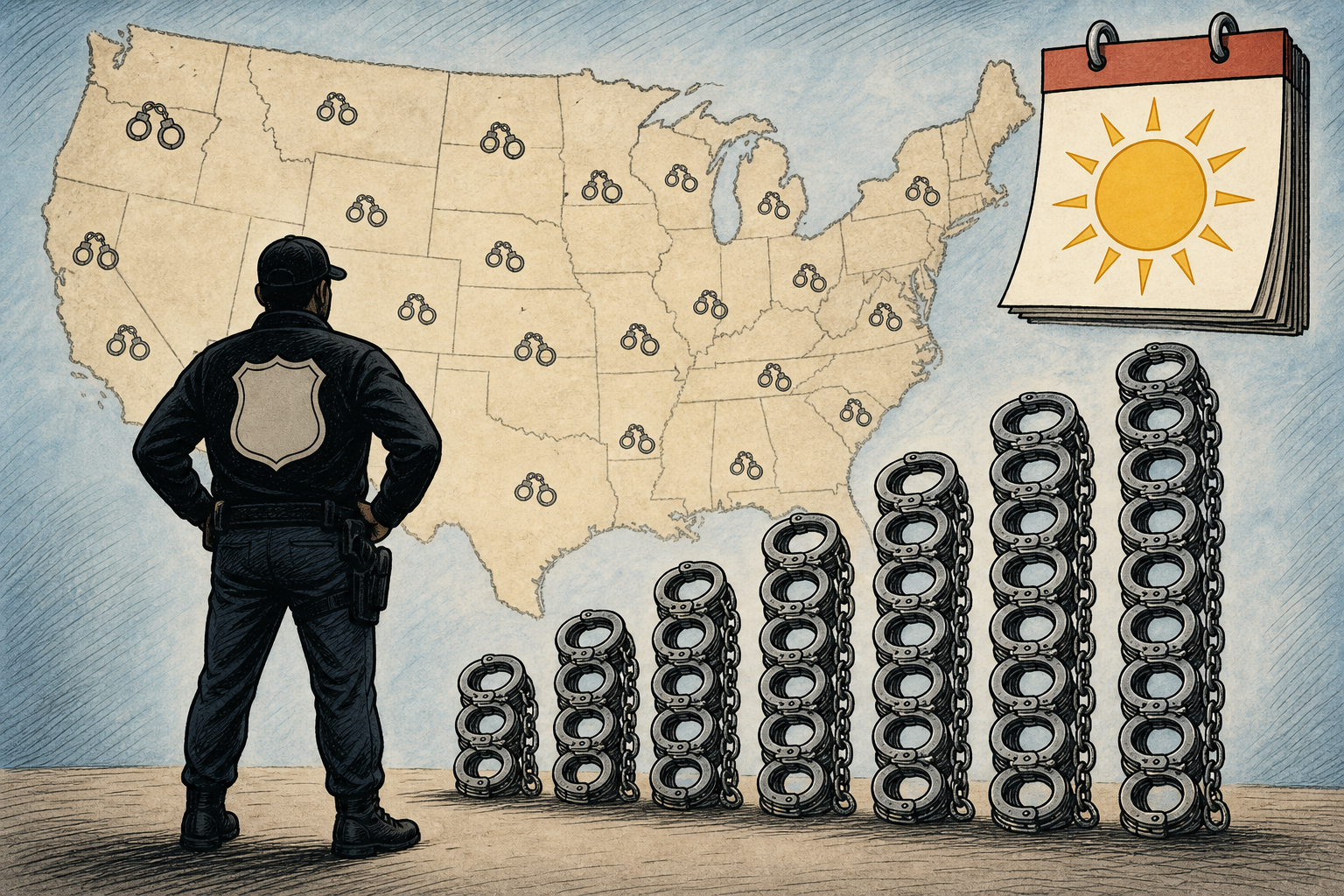
Put the figures side by side and the gap is stark. Orange County’s median household income sits around $95,000 — which means the “low income” ceiling of $104,200 now floats above what a typical household actually brings home. A full-time minimum-wage worker, by contrast, earns only about a third of that limit. The same label is being stretched across an enormous range of real lives.
“In the country's most expensive housing market, a six-figure salary now reads, on paper, as poverty-adjacent.”
The Civic Intelligence Read
Orange County made the headlines, but the pattern runs up the coast. Four counties in the San Francisco Bay Area carry “low income” thresholds in the same $100,000 range, according to the 2026 limits. By the analysis of where a six-figure paycheck buys the least, San Francisco and Oakland top the list — the cities where $100,000 stretches the shortest distance in the country.
This is the throughline of California’s housing story: the most economically dynamic regions in the state — the ones generating the high salaries in the first place — have housing so scarce and so expensive that the high salaries don’t keep up. The income limits are simply the receipts.

The income limit is a number HCD calculates; it is not a policy choice in itself. But the housing scarcity it measures is a policy outcome, and the state’s chief executive, Gov. Gavin Newsom (D-CA), presides over the record. California’s own Legislative Analyst’s Office has long documented the core problem: the state has built far too little housing for decades, and the resulting scarcity is the single largest driver of its sky-high costs. Layered regulation, slow permitting, and environmental-review litigation are repeatedly identified as constraints on supply.
Naming the responsibility here is not the same as asserting that any official caused the precise $104,200 figure. The honest framing is narrower and harder to dodge: the cost of living crisis that the formula is registering did not appear overnight, and it sits under the leadership of a state government that has governed the housing market for a generation. The number is a verdict on that record, written in the state’s own tables.
For the people living it, the redefinition cuts two ways. On paper, it expands who can qualify for housing assistance — a nurse, a teacher, or a mid-career professional earning near six figures may now be eligible for income-restricted units they’d never have imagined applying for. That is the system trying to keep up with reality.
But the deeper meaning is the warning inside the number. When a $104,200 salary qualifies as “low income,” the middle of the middle class has been redefined downward by housing costs. The assistance is a patch on a wound the formula keeps measuring and the housing supply keeps failing to close.
In Orange County, a single person can now earn up to $104,200 a year and still qualify as "low income" for housing assistance — up from $94,750 last year, under California's 2026 state income limits.
Making less than $100K in Orange County? Under California's 2026 income limits, a six-figure salary may now qualify you for low-income housing — a stark measure of the region's cost-of-living crisis.
The headline is real and the math is the state’s own: in Orange County, $104,200 is now “low income,” and four Bay Area counties sit in the same range. The fair caution is that this is a formula-driven measurement, not a single official’s decree, and it does not by itself prove who is to blame for any one figure. The fair conclusion is harder to wave away: a cost-of-living crisis severe enough to recast a six-figure salary as poverty-adjacent is a verdict on a generation of housing policy — and it is the people earning those salaries, not the officials who set the rules, who are living the gap.

- 1.LAist — 'In Orange County, Six-Figure Salaries Now Qualify as "Low Income"' (primary local report), June 2026
- 2.California Department of Housing and Community Development — State and Federal Income Limits (official 2026 limits), effective May 29, 2026
- 3.California HCD — 2026 State Income Limits (primary PDF)
- 4.California HCD — Income Limits Filing 2026 (memorandum, primary PDF)
- 5.HUD USER — FY2026 Income Limits Datasets (federal source HCD derives from)
- 6.Nelson Mullins — 'HUD Releases 2026 Income Limits' (affordable-housing analysis)
- 7.Fox News — '$104,200 Salary in Orange County, California Considered "Low-Income" by State Officials,' June 2026
- 8.Long Beach Post — 'In Orange County, Six-Figure Salaries Now Qualify as "Low Income",' June 2026
- 9.U.S. Census Bureau — QuickFacts, Orange County, California (median household income reference)
- 10.California Department of Industrial Relations — Minimum Wage (state hourly minimum reference)
- 11.California Legislative Analyst's Office — California's High Housing Costs (causes and the supply gap)
Last updated June 20, 2026