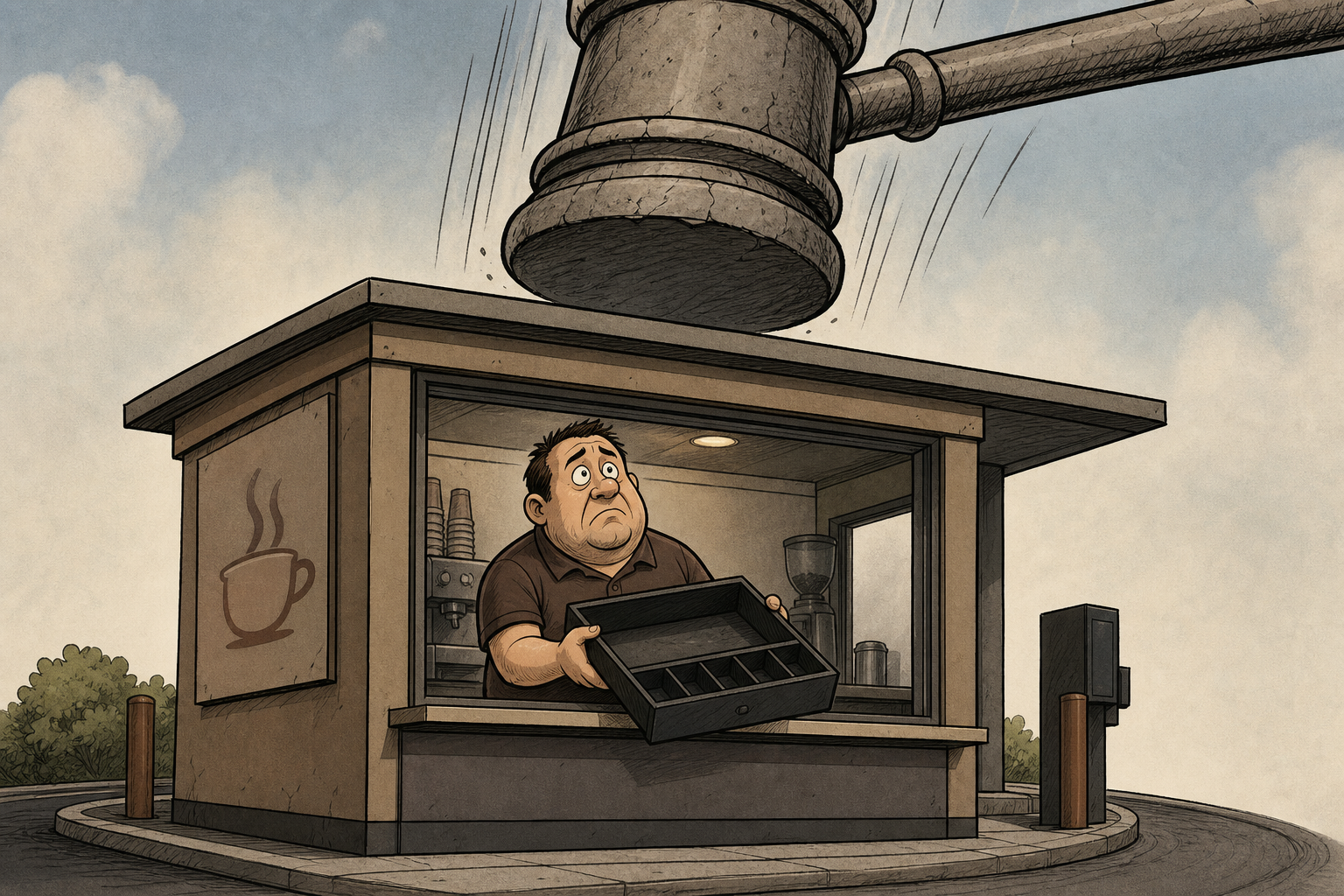
A Federal Judge Says a McRib Lawsuit Can Proceed. Federal Labeling Rules Don't Spell Out What 'Rib' Must Mean.
Tuesday, November 3, 2026. A federal judge in Chicago ruled on Friday, October 30, that a proposed class action accusing McDonald's of deceiving customers about its McRib sandwich can go forward, per Reuters. The plaintiffs say the patty is a rib-shaped mold of pork scraps that contains no rib meat. McDonald's says the sandwich is 100 percent pork and the claims are meritless.
It sounds like a joke lawsuit. The legal question is not: how much of a food's name a company may use without the food matching it, and who decides.
- Oct. 30ruling dateU.S. District Judge April Perry, N.D. Ill., partly denied McDonald's motion to dismiss; some claims were dismissed, per Reuters.
- 16counts in the complaintFraud, negligent misrepresentation, warranty and state consumer-protection claims, per FindLaw; filed Dec. 23, 2025.
- 4named plaintiffsFrom New York, Chicago, California and D.C.; they seek a nationwide class of buyers over four years, per FindLaw.
- 0federal definitions of 'rib' found in USDA's labeling policy bookOur search of the policy book PDF; see below.
The complaint, filed December 23, 2025 in the Northern District of Illinois, alleges the McRib is made from restructured pork, which the plaintiffs describe as ground portions of pork shoulder, heart, tripe and scalded stomach, shaped to look like a rack of ribs. Those are allegations; McDonald's says the sandwich contains no hearts, tripe or stomach. It uses “100% pork sourced from farmers and suppliers across the U.S.,” the company said.
Judge Perry did not decide what is in the patty. She decided that McDonald's argument, that no reasonable consumer would expect rib meat in a sandwich called McRib, was premature at this stage. Reuters quotes her: “Plaintiffs' proffered understanding of 'McRib' is not unreasonable or fanciful.” She noted McDonald's website describes the sandwich only as pork and said advertising that stresses the rib-like shape could support an intent-to-defraud claim, with more proof needed.
“Plaintiffs' proffered understanding of 'McRib' is not unreasonable or fanciful.”
U.S. District Judge April Perry, N.D. Ill., Oct. 30, 2026, per Reuters

Meat and poultry products are regulated by the Agriculture Department's Food Safety and Inspection Service, which publishes a policy book of standards for how foods may be labeled. In a search of that book we found no standard of identity for the word “rib” as part of a brand name. A 2013 FSIS rule also moved most meat and poultry labels to generic approval, without prior federal sign-off, per the Federal Register. Where Washington is silent, consumer-protection suits under state law do the work, which is why four plaintiffs from four jurisdictions are pressing California, New York, Illinois and D.C. claims.
The plaintiffs ask for class certification, damages, an injunction against the marketing, and an order changing the name, per FindLaw. Class certification has not been decided. Thiago Coelho is named as counsel in the Reuters report; his firm is not named in the sources we read.
Outcomes in food-name suits vary. Subway's tuna suit ended in 2023 when the lead plaintiff dropped it, and the chain could not recover its costs, per Bloomberg Law. A Whopper-size advertising suit against Burger King, however, survived dismissal in the Southern District of Florida, per NBC News. Perry’s reasoning, that ads stressing the rib shape could support intent to defraud, fits the cases that survive: marketing, not only a name, is alleged to mislead.

The next step is discovery, where the plaintiffs will seek ingredient and advertising records and McDonald's will argue buyers know what the sandwich is. We could not read McDonald's own ingredient page, which blocked our request, and so do not state the formula here.
Decided: the case survives McDonald's motion to dismiss, in part; some claims were dismissed.
Alleged, not proven: that the McRib contains offal and no rib meat, and that the name and marketing deceive.
Unknown: which claims survived, the docket number, and whether a class will be certified.
A judge has said the plaintiffs' reading of “McRib” is not unreasonable. The case will not be settled by the name, but by what McDonald's advertising told buyers and what the patty contains.