$175.8 Million to Keep China
Off the Caribbean’s Undersea Cables.
Nearly $500 Million More Is on the Table.
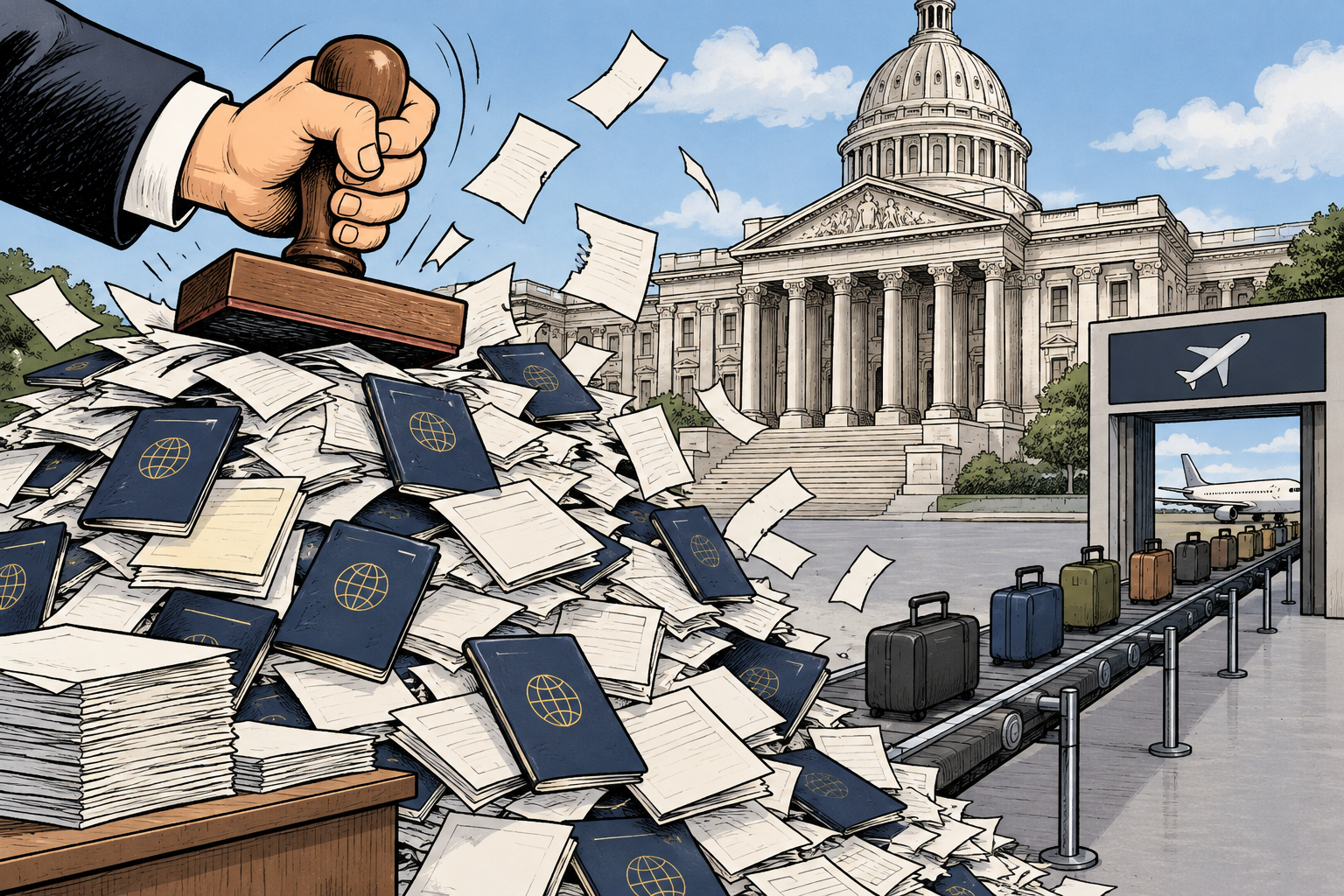
On July 21, 2026, the State Department formally notified Congress that it intends to spend $175.8 million replacing aging undersea telecommunications cables across five Caribbean and Central American nations — money aimed squarely at keeping Chinese firms from wiring the region’s phone and internet traffic.
It’s the most concrete piece of a far larger push. Internal planning documents reviewed by the Associated Press describe more than $340 million earmarked for over 50 anti-China projects worldwide, and nearly $500 million more under discussion — arriving the same week Secretary of State Marco Rubio (R) met China’s top diplomat in Manila to lay groundwork for a Trump-Xi summit expected in September.
- $175.8M for the "Countering CCP Control of Caribbean and Central America Undersea Cables project," formally notified to Congress the week of July 21, 2026 — State Dept. notification via AP/PBS NewsHour
- $340M+ planned across 50+ specific anti-China projects worldwide, per an internal State Department planning document — AP/PBS NewsHour
- ~$500M total under consideration across the Western Hemisphere, Africa, and Asia — officials caution most of it remains unobligated — AP/PBS NewsHour

The notification itself is narrow and specific: $175.8 million for the “Countering CCP Control of Caribbean and Central America Undersea Cables project,” sent to the relevant congressional committees the week of July 21, 2026. Under the Foreign Assistance Act and the annual State-Foreign Operations appropriations law, the executive branch must notify Congress before obligating foreign-assistance funds above set thresholds — a routine procedural step that gives lawmakers a window to raise objections before money moves, per the Congressional Research Service. The money doesn’t lay cable directly; it funds host governments in El Salvador, Guatemala, Honduras, Nicaragua, and Haiti as they partner with private-sector installers to replace outdated lines with what the notification calls “secure, U.S. and trusted alternatives.”
“China's economic activities in the Western Hemisphere pose risks to U.S. national security and prosperity.”
State Department official · quoted by the Associated Press · July 2026
The cables are the latest front in a pattern that’s been building for more than a year: opposition to Chinese ownership tied to ports at either end of the Panama Canal, scrutiny of Belt and Road-financed infrastructure across the region, and now the physical wiring that increasingly carries mobile banking, government records, and everyday internet traffic in economies that can’t always match Beijing’s financing terms. AP’s reporting frames the cable project as an attempt to make sure the replacement bid comes from a U.S. or allied vendor before a Chinese state-linked firm can win it by default.
The cable notification is the most concrete line item in a much longer list. A separate internal State Department planning document reviewed by AP lays out more than $340 million earmarked for over 50 specific anti-China projects spanning Latin America, Africa, and Asia — including security operations centers in Argentina and Belize built to monitor Chinese threats to critical infrastructure and cyber platforms, plus critical-infrastructure protection work in Ecuador, Jamaica, Mexico, Paraguay, Peru, and Uruguay.
A second internal document puts the full universe under consideration at nearly $500 million across the Western Hemisphere, Africa, and Asia combined. Officials cautioned AP that most of that figure remains in the discussion phase — identified as a priority, not yet obligated to a specific country or contractor. The planning document’s own language is blunt: “The United States must respond to the CCP’s growing economic, technological, and diplomatic leverage around the world which undermines our national interests.”
The list extends well past cables and security centers. AP’s document review also found line items aimed at countering Chinese firms’ export of surveillance and censorship technology to third countries, opposing international support for China’s space program, and developing what the document calls “proprietary technology to ensure secure communications and information collection” intended to prevent Chinese Communist Party interference in the succession process for the next Dalai Lama — a live diplomatic flashpoint as the 91-year-old Tibetan spiritual leader’s eventual successor becomes a subject of competing claims between Beijing and the Tibetan exile government. A senior U.S. official confirmed the administration’s intent to increase funding across the board while reiterating that the largest-dollar items remain proposals, not commitments.
The cable notification landed within days of Secretary of State Marco Rubio (R) sitting down with Chinese Foreign Minister Wang Yi in Manila on July 22, 2026, on the sidelines of the ASEAN Foreign Ministers’ Meeting. The roughly 90-minute meeting focused on laying groundwork for a visit to Washington by Chinese President Xi Jinping that President Trump has flagged for around September 2026 — a summit both governments are treating as the year’s marquee event in the relationship.
The backdrop wasn’t entirely friendly. Rubio’s meeting came amid a fragile truce complicated by Trump’s recent accusations of Chinese meddling in U.S. elections, which Beijing denied, and a maritime confrontation near Second Thomas Shoal in the South China Sea, where the Philippine military said a sailor was injured after being struck by a China Coast Guard officer. Chinese Foreign Ministry spokesperson Lin Jian, addressing Washington’s broader economic posture toward Beijing, said: “Turning it into a political or security issue will only disrupt international market rules.”
Running new counter-China funding and open diplomatic channels on parallel tracks isn’t new for Washington’s China policy; it has spanned multiple administrations. The House Select Committee on the Chinese Communist Party, chaired by Rep. John Moolenaar (R-MI) with Rep. Raja Krishnamoorthi (D-IL) as ranking member, has not issued a public statement specific to this spending as of this writing.
The pipeline traces back further than this month. Counter-China programs were authorized and partly funded under the Biden administration in 2024 and 2025. In early-to-mid 2025, the Department of Government Efficiency’s budget and personnel cuts froze a number of USAID-adjacent counter-China programs before that money reached the field. In May 2026, the State Department separately notified Congress of several hundred million dollars in remaining 2024-appropriated spending — funds that had been paused, not new money. The undersea-cable notification and the Rubio-Wang Yi meeting, six days apart in July, mark the first clear public sign that the administration intends to add fresh funding rather than simply release what was already on the books.
AP’s reporting on both internal documents surfaced on July 27–28, 2026, and was carried within a day by PBS NewsHour, the Philadelphia Inquirer, The Hill, Fortune, and BNN Bloomberg. A Trump-Xi summit remains expected around September 2026, though neither government has announced a fixed date.
$175.8 million is real, notified, and headed to five specific countries. The $340 million-plus in named projects and the nearly $500 million in broader consideration are not yet money in hand — officials describe most of it as still in the planning stage. What is confirmed is that Washington is expanding counter-China funding and preparing the diplomatic groundwork, through Rubio’s Manila meeting with Wang Yi, for a Trump-Xi summit expected around September. Both tracks are moving at once, not in sequence.