A Minnesota Prison Sat Empty for Sixteen Years. Now It’s an ICE Detention Center, and Mike Lindell Calls It “One Hundred Percent… a Good Thing.”
The Prairie Correctional Facility in Appleton, Minnesota has sat dark since 2010 — a 1,600-bed prison the city built, CoreCivic bought, and the state stopped needing. On August 4, CoreCivic announced ICE was finally moving in: a five-year contract worth an estimated $75,000,000 a year, with detainees arriving by year’s end. A day later, CoreCivic announced something bigger — it had sold the building outright to the Department of Homeland Security for $495,600,000.
Reached by phone, Trump-endorsed Republican governor candidate Mike Lindell told the Washington Examiner exactly where he stood: “One hundred percent it’s a good thing.” His reasoning wasn’t abstract — he wants Minnesota to move criminal illegal immigrants already sitting in state prisons into the new federal facility, and he put a number on what he says that’s costing taxpayers now.
Gov. Tim Walz (D-MN) and his own corrections commissioner say the deal shouldn’t be happening at all — and note that Minnesota passed a law in 2023 banning exactly this kind of private prison. It just doesn’t apply to Washington.
- 1,600 beds capacity of the Prairie Correctional Facility once ICE operations fully ramp up, a state prison sitting dark since 2010 — CoreCivic contract announcement
- $495,600,000 the price CoreCivic sold the Appleton building to the Department of Homeland Security, one day after signing the operating contract — CoreCivic / GlobeNewswire
- $75,000,000 CoreCivic's projected annual revenue once the facility is fully staffed, under a management deal now running through August 2031 — CoreCivic press release
- 450 jobs the reopening promises the region, according to the facility's biggest legislative booster — State Sen. Torrey Westrom (R-Alexandria)
The city of Appleton built the Prairie Correctional Facility in 1992. CoreCivic (then Corrections Corporation of America) bought it in 1997 and expanded it to 1,600 beds, filling it with out-of-state inmates from Puerto Rico, Colorado, Idaho, Wisconsin, Hawaii, and Washington. In 2010, Minnesota’s own Department of Corrections stopped sending it prisoners — the state had built its own capacity elsewhere — and the building went dark. It has sat empty in Swift County, population roughly 1,400 in the city itself, for sixteen years.
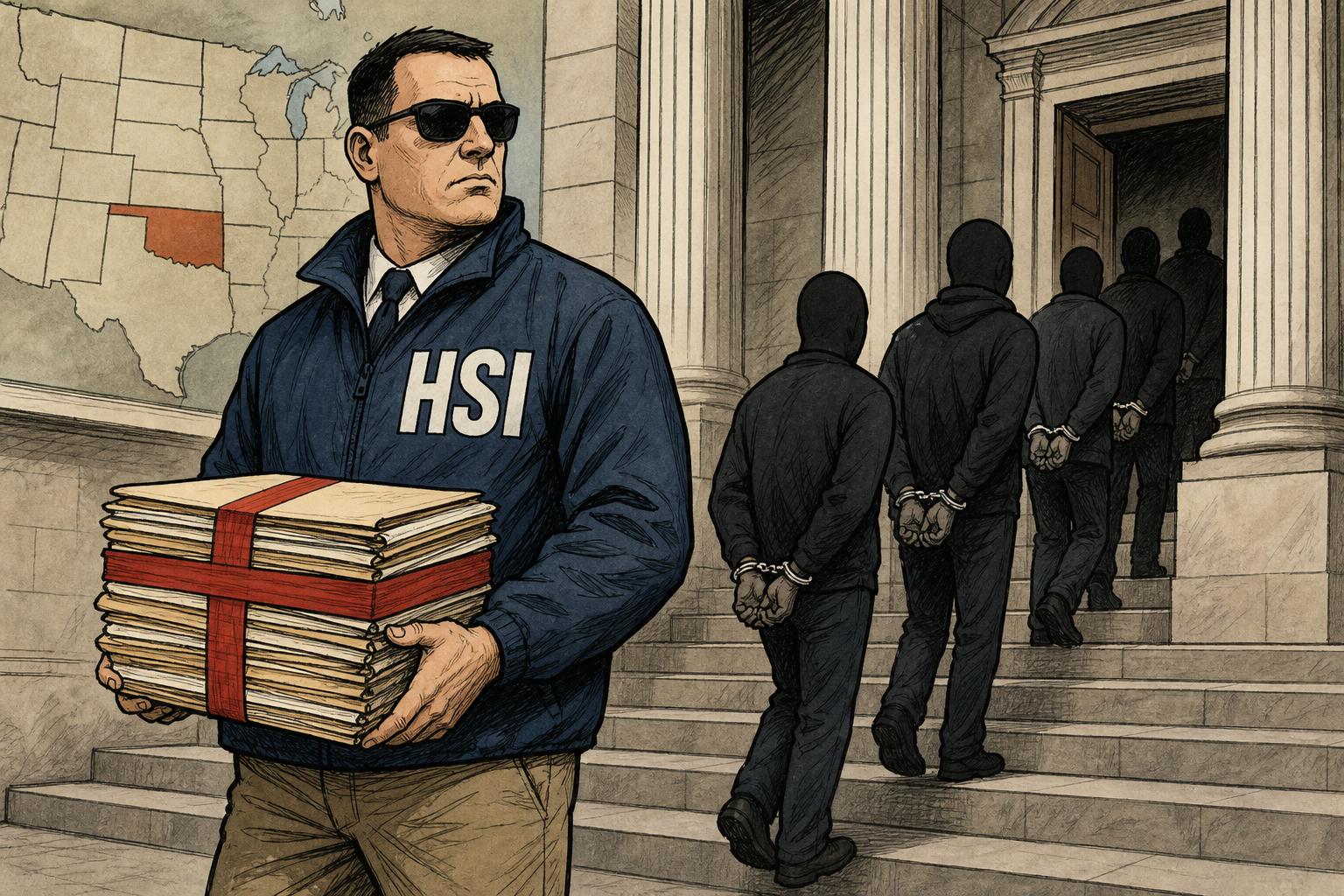
The Washington Post first reported ICE was eyeing the building in August 2025. On August 4, 2026, CoreCivic made it official: a five-year contract with U.S. Immigration and Customs Enforcement, effective August 11, paying a fixed monthly rate plus a per-detainee daily rate. The company expects its first detainees by the fourth quarter of 2026 and full 1,600-bed operation by the second quarter of 2027. Then, on August 5, CoreCivic went further — it sold the Appleton building and a second facility in Leavenworth, Kansas outright to the federal government, a combined $734,000,000 deal, with Appleton alone going for $495,600,000. CoreCivic keeps operating it under the existing ICE management contract, now extended to August 2031.
Lindell’s enthusiasm wasn’t about the building — it was about who he wants inside it. “We have 1,400 illegals in our prisons that have committed the most atrocious crimes ever, and we house them for, it costs us $110,000,000 a year to Minnesota taxpayers,” he told the Examiner, a figure that is his own claim, not an audited state number. His pitch: send those inmates to ICE custody in Appleton instead. “Cooperating with ICE is what has to be done in Minnesota,” he said, “but there’s a way to do it with … the detention center, but get these criminals that are in our prisons.”
It’s a notably harder line than the one Lindell held three weeks earlier. On July 22, he unveiled a six-month amnesty proposal — a one-time “conditional work visa” window for undocumented immigrants with no other criminal record, invoking the January 2026 shootings of Renee Good and Alex Pretti as reasons Minnesota needed a calmer approach. Minnesota GOP Chairman Alex Plechash and House Speaker Lisa Demuth (R) tore into the plan as amnesty in disguise, and Lindell spent the following weeks walking it back, eventually settling on a simpler line: Minnesota “at least needs to cooperate with the federal government.” The Appleton contract gave him a concrete way to say that without repeating the word amnesty.
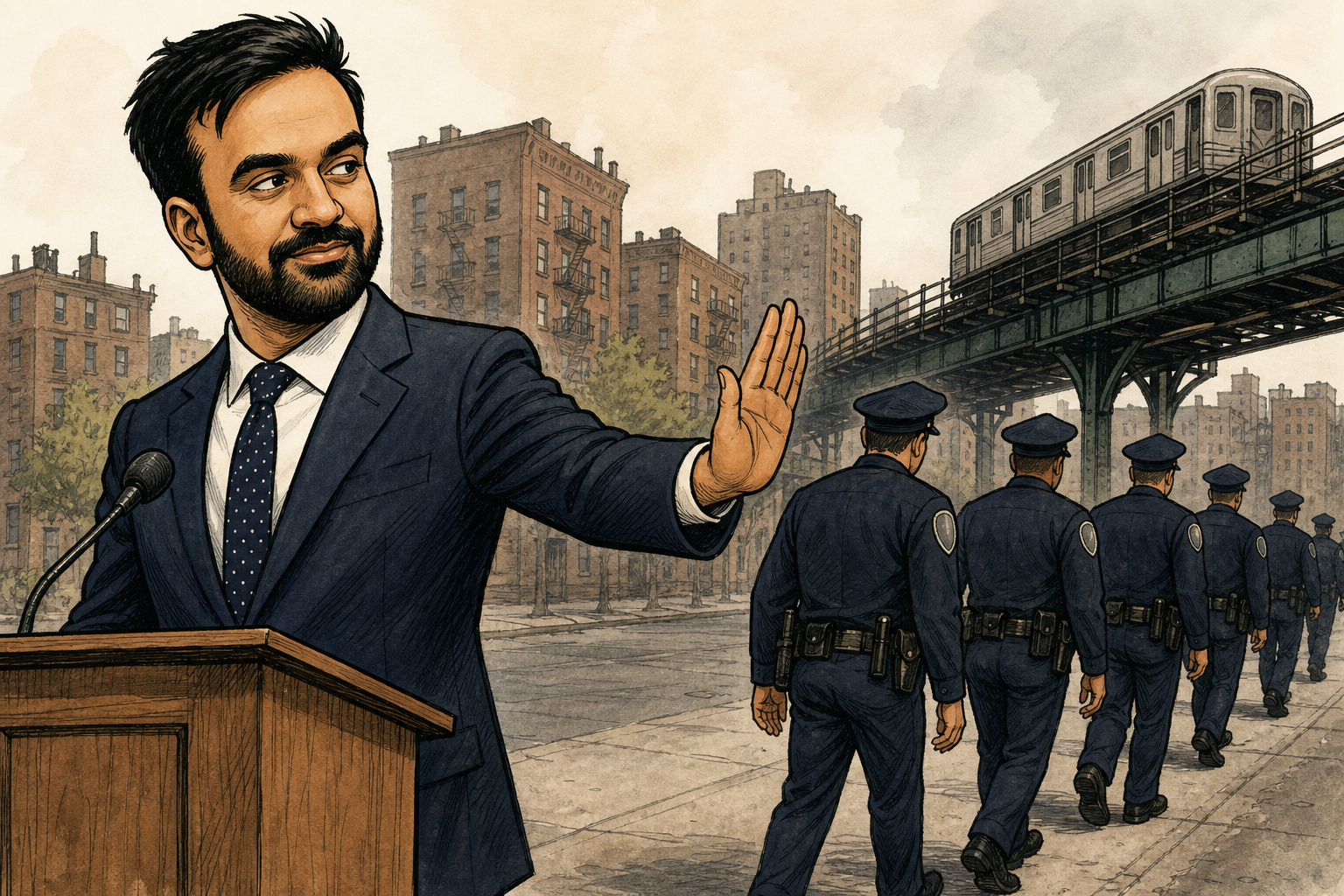
In 2023, Minnesota’s DFL-controlled legislature passed and Gov. Walz signed Minn. Stat. § 243.95, barring the Department of Corrections from housing state inmates in privately owned prisons — a law aimed squarely at facilities like Prairie. It says nothing about federal contracts. That gap is what let CoreCivic’s ICE deal proceed with no vote required from Appleton, Swift County, or the legislature.
Rep. Michelle Fischbach (R-MN-7), whose district includes Appleton, welcomed it: “I know that the community has been very supportive of making sure that we can open that up, and it makes sense … there’s an existing facility there, and so there doesn’t have to be anything new built.” State Sen. Torrey Westrom (R-Alexandria) pointed to roughly 450 jobs for a region that lost residents when the prison closed. Her Democratic challenger, Erik Osberg (D), called it part of a “$180 billion detention center and deportation-industrial complex” funded by last year’s federal reconciliation bill and wants that funding repealed. Sen. Ron Latz (DFL-St. Louis Park), who chairs the Senate Judiciary and Public Safety Committee, went further, calling the deal “an affront to all Minnesotans, who have soundly rejected the barbaric immigration policies and practices of this administration,” and vowing to explore “every effort” to block it.
“Minnesota outlawed the use of private prisons for people serving state prison sentences because public safety is a core government responsibility. CoreCivic is a publicly traded corporation whose profits depend on keeping beds filled.”
Paul Schnell · Commissioner, Minnesota Department of Corrections
Gov. Walz put the state’s position bluntly at Farmfest: “Our opinion, and Commissioner Schnell put out, that it is not the proper way to do this.” He acknowledged Minnesota had no real recourse — “the federal government is going to do what the federal government does.” Locally, reaction has split along familiar lines: the City of Appleton’s official statement called the reopening a “significant benefit to our residents and local economy,” while CURE, a rural advocacy nonprofit, has organized regular community meetings against it and the public-employee union AFSCME Council 5 has condemned contracting public safety out to a for-profit operator.
Nothing about ICE in Minnesota is happening in a vacuum. On January 7, 2026, Renee Good was shot and killed by an ICE agent in Minneapolis during Operation Metro Surge. Seventeen days later, on January 24, Alex Pretti — a 37-year-old VA intensive-care nurse — was shot multiple times and killed by federal agents after he stepped between an officer and a woman on the ground; the county medical examiner ruled his death a homicide. Both cases remain the backdrop against which every Minnesota candidate now has to answer for ICE.
At the same August 5 Farmfest forum where Lindell discussed the Appleton contract, Democratic Sen. Amy Klobuchar (D-MN), also running for governor, turned directly on her Republican rivals: “None of my opponents on this stage condemned what ICE did. Not a word. Two innocent people were killed, shot in the back.” Lindell’s answer, both at Farmfest and in his own platform, has been to promise he’d “enforce laws on protests and businesses hiring undocumented immigrants” rather than relitigate the shootings themselves — the same posture behind his Appleton comments: cooperate with federal enforcement, argue about the details later.
The timing is not subtle. CoreCivic’s ICE contract formally takes effect August 11 — the same day Minnesota Republicans vote in their gubernatorial primary, where Lindell, having stepped down as MyPillow CEO on August 5 to campaign full time, is running as the Trump-endorsed favorite against Speaker Demuth and businessman Kendall Qualls. His “good thing” comment lets him claim credit for federal enforcement dollars landing in rural Minnesota days before voters decide whether he survives the primary at all.
A prison Minnesota Democrats banned the state from using is reopening anyway — run by the same private company, funded by Washington instead of St. Paul, and the law that was supposed to stop this never touched federal contracts in the first place. Mike Lindell wants credit for cooperating with it; Gov. Walz and his own corrections commissioner say it never should have happened; and Appleton, population 1,400, gets 1,600 new neighbors it didn’t vote on.