
The L.A. City Council Won’t Ask Voters to Approve Noncitizen Voting. It Will Ask for Permission to Approve It Later.
Update, July 12, 2026: the council unanimously pulled this measure from the November ballot on June 30 and sent it back to committee. Details at the end of this story.
On June 17, 2026, the Los Angeles City Council voted 10–5 to put a charter amendment on the November 3 ballot. Read quickly, the measure sounds modest: a technical change to the city charter. Read closely, it is the legal trapdoor under one of the most consequential election changes a major American city has attempted — letting noncitizens vote in municipal and school-board races.
The amendment does not, by itself, enfranchise a single noncitizen. That is the point. It asks Angelenos to grant the council the authority to authorize noncitizen voting by ordinance at some later date — without specifying who would qualify, what proof of residency would be required, or whether immigration status would matter at all. Voters approve the blank check; the council fills in the amount after the election.
The motion was carried by two members of the Democratic Socialists of America — Councilman Hugo Soto-Martínez (D) as author and Councilwoman Ysabel Jurado (D) as second — on a council where Democrats hold every seat. Within a day it had drawn fire from Elon Musk, GOP senators, and national conservative media.
- 10–5 — the council vote to send the noncitizen-voting charter amendment to the November 3, 2026 ballot · Source: ABC7 Los Angeles; CBS LA
- Authority, not permission — the amendment grants the council power to authorize noncitizen voting by later ordinance — it does not enact it directly · Source: NY Post; NBC LA
- City + LAUSD races — the proposal covers Los Angeles municipal elections and the LA Unified School District Board of Education · Source: CBS LA; Spectrum News 1
- 2 DSA members — Councilman Hugo Soto-Martínez (D) authored it; Councilwoman Ysabel Jurado (D) seconded — both Democratic Socialists · Source: NY Post; California Globe
- File 26-0638 — the Los Angeles City Clerk council file logging the motion, introduced April 29 and adopted as amended June 17 · Source: LA City Clerk; LAmag
The June 17 vote did not legalize noncitizen voting. It approved language — logged by the Los Angeles City Clerk as Council File 26-0638 — directing the city attorney to draft a charter amendment for the November 3 ballot. If voters pass it, the charter would be changed to permit the council to later adopt an ordinance allowing “eligible noncitizen residents” to vote in city and LA Unified School District races. The ordinance, with all its real-world rules, would be written after the charter vote, by the same council. Federal law still bars noncitizens from voting in federal elections; this reaches only local contests.

“Voters are being asked to approve a technical change to the city charter, and to trust the City Council to work out the details later.”
New York Post — 'Inside LA City Council's sneaky plan to give illegal aliens voting rights,' June 2026
The New York Post’s charge is structural, not rhetorical. The council, it argues, understands that a ballot question reading “Should noncitizens be allowed to vote in Los Angeles?” would face fierce resistance — so it is not asking that question. It is asking voters to hand the council the authority, then promising to sort out eligibility on its own. Crucially, the charter text does not name which noncitizens qualify and does not exclude anyone by immigration status, which is why opponents read it as a path to voting by people in the country illegally, not merely green-card holders.
Soto-Martínez has consistently framed it as a fairness measure for long-term residents. He has pointed to DACA recipients, holders of Temporary Protected Status, and lawful permanent residents as the intended beneficiaries — people, he says, who pay taxes and send children to LAUSD schools but have no say in who runs them. The gap critics keep pressing on is that the ballot language itself enacts none of those limits.
Los Angeles politicians moving to let noncitizens vote in their elections. They have imported voters to win. This is how you turn a country into a one-party state.
The LA City Council wants to give local voting rights to noncitizens for the explicit purpose of empowering them against ICE and immigration enforcement. Election rules shouldn't be rewritten to manufacture a political base.
Los Angeles has a 15-member council, and every member is a Democrat — so the split here was inside the party, not across it. The ten who voted to send the measure forward were Hugo Soto-Martínez (D), Ysabel Jurado (D), Eunisses Hernández (D), Nithya Raman (D), Katy Yaroslavsky (D), Imelda Padilla (D), Marqueece Harris-Dawson (D), Heather Hutt (D), Curren Price (D), and Traci Park (D). The five against were Monica Rodriguez (D), Bob Blumenfield (D), John Lee (D), Tim McOsker (D), and Adrin Nazarian (D).
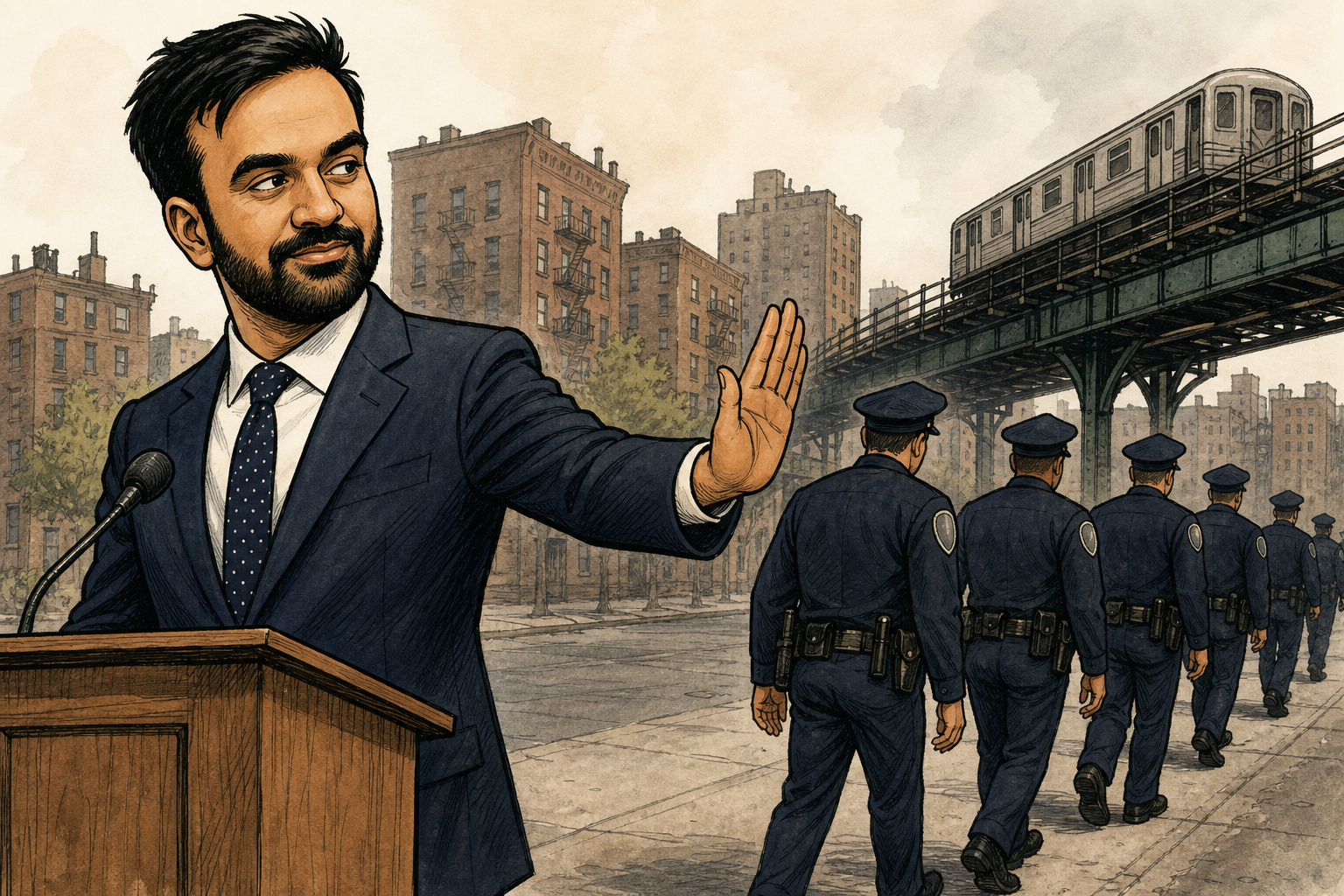
Mayor Karen Bass (D) — asked in a televised debate whether noncitizens should vote, declined a yes-or-no answer: “It depends. It’s not a yes or no,” noting that “noncitizens” includes lawful green-card holders.
Councilman Hugo Soto-Martínez (D) — author of the measure; member of the Democratic Socialists of America.
Councilwoman Monica Rodriguez (D) — one of five no votes; questioned whether Los Angeles County had been consulted on how it would even administer a noncitizen-voting system on a mixed ballot.
Los Angeles is not inventing this. The most-cited precedent cuts both ways. In San Francisco, voters passed Proposition N in 2016 letting noncitizen parents vote in school-board elections. A Superior Court judge struck it down as unconstitutional in 2022, but a California Court of Appeal reversed in August 2023 and upheld the program under the state constitution and city charter — so it survives there, narrowly, for school-board races only.
New York City went further and lost. Its 2021 law would have let roughly 800,000 noncitizens vote in municipal elections; a state court threw it out in 2022 as inconsistent with the New York constitution. The Los Angeles proposal is closer to the New York model than the San Francisco one — it reaches full municipal elections, not just the school board — which is exactly why opponents expect it, if enacted, to draw the same kind of legal challenge.
Los Angeles wants ILLEGALS voting in their elections. They flood the City, then they want them at the Ballot Box. This is why they fight Voter ID so hard. Only Citizens should vote in America!
Paraphrased commentary · not a verbatim post
Trump's recurring framing of the L.A. measure — paraphrased and labeled as commentary, not a verbatim post.
Even members who lean sympathetic flagged a hard administrative problem: Los Angeles voters do not get a separate “city only” ballot. Municipal, school-board, county, state, and federal contests are consolidated. If noncitizens may vote for mayor and school board but not for governor or Congress, the county registrar would need to issue and reconcile distinct ballot styles for noncitizen voters — and ensure none of those ballots ever counts in a federal race, where noncitizen voting is a crime. Councilwoman Monica Rodriguez (D) pressed on precisely this, asking whether the county had been consulted on implementation. The charter amendment does not answer it; that, again, is left for the later ordinance.
They will mix the ballots, make 'mistakes,' and tell you it was an accident. We've seen this movie. Citizen-only voting and Voter ID — it's not complicated, it's common sense!
Paraphrased commentary · not a verbatim post
Trump's standing posture on ballot integrity in the L.A. fight — paraphrased and labeled as commentary, not a verbatim post.
Nothing has been enacted yet. To be precise: the council has only voted to put a charter amendment on the November 3, 2026 ballot, and voters — not the council — will decide whether to grant the authority. If they say yes, the council still has to pass a separate ordinance before any noncitizen casts a ballot, and a legal challenge of the kind that sank New York City’s law is near-certain. What is decided is the framing: a one-party council in a Democratic-run city chose to ask voters for open-ended power rather than for the specific change, and to leave eligibility — including whether immigration status matters — for a vote it controls after the cameras leave. That design choice is the story, and it was the part voters were going to be asked to ratify in November. We’ll track what the council does next and update if the measure returns in any form.
Update — July 12, 2026: The measure never made it to voters. On June 30, 2026 — at the same session that kept the council’s own meeting-reduction charter amendment on the ballot — the council unanimously pulled the noncitizen-voting proposal from the November 3 ballot and sent the draft language back to committee for further study, two weeks after placing it there 10–5. Per LAist and ABC7, no new timeline has been set.

- 1.New York Post — 'Inside LA City Council's sneaky plan to give illegal aliens voting rights,' June 2026
- 2.ABC7 Los Angeles — 'Measure to give noncitizens the right to vote in Los Angeles city elections approved for Nov. 3 ballot,' June 2026
- 3.CBS Los Angeles — 'LA City Council approves ballot measure to allow non-citizens to vote in local elections,' June 2026
- 4.Fox News — 'Elon Musk rips LA City Council proposal to allow noncitizen voting' (online backlash), June 2026
- 5.Fox News — 'Mayor Karen Bass declines yes-or-no on noncitizen voting in LA debate,' June 2026
- 6.Spectrum News 1 — 'Los Angeles voters to decide whether noncitizens can vote in city elections,' June 19, 2026
- 7.NBC Los Angeles — 'Will LA voters allow noncitizens to vote in city elections? Councilman Soto-Martinez thinks so,'
- 8.Just the News / The Center Square — 'Los Angeles moves to let noncitizens vote in local elections, Republicans raise alarm,' June 2026
- 9.Los Angeles Magazine — 'L.A. City Council Approves Noncitizen Voting Measure on Ballot,' June 2026
- 10.EdSource — 'Court grants immigrant parents right to vote in San Francisco school elections' (Prop N litigation), 2023
- 11.SF Standard — 'Noncitizen parents can vote in San Francisco school board elections again,' Aug. 2023
- 12.Los Angeles City Clerk — Council File 26-0638 (noncitizen voting / municipal & LAUSD elections charter amendment)
- 13.LAist — July 12, 2026 update
- 14.ABC7 Los Angeles — July 12, 2026 update
Last updated June 22, 2026