China’s Coast Guard Rotated Fresh Ships Off Taiwan’s Back Door — and It Isn’t Leaving.
For the first time, China Coast Guard cutters have spent a full month patrolling east of Taiwan— the ocean-facing coast that has always been the island’s strategic rear, and the corridor through which American and allied help would have to arrive in a war. On Saturday, July 4, Beijing rotated in a fresh task group and vowed to keep going.
Taiwan’s Coast Guard Administration tracked the new cutters roughly 54 nautical miles off Hualien and prepositioned two of its own ships to shadow them. Beijing calls the patrols routine “law enforcement” in its own jurisdictional waters. Taipei calls them an “illegal expansion of power” and a rehearsal for a blockade of a strait that carries roughly $2.45 trillion in annual trade.
Here is what is happening on Taiwan’s Pacific coast, why the map matters, and what analysts assess it is rehearsing for — with every contested claim marked as Beijing’s or Taipei’s, never stated as fact.
- 54nm eastposition of the CCG cutters Xiushan and Chongming off Hualien, Saturday morning — Taiwan CGA via Reuters/Bloomberg
- 198shipsvessels the China Coast Guard claims it “inspected” east of Taiwan, asserting jurisdiction — AEI tracker, July 2
- 30sorties/dayPLA aircraft around Taiwan on July 3 alone (26 crossed the median line), plus 7 navy and 5 “official” ships — Taiwan MND via ANI
- $2.45Tin tradegoods that transited the Taiwan Strait in 2022 — over one-fifth of all global maritime trade — CSIS ChinaPower
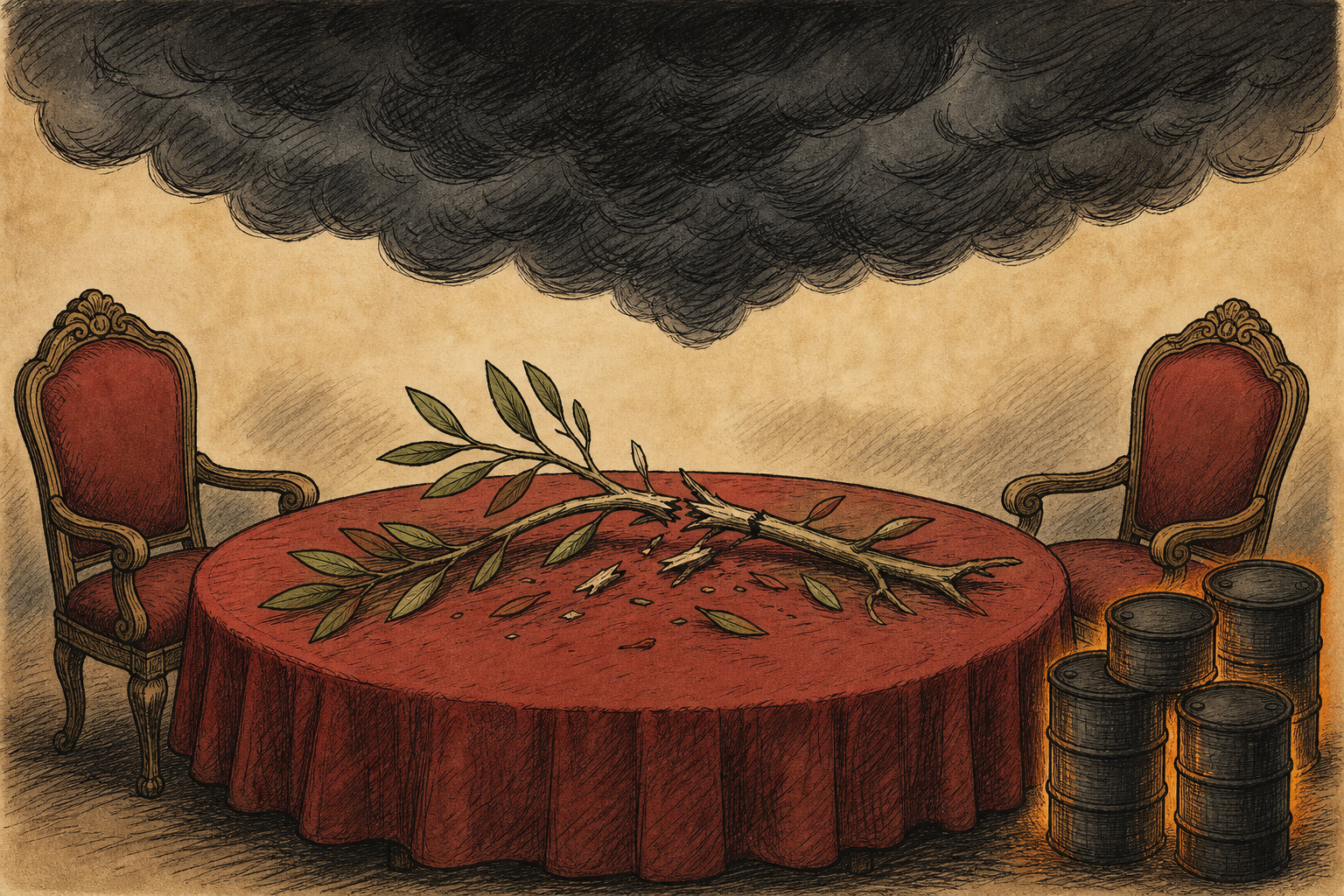
On Saturday, July 4, 2026, the China Coast Guard announced it had swapped out one task group for another off Taiwan’s eastern, Pacific-facing coast. A group led by the cutter Xiushan replaced a group led by the Daishan to, in Beijing’s words, “continue law-enforcement patrols.” Taiwan’s Coast Guard Administration (CGA) reported tracking the Xiushan and a second cutter, the Chongming, roughly 54 nautical miles east of Hualien on Saturday morning, and prepositioned two of its own vessels to sail alongside them. (Hull numbers — Xiushan 2305, Chongming 2302, Daishan 2502 — are attributed to Taiwan’s CGA and open-source trackers.)
The rotation itself is the tell. This was not a one-off drill that packed up and left. According to the American Enterprise Institute’s China-Taiwan tracker, China Coast Guard ships — at least two at a time — have held station in the waters Taiwan claims as its eastern exclusive economic zone almost continuously since June 1, when Beijing announced its first-ever “law-enforcement patrol” east of the island. Beijing framed that June 1 debut as a “necessary response” to maritime-boundary talks between Japan and the Philippines. Taiwan’s Mainland Affairs Council on Saturday called the operation an “illegal expansion of power in violation of international law and a disruption of regional stability.”
China Coast Guard vessels Baita (2304) and Daishan (2502) conducted patrols in international waters near the waters of Orchid Island on 6/1. Coast Guard Administration offshore patrol vessel Changbin (CG611) monitored the two ships. (Coast Guard Administration)
Beijing says: the patrols are routine “law enforcement” in “China’s jurisdictional waters” — vessel verification, fishery protection, and rescue for “fishermen on both sides of the strait.”
Taipei reports: “China does not enjoy any sovereign rights in waters east of Taiwan.” It calls the presence an illegal expansion and vows to “forcefully expel” harassing vessels.
Analysts assess: a persistent coast-guard presence on the Pacific side is “lawfare” — manufacturing a precedent for jurisdiction Beijing has never before enforced, and rehearsing the inspection regime a blockade would need.
Taiwan’s western coast faces the 100-mile strait and mainland China; its eastern coast — Hualien, Taitung — faces the open Pacific. That geography is the entire point. Hualien hosts a major air base with mountain-bunker aircraft shelters, the presumed wartime dispersal site for Taiwan’s fighters, and the corridor through which American and allied resupply would have to arrive in a conflict. A persistent People’s Republic of China presence there does not add pressure across the strait — it closes the back door. Analysts read it as a move toward encirclement.
“The law enforcement activity is on the Pacific side of the first island chain, east of Taiwan, not in the Strait or the South China Sea, where we are used to seeing it.”
Ben Lewis · founder, PLATracker · USNI News, June 8, 2026
This is a different instrument than the exercises the world has grown used to. When the People’s Liberation Army ringed the island with fighters and warships in May’s large-scale PLA drills, or when Beijing’s April 2025 “Strait Thunder” maneuvers ran up a multibillion-dollar bill for Taiwan’s economy, the pressure was military and temporary — a show of force that ended. A gray-hulled coast guard that simply never leaves is harder to answer, precisely because it is dressed as police work rather than war.
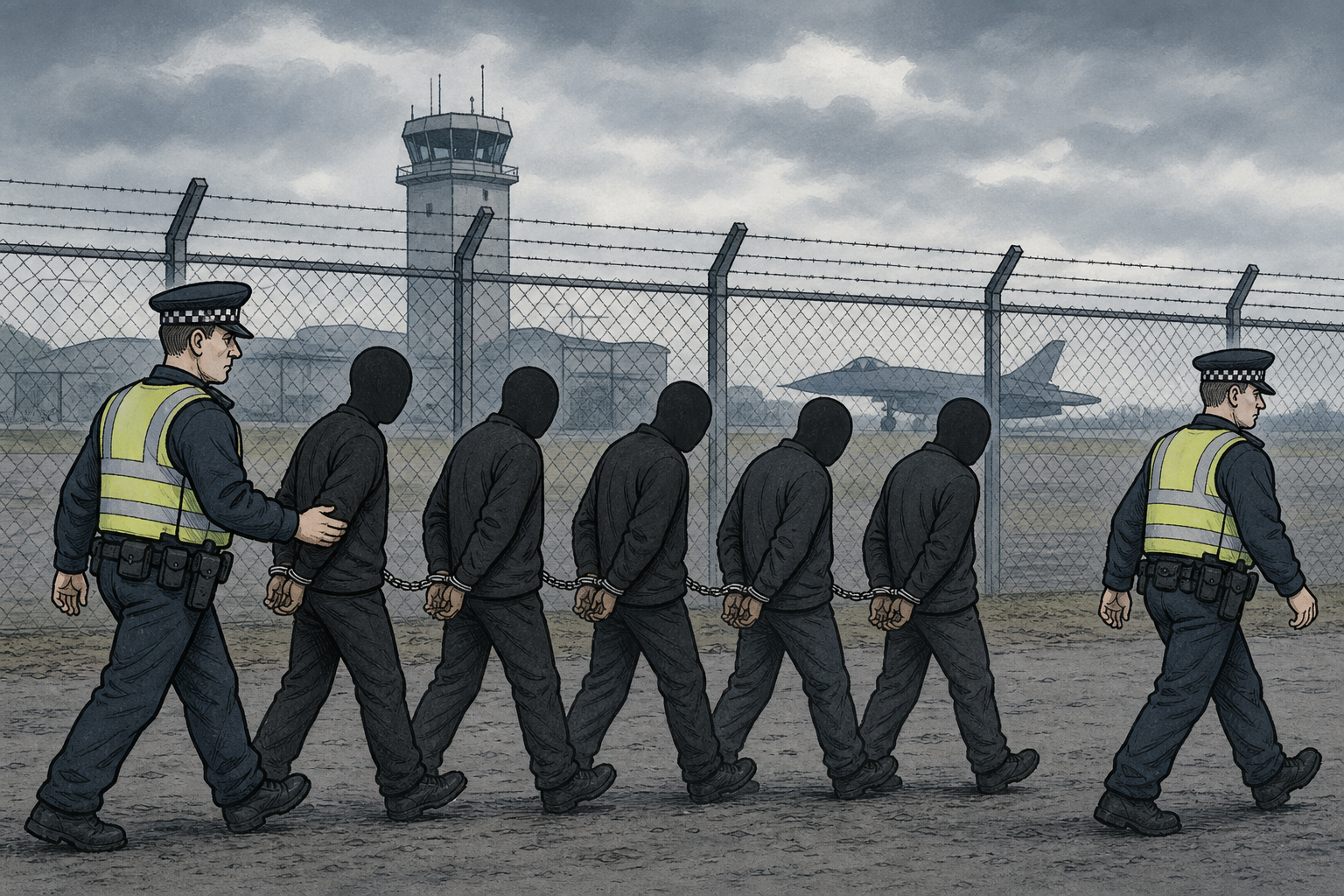
The clearest sign this is about law, not just presence, is what the China Coast Guard says it has been doing out there. Beijing claims that during a five-day patrol its ships “inspected” or verified some 198 vessels and hailed three cargo ships, according to figures logged by the American Enterprise Institute’s tracker. Whether or not those inspections happened as described, the claim itself is the point: it rehearses — and tries to normalize — exactly the ship-boarding regime a maritime quarantine would require, while asserting that Beijing has the authority to conduct it.
The two governments are not merely spinning; they are asserting two incompatible legal theories. Beijing’s position, restated repeatedly through its foreign ministry and state media, is that “Taiwan is a part of China,” so China holds exclusive-economic-zone and continental-shelf rights in the waters east of the island, and coast-guard patrols there are “legitimate, necessary, and brook no infringement.” Taipei’s position, stated by the CGA on June 7, is the flat opposite: “China does not enjoy any sovereign rights in waters east of Taiwan.”
Taiwan is a part of China. China has exclusive economic zone and continental shelf in the waters east of Taiwan island. The law enforcement and patrol actions carried out by the China Coast Guard are legitimate, necessary, and brook no infringement…
One point of confusion is worth clearing up. Reuters reported on June 10 that China had “ended” its patrol east of Taiwan — but that referred to a separate, six-ship “special maritime traffic law enforcement operation” run by China’s Ministry of Transport, which wrapped up after Taiwan condemned it. The China Coast Guard patrol itself, per the AEI tracker, never stopped. What ended in June was one layer; the coast-guard layer has been continuous.
Why a coast guard, and not the navy? Because a coast guard lets Beijing rehearse the one option that stops short of a shooting war: a “quarantine.” In a 2024 war-game, CSIS modeled exactly this — a China-Coast-Guard-led quarantine, rather than a military blockade, in which law-enforcement vessels stop, board, and inspect inbound shipping and demand that ships accept Beijing’s authority to do so. It is coercion designed to look like policing, and to make a foreign navy the one that fires first if it wants to break it.
Taipei is treating it as a rehearsal, too. President Lai Ching-te (DPP) issued a directive on June 23 — after a whole-of-society tabletop exercise that simulated a PRC maritime quarantine — ordering stronger maritime and air intelligence, expanded drone reconnaissance and escort, better communication with commercial shipping, and updated energy and critical-supply stockpiles. That is a government preparing to keep goods flowing through a chokehold, not a government treating this as a passing squall. It sits inside a wider surge: the AEI logged 134 PLA incursions into Taiwan’s air-defense identification zone in June, and Taiwan’s defense ministry counted 30 PLA aircraft in a single day on July 3, 26 of them crossing the median line.
The reason a quarantine rehearsal off a mid-size island commands global attention is the water it threatens. In 2022, roughly $2.45 trillion in goods transited the Taiwan Strait — more than one-fifth of all global maritime trade, according to CSIS ChinaPower. Taiwan also fabricates more than 90 percent of the world’s most advanced semiconductors, the chips inside phones, cars, data centers, and weapons. Squeeze the strait and the disruption does not stay local.
Bloomberg Economics tried to put a number on it. In a February 2026 model, it estimated that a full US-China war over Taiwan would cost the world economy on the order of $10 trillion in its first year — roughly 10 percent of global GDP — while a blockade short of war would still run about $5 trillion. Those are modeled estimates, not certainties, and we flag them as such. But they explain why a rotation of coast-guard cutters off Hualien is a story with a dollar sign attached: the cheapest version of this scenario is measured in trillions.
The east-coast patrol is small — a handful of cutters, dressed as police. The system it rehearses squeezing is not: $2.45 trillion in annual strait trade, more than 90 percent of the world’s cutting-edge chips, and a blockade scenario CSIS-adjacent modeling prices near $5 trillion in a single year.
Taiwan has answered on the water and on paper. The CGA shadows the Chinese cutters daily and has vowed “all necessary measures to forcefully expel Chinese vessels harassing our waters.” On July 1, Taipei went a step further, advising Taiwanese ships operating east of the island to ignore any China Coast Guard boarding or inspection demands, with the CGA standing ready to intervene. Defense Minister Wellington Koo had earlier called the patrols a “provocative act” and pledged the military would coordinate closely with the coast guard.
Chinese Coast Guard patrols to the east of Taiwan are a 'provocative act' and the military will closely coordinate with the island's Coast Guard in responding, Defense Minister Wellington Koo said on Monday.
The diplomatic line has held, for now. The United States, the United Kingdom, France, and Germany all raised concerns about the patrols — over regional stability, freedom of navigation, and shipping safety — and Taiwan’s governing Democratic Progressive Party thanked the four governments. Beijing rejected the objections outright; PRC foreign-ministry spokesperson Guo Jiakun said the institutions raising them “should not make statements unsuited to their identity.” Washington’s posture has been cautious at the top: back in May, around a summit with Xi Jinping, President Donald Trump (R) said China and Taiwan “ought to both cool it” — a line of context, not a statement on the east-coast patrols, which the administration has not addressed directly.
A month ago, China had never announced a coast-guard patrol on Taiwan’s Pacific coast. Now it rotates fresh cutters in on schedule, claims to be inspecting nearly 200 ships, and says it will “strengthen” the presence in what it calls its own jurisdictional waters.
Beijing frames it as policing. Taipei calls it an illegal expansion and a blockade rehearsal, and is stockpiling and drilling accordingly. Analysts read it as lawfare aimed at the one coast where outside help would arrive.
No shot has been fired, and every jurisdictional claim here is contested. But the thing being rehearsed off Hualien would, if it ever ran for real, put a fifth of the world’s seaborne trade and most of its advanced chips inside a chokehold — which is why a quiet rotation of gray hulls is a global story.