Hamas Says It Executed a 47-Year-Old Gazan as an Israeli Spy. There Was No Trial.
A Hamas-run security apparatus in Gaza says it shot and killed a man it accuses of spying for Israel — a 47-year-old Gazan identified only by the initials “M.M.” — after what its own statement called “all revolutionary procedures had been exhausted.” There was no public trial, no named judge, no defense counsel, and no published evidence. The only account of the man’s alleged guilt is Hamas’s own.
The claim reached the outside world through a single chain: the Hamas-affiliated unit calling itself “Resistance Security” announced it on July 1; the London-based daily Asharq Al-Awsat relayed it with detail from unnamed Hamas sources on July 2; and The Jerusalem Post carried that account on July 4. No independent body has confirmed the execution, the man’s identity, or the espionage allegation. Israel has not commented.
What can be checked is the backdrop. Israel did kill Hamas’s military chief Izz al-Din al-Haddad on May 15 and his successor Mohammed Odeh weeks later — both confirmed by the IDF. And the United Nations has documented what Hamas does to Gazans it labels collaborators. This is that pattern, with a fresh name attached that no one outside Hamas can verify.
- 108killedPalestinians killed by armed actors inside Gaza, Aug. 2024 – Jan. 2026 — UN Commission of Inquiry (June 2026)
- 384woundedwounded in the same executions and severe physical violence the COI documented over that window — UN COI
- ~25%of casesof the 249 documented cases involved Hamas-affiliated forces — UN COI dataset
- 0outside checksindependent confirmations of the July 2026 'M.M.' execution beyond Hamas's own statement — see sourcing
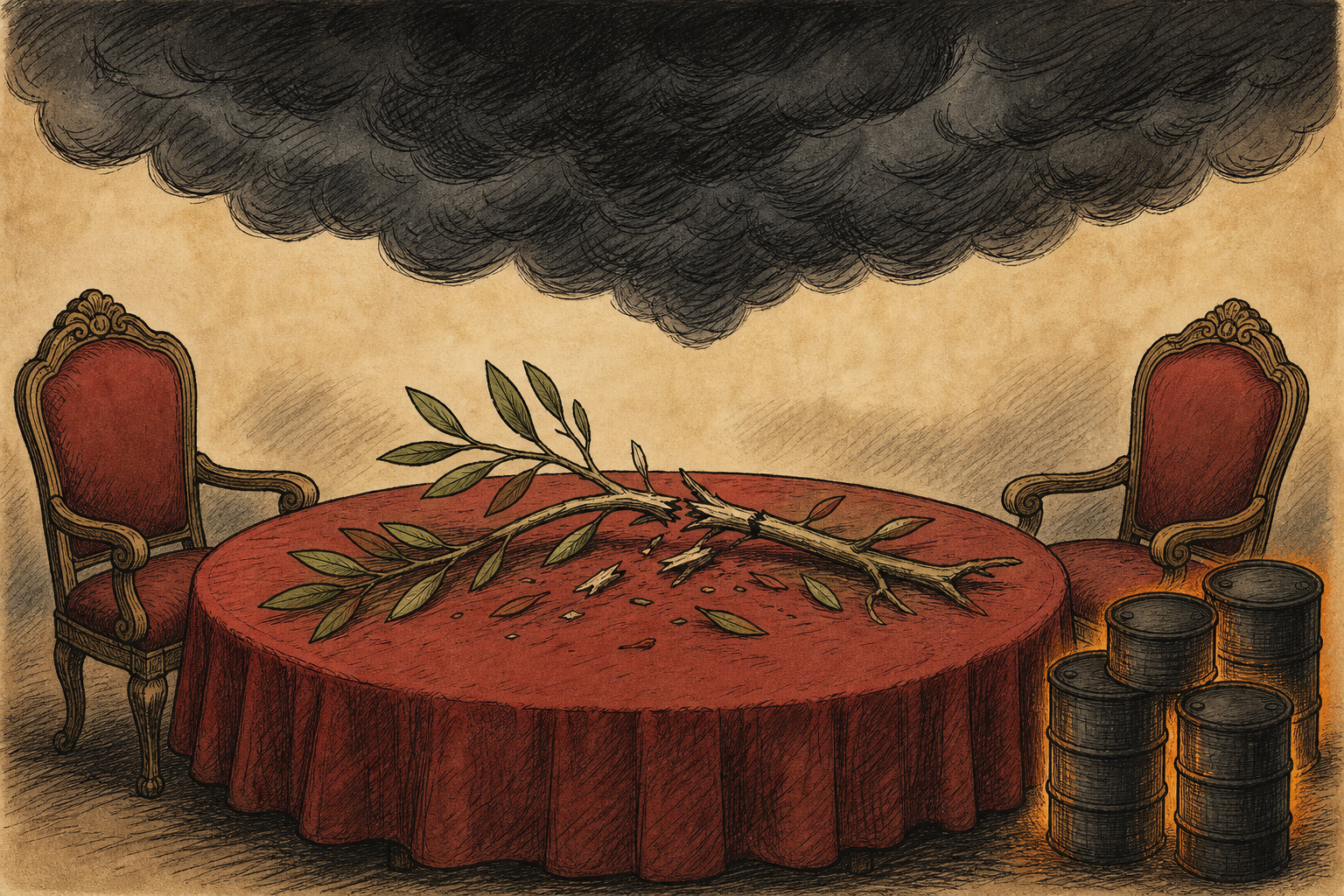
According to the statement, issued the evening of Wednesday, July 1, by the Hamas-affiliated “Resistance Security” apparatus (Arabic: Amn al-Muqawama), the man was a 47-year-old Gazan who was not a Hamas member. Hamas sources told Asharq Al-Awsat that he was arrested at or immediately after the scene of the May 15 assassination of Izz al-Din al-Haddad, allegedly after being observed communicating with an Israeli intelligence officer, and that he was later seen at Al-Shifa Hospital “verifying the identities of those killed.” He was, per the same sources, found with modern communications and tracking equipment, and “confessed immediately” to passing information that contributed to the deaths of roughly 30 fighters from various armed factions — “most recently Haddad.”
Every clause of that account carries the same caveat: it comes from Hamas, and it cannot be independently verified. The alleged confession was obtained in Hamas custody, where there is no way to test how it was extracted. The man is named only by initials. And the body, according to Haaretz and other relays, was left outside Al-Quds Hospital in Gaza City’s Tel al-Hawa neighborhood — a display, not a proceeding.
“After all revolutionary procedures had been exhausted.”
Statement of the Hamas-affiliated 'Resistance Security' apparatus, July 1, 2026 · via Asharq Al-Awsat / Haaretz / Times of Israel
Step 1 (July 1): Gaza’s Hamas-affiliated “Resistance Security” unit announces the execution. Israel National News notes Hamas’s top leadership did not formally claim the killing.
Step 2 (July 2): Asharq Al-Awsat publishes the fullest account, sourced to unnamed Hamas field and security officials.
Step 3 (July 2–4): Haaretz, Times of Israel, Israel National News (via Al-Araby Al-Jadeed), and The Jerusalem Post relay it, all attributing to the same Hamas statement and sources.
What’s missing: any second, independent evidentiary source. Multiple outlets state plainly that the claims “could not be independently verified.” Israel has said nothing.
Asharq Al-Awsat’s sources added one more claim: that a second suspect was arrested about two days after the killing of Haddad’s successor, Mohammed Odeh, allegedly for monitoring Odeh’s wife. That second man’s fate has not been reported. It, too, rests entirely on Hamas’s telling.
Strip away the unverifiable espionage narrative and two hard facts remain — the ones Hamas’s story attaches itself to. On May 15, 2026, an Israeli airstrike in central Gaza City killed Izz al-Din al-Haddad, head of Hamas’s military wing, known as “the Ghost of al-Qassam” and described by Israeli officials as the last senior commander still in Gaza who had helped plan the October 7 attack. The IDF confirmed the killing on May 16; Hamas spokesman Hazem Qassem confirmed it the same day. His wife and daughter were reportedly killed with him. NPR reported the broader strike wave killed at least seven people and wounded more than fifty.
Twelve days later, on May 27, 2026, the IDF announced it had killed Haddad’s successor, Mohammed Odeh, in a strike in northern Gaza. Those two eliminations — announced by Israel’s own military, on the record — are the events Hamas’s “collaborator” story is meant to explain. The killings are real. The claim that an informant named “M.M.” enabled them is Hamas’s alone, and Israel has not addressed how either commander was located.
ELIMINATED: Izz al-Din al-Haddad, Head of Hamas' military wing and one of the last senior commanders involved in the planning of the October 7 massacre. Following the elimination of Mohammed Sinwar, Haddad assumed his role and worked to rebuild Hamas' capabilities.
ELIMINATED: Mohammed Odeh — Head of Hamas' Military Wing in a strike in northern Gaza. Odeh served as the Head of Hamas' military wing following the elimination of Izz al-Din al-Haddad.
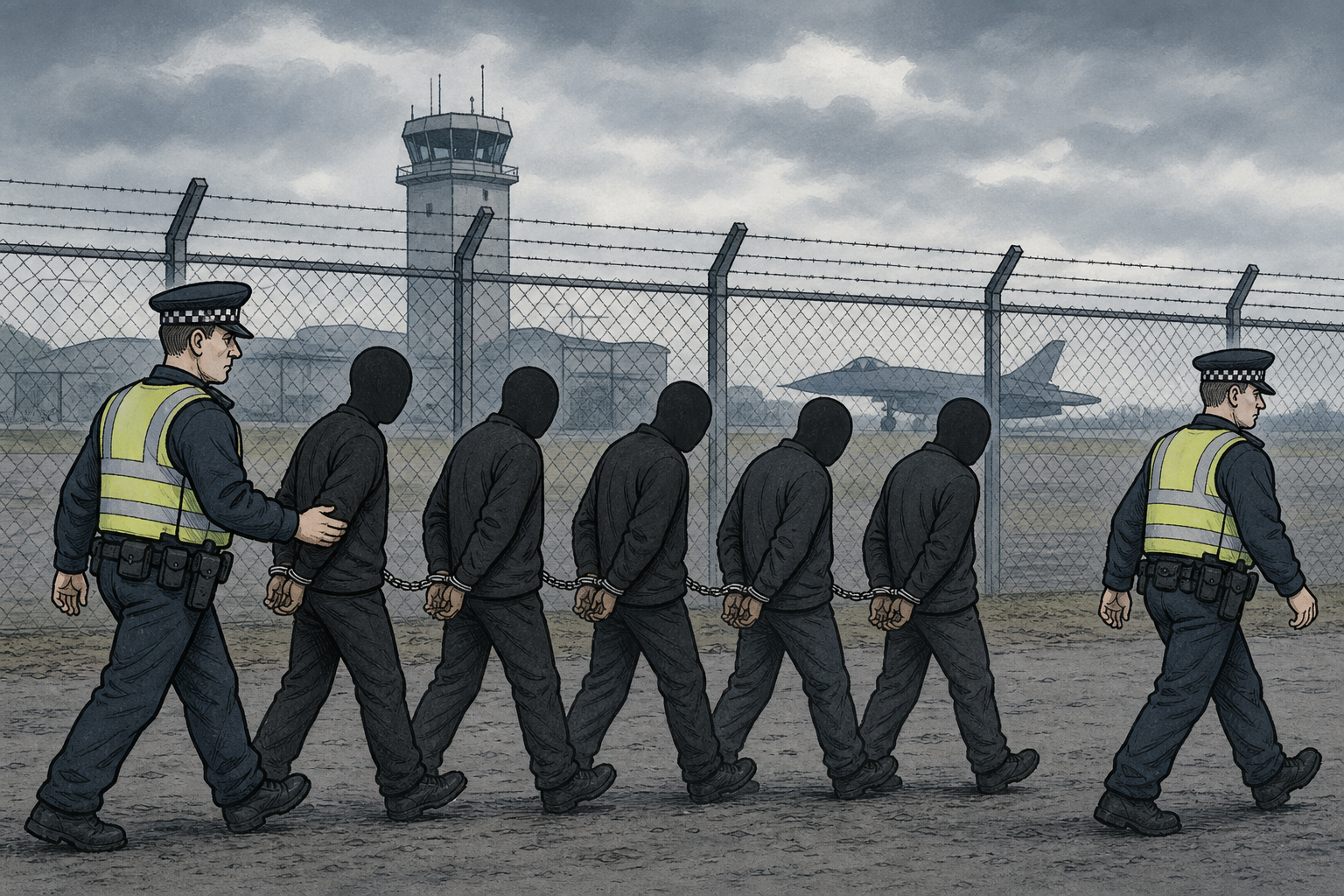
The reason a single unverifiable statement is worth taking seriously is that it fits a record the United Nations has already documented in detail. In June 2026, the UN Independent International Commission of Inquiry reported 249 documented cases of executions and severe physical violence by armed actors inside Gaza between August 2024 and January 2026: 108 people killed and 384 wounded. Roughly a quarter of those cases — at least 60 incidents — involved Hamas-affiliated forces. The Commission concluded that the documented killings “amount to the war crime of murder.”
“Following the ceasefire, Hamas' armed wing carried out apparently summary killings of some people it accused of working with the Israeli army.”
Human Rights Watch · World Report 2026, Israel and Palestine chapter
This is not new behavior. Amnesty International documented at least 23 Palestinians summarily killed by Hamas as accused collaborators during the 2014 Gaza war in its report “Strangling Necks.” In March 2024, Hamas executed the leader of the Doghmush clan and two others over alleged aid-distribution contact with Israel. The playbook — accuse, extract a confession in custody, kill, and publicize — has been consistent for more than a decade.
The Commission’s framing is not one-sided, and it is worth quoting accurately. Its chair, Srinivasan Muralidhar, faulted both parties, saying Hamas-affiliated forces “exploited the vacuum created by relentless Israeli attacks” and describing Gazans as trapped between Israeli military operations and, in the report’s words, “the fear-based rule of Hamas.” The point of the pattern is not that Israel is blameless; it is that Hamas’s use of “collaborator” killings as an instrument of internal control is a matter of UN and human-rights documentation, not conjecture.
The most heavily documented episode came in the autumn of 2025. Between September 19 and October 21, a wave of killings attributed to Hamas interior-ministry units — the Sahm (“Arrow”) unit and the Rad’a force — left at least 33 men dead, according to counts reported across outlets. Two of those killings were carried out in public and filmed: three men in September, eight in October. News organizations including the BBC, CNN, and CBS verified the footage.
The killings continued after the Gaza ceasefire took effect on October 10, 2025, before Hamas announced a pause in public executions on October 21 to protect the truce. The verification itself is the story worth watching: outlets like ABC News established what the footage did and did not show before publishing — the opposite of the unchecked chain behind this week’s “M.M.” claim.
After the ceasefire, Hamas began mass executions of people suspected of disloyalty. According to The Times of Israel and The Jerusalem Post, weakened Hamas militants are trying to reassert control over Gaza using violence and intimidation.
Hamas has not hidden the practice; it has defended it. Political-bureau official Mohammed Nazzal told Reuters the October 2025 executions were “exceptional measures” against criminals. Weeks before the two 2026 eliminations, senior Hamas figure Dr. Basem Naim publicly warned “collaborating gangs” on May 6, and the “Resistance Security” statement itself carried a warning relayed by Al-Araby Al-Jadeed: “this is the fate of collaborators who cooperate with the occupation.” The killing is presented, in other words, as policy — a demonstration aimed at Gaza’s own population.
Not everyone in the Palestinian arena accepted the framing. PA President Mahmoud Abbas called the October 2025 executions “a crime against the Palestinian people,” and the Gaza-based Al-Mezan Center for Human Rights described them as “extrajudicial execution[s] of citizens.” In Washington, the response came from the top. Amid the October 2025 wave, President Donald Trump (R) issued a public warning to Hamas.
If Hamas continues to kill people in Gaza, which was not the deal, we will have no choice but to go in and kill them.
Paraphrased commentary · not a verbatim post
Trump's widely reported Oct. 16, 2025 warning to Hamas — quoted across Fox News, CNN, and ABC. The exact Truth Social post ID was not independently retrieved, so it is rendered here as an attributed quote card, not a verbatim embed.
No legal case exists in the ordinary sense. The execution was announced by a security apparatus that said it had followed “revolutionary procedures” — no public trial, no named judge, no defense, no appeal, no published evidence. The dead man is identified only by initials, and the sole basis for the espionage allegation is Hamas’s statement and a confession obtained in its own custody. His guilt should be treated as asserted by Hamas, not established. A second detained man in the Odeh case has simply vanished from the record. And under the standard the UN Commission of Inquiry applied to identical conduct, killings of this type “amount to the war crime of murder.”
A Hamas-run security unit says it executed a man as an Israeli spy. That specific claim — his identity, his age, his confession, the 30 fighters he supposedly betrayed — cannot be verified by anyone outside Hamas, and Israel has not commented.
What can be verified is the frame around it: Israel really did kill Hamas’s two most senior military commanders of 2026, and the UN really has documented 108 Palestinians killed by armed actors inside Gaza, with Hamas-affiliated forces in a quarter of the cases.
Read together, the news peg and the pattern point the same direction — a weakened Hamas reasserting rule by fear and recasting its own intelligence failures as penetration by informants. The correct posture toward the “M.M.” story is neither belief nor dismissal, but the caveat the outlets themselves used: it could not be independently verified.