Tankers Burn in Hormuz. The US Hits 80+ Targets in Iran. Trump Says the Ceasefire Is Over.
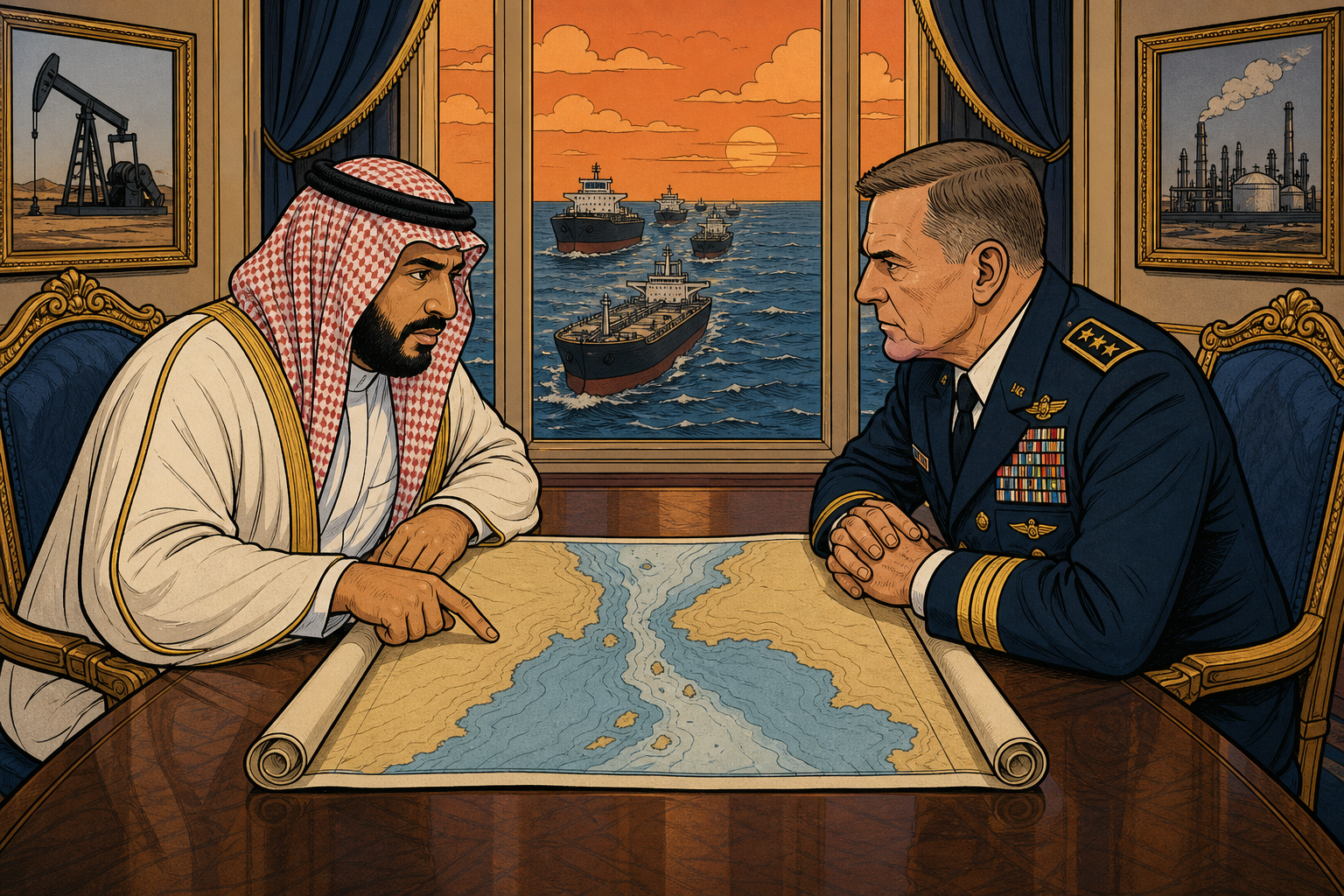
Four days after President Donald Trump (R) promised Iran “a week off” from US strikes out of respect for the funeral of Supreme Leader Ali Khamenei, that pause ended in fire. On July 7, 2026, two tankers were struck within hours of each other in the Strait of Hormuz — the Qatari-flagged LNG carrier Al Rekayyat, which caught fire in its engine room, and the Saudi supertanker Wedyan. A third vessel was hit within roughly 24 hours. Qatar and Saudi Arabia both pointed to Iran; Tehran made no official claim.
US Central Command, under Commander Adm. Brad Cooper, answered within hours — not with a warning, but with strikes CENTCOM itself says hit “over 80 targets” across southern Iran: air-defense systems, command-and-control networks, coastal radar, anti-ship missile capability, and dozens of Islamic Revolutionary Guard Corps small boats, concentrated around Sirik, Qeshm Island, and Bandar Abbas.
Iran’s Khatam al-Anbiya Central Headquarters vowed a “crushing response,” and the IRGC claims it hit 85 US-linked sites in Bahrain and Kuwait. The same day, the US Treasury Department revoked the general license that had authorized Iranian oil exports since June. By the time Trump reached NATO’s summit in Ankara the next morning, he wasn’t describing an incident. He was describing the end of the ceasefire.
- 80+ — targets CENTCOM says it struck across southern Iran with precision munitions on July 7 — Source: Al Jazeera, Jerusalem Post
- 2–3 — tankers struck in the Strait of Hormuz within roughly 24 hours — the Al Rekayyat and Wedyan among them — Source: NPR, CNN
- 85 — US-linked military sites in Bahrain and Kuwait the IRGC claims to have struck in retaliation — an Iranian claim, not independently confirmed — Source: Jerusalem Post, CBS News
- July 17, 2026 — the wind-down deadline Treasury set, 12:01am EDT, when it revoked the general license authorizing Iranian oil sales — Source: US Treasury / OFAC
- +5.3%–5.85% — Brent crude's jump to roughly $78 a barrel on July 8, its sharpest single-day move of this cycle — Source: Bloomberg
- 60+ — IRGC small boats CENTCOM says were hit alongside air-defense systems and coastal radar — Source: Al Jazeera liveblog
The Strait of Hormuz carries roughly a fifth of the world’s oil traffic and a comparable share of global LNG transit, according to reporting cited by NPR and CNN — which is precisely why a fire aboard a single tanker there moves markets and governments in a way that the same incident almost anywhere else would not. On July 7, the Qatari-flagged LNG carrier Al Rekayyat reported an engine-room fire consistent with an external strike. The Saudi supertanker Wedyan was hit separately the same day. A third vessel was struck within roughly 24 hours of the first two, according to NPR and CNN’s reporting.
Qatar and Saudi Arabia both attributed the strikes to Iran. Iran itself made no official claim — a pattern consistent with how Tehran has handled prior Strait of Hormuz incidents this year, alternating between denial, silence, and indirect signaling rather than open acknowledgment. No independent forensic confirmation of the attacker has been published as of this writing; this piece treats the Qatari and Saudi attribution as reported, not as an adjudicated fact.
The timing is what turned a maritime incident into a geopolitical one. The strikes landed in the middle of a week the White House had explicitly set aside as a pause — a pause granted, in Trump’s own words, “out of respect” for the funeral of Iran’s slain Supreme Leader, Ali Khamenei, whose burial procession Civic Intelligence covered as it moved through Qom earlier this same week. Whoever struck the tankers did so knowing that pause was in effect.
Washington did not wait for a damage assessment. US Central Command, commanded by Adm. Brad Cooper and operating under Secretary of War Pete Hegseth (Trump administration) and Chairman of the Joint Chiefs of Staff Gen. Dan Caine, launched strikes the same day CENTCOM says hit “over 80 targets” across southern Iran — air-defense systems, command-and-control networks, coastal radar installations, anti-ship missile capability, and more than 60 IRGC small boats, concentrated around three locations: Sirik, Qeshm Island, and Bandar Abbas, according to Al Jazeera’s liveblog and the Jerusalem Post.
“Over 80 targets with precision munitions.”
US Central Command · via Al Jazeera, Jerusalem Post
CENTCOM framed the response as retaliation, not initiation, describing Iran’s tanker strikes as “unwarranted, dangerous aggression and a clear violation of the ceasefire.” The Department of War’s own release on the operation — which it has labeled “Epic Fury” — quotes Hegseth describing the campaign’s goals as, in his words, “laser focused,” according to a war.gov statement.
US forces struck more than 80 targets across southern Iran today with precision munitions in response to Iran's unwarranted, dangerous aggression and clear violation of the ceasefire, including attacks on commercial shipping in the Strait of Hormuz.
The pause that broke this week had been in place since early July. Speaking at Mount Rushmore on July 4, Trump described the lull in strikes as American generosity extended during Iran’s mourning period for Ali Khamenei, who was killed in the February 28, 2026 opening strikes of the US-Israel war.
“We gave them a week off for a funeral because we're nice.”
President Donald Trump (R) · Mount Rushmore, July 4, 2026
That pause sat on top of a broader diplomatic structure built weeks earlier. On June 21, 2026, the US Treasury Department issued General License X, authorizing Iranian oil sales through August 21, 2026, as part of a memorandum of understanding between Washington and Tehran. The funeral-week pause in strikes and the oil-sale license together represented the most conciliatory posture the administration had taken toward Iran since the February war ended.
Both pieces of that posture came apart on July 7. The tanker strikes hit during a week Washington had explicitly set aside as a courtesy; the US response that followed did not wait out the remainder of that week, and Treasury moved the same day to unwind the oil license that had been the diplomatic centerpiece of the memorandum. Measured against the conciliatory tone of early July, the reversal took less than 72 hours.
Iran did not stay quiet for long. Khatam al-Anbiya Central Headquarters, the joint command overseeing Iran’s armed forces, issued a statement promising retaliation for the CENTCOM strikes.
“The Armed Forces of the Islamic Republic of Iran will deliver a crushing response to the US aggression and terrorist action.”
Khatam al-Anbiya Central Headquarters, Iran
The IRGC says it followed through, claiming it struck 85 US-linked military sites in Bahrain and Kuwait. Bahrain’s government reported a single residential building damaged near its international airport, with no fatalities. Kuwait’s Foreign Ministry condemned the Iranian strikes on Bahrain as “heinous.” The gap between Iran’s claimed scale — 85 sites — and the one confirmed piece of damage is wide enough that Civic Intelligence treats the 85 figure as an IRGC claim, not an established fact.
Neither side’s numbers can be taken purely at face value here. CENTCOM’s “over 80 targets” figure and the IRGC’s “85 sites” figure are each the respective military’s own characterization of its own operation — useful as a measure of scale and intent, not as an independently audited casualty or damage count. What is independently confirmed on the Iranian side of the ledger, as of this writing, is one damaged building in Bahrain and no reported deaths.
President Donald Trump (R) — commander-in-chief; declared the ceasefire with Iran “over” from NATO’s Ankara summit.
Pete Hegseth — Secretary of War, the Department of Defense’s rebranded name under this administration (war.gov); said the strikes’ goals remain “laser focused.”
Gen. Dan Caine — Chairman, Joint Chiefs of Staff.
Adm. Brad Cooper — Commander, US Central Command (CENTCOM); confirmed the strikes on “over 80 targets.”
Alongside the military response, the Trump administration reached for a financial one. The Treasury Department’s Office of Foreign Assets Control revoked General License X — the authorization for Iranian oil sales issued June 21 — and replaced it with General License X1, a wind-down-only license with a hard deadline: July 17, 2026, at 12:01am EDT, according to OFAC’s own posted action, the primary-source record of the change.
“Iran's actions in the strait were wholly unacceptable to the United States and will be met with consequences.”
Unnamed US official · via Jerusalem Post, Axios
A wind-down license is a specific tool: it does not zero out Iranian oil sales overnight, but it gives counterparties ten days to unwind existing transactions before General License X1 itself lapses, after which any sanctions relief the June memorandum had extended is gone. Coupled with the CENTCOM strikes, Treasury’s move erased, in a single day, both halves of the conciliatory posture Washington had built toward Tehran since the February war ended.
Oil markets read the day’s events as exactly the kind of supply risk the Strait of Hormuz exists to represent. Brent crude jumped roughly 5.3% to 5.85%, to about $78 a barrel, on July 8; West Texas Intermediate rose a comparable 5.4% to 5.69%, to about $74 a barrel — the sharpest single-day move of this cycle, according to Bloomberg’s reporting on the price data.
Trump made the administration’s position explicit the next morning, speaking to reporters at the NATO summit in Ankara, Turkey. Asked directly about the state of the US-Iran ceasefire, he did not equivocate.
“I think it's over. I don't want to deal with them anymore. They're scum... they're sick people, they're led by sick people, and they're vicious, violent people.”
President Donald Trump (R) · NATO summit, Ankara, July 8, 2026
Trump added that talks with Iran could continue, but that in his view they would be “a waste of time” — language that leaves a diplomatic door technically open while making clear the administration does not currently expect anything to come through it. It is the most direct public statement to date that the ceasefire structure built earlier this year no longer describes the actual relationship between Washington and Tehran.
The effort to eliminate the Iranian regime's mobile missile launch capabilities continues...
That CENTCOM post is not a one-day statement about a completed operation — the verb tense is present-progressive, “continues,” and it landed a full day after Trump’s Ankara remarks. Read together, the two data points describe an administration treating July 7’s strikes as the opening move of an ongoing campaign rather than a single retaliatory episode.
One open question shadows all of this: who, exactly, is directing Iran’s side of the escalation. Mojtaba Khamenei was installed as Iran’s Supreme Leader on March 9, 2026, after his father Ali Khamenei was killed in the February 28 strike that also reportedly wounded Mojtaba himself. He has made no public appearance since. Whether he is actively directing Iran’s response to this week’s events, or is sidelined by his injuries and functioning mostly as a title, is not established either way, and this piece does not claim to know which it is.
Into that visible gap has stepped Mohammad Bagher Qalibaf, Speaker of Iran’s Parliament, who has been the most visible Iranian official commenting publicly on Iran’s posture amid Mojtaba Khamenei’s continued absence. That does not mean Qalibaf is running the war — Iran’s military command structure, including Khatam al-Anbiya and the IRGC, operates independently of Parliament — but it does mean the most visible Iranian public face of this crisis, at present, is a legislative official rather than the man holding the country’s highest office.
Mojtaba Khamenei — Iran’s sitting Supreme Leader since March 2026. No public appearance since being reported wounded in the February 28 strike. Day-to-day control of Iran’s response is unconfirmed.
Mohammad Bagher Qalibaf — Speaker of Iran’s Parliament; the most visible Iranian official commenting publicly amid Mojtaba Khamenei’s absence.
Khatam al-Anbiya Central Headquarters — Iran’s joint military command, not an individual; issued the “crushing response” vow.
None of that uncertainty changes what is confirmed: tankers burned, CENTCOM struck more than 80 targets, Iran claims a retaliation of its own, Treasury pulled the oil license, and the president of the United States told reporters at a NATO summit that he considers the ceasefire finished. Whoever is making decisions in Tehran now inherits a US administration that has, in the space of 72 hours, abandoned both the military restraint and the financial relief it had extended just weeks earlier.
A funeral-week pause Trump himself framed as a courtesy ended in tanker fire, an 80-plus-target US strike, an Iranian vow of a “crushing response,” and a revoked oil license — all inside 72 hours. Trump told NATO he thinks the ceasefire is “over.” Oil markets, IRGC claims of retaliation still unverified beyond one damaged building in Bahrain, and a still-unclear chain of command in Tehran all suggest this is the opening chapter of a new phase, not a contained incident.