
EU Expands Iran Sanctions, US Launches New Strikes — The Hormuz War in Five Numbers
May 29, 2026. The most consequential disruption to global energy shipping since the 1973 OPEC embargo reached its most intensive phase this week — and may be ending. President Trump announced Thursday that the U.S. naval blockade of Iran is being lifted pending final deal terms. The announcement followed three interlocking escalations in seven days: a European Union sanctions expansion (May 22), a pair of U.S. self-defense strikes targeting IRGC mine-laying boats and a Bandar Abbas air-defense site (May 25), and a Treasury Department designation of Iran’s newly created Persian Gulf Strait Authority as a Specially Designated National (May 27).
Since Operation Epic Fury on February 28, 2026 — when U.S. and Israeli forces assassinated Supreme Leader Ali Khamenei and Iran formally closed the Strait of Hormuz on March 4 — the world’s single most important chokepoint for energy has been shut or severely constrained. Tanker traffic dropped more than 90% from pre-war levels. At peak crisis, the International Maritime Organization reported 2,000 ships and approximately 20,000 sailors stranded in the Persian Gulf — the largest maritime disruption since World War II. And Iran was doing it deliberately, with a new bureaucratic toll-booth dressed up as a regulatory agency.
Five numbers tell the story of what the last 90 days cost the global economy, how Iran tried to monetize the crisis, and why the U.S., EU, and Gulf States finally moved in coordination to end it.
- >90%tanker traffic collapseOil tanker transits through Hormuz fell more than 90% from pre-war levels. At peak crisis, the EIA estimated the disruption cost the global economy roughly $1.1 trillion in annualized supply-chain exposure. EIA Hormuz forecast, April 7, 2026.
- 2,000ships stranded20,000 sailors aboard roughly 2,000 vessels were effectively stranded in the Persian Gulf — the IMO's official count, described as 'unprecedented since World War II.' CRS Report R48887; Wikipedia 2026 Hormuz crisis.
- $126Brent crude peakBrent crude hit $126/barrel in March 2026. Dubai crude briefly touched $166/barrel. U.S. retail gasoline peaked near $4.30/gallon; diesel exceeded $5.80/gallon. EIA; Platts; AAA Fuel Gauge.
- $4.8BIran oil revenue lostPentagon estimate: Iran lost approximately $4.8 billion in oil revenue by May 1, 2026, as U.S. blockade and sanctions enforcement choked exports. The regime's shadow fleet softened — but did not eliminate — the loss.
- 26+shadow fleet ships evaded blockadeAt least 26 shadow fleet vessels — tankers with AIS transponders disabled, flagged through third countries — bypassed the U.S. naval blockade. Iran's shadow export rate: approximately 1.1 million barrels per day even during active strikes. Lloyd's List.
Feb 28 to May 29. Khamenei killed, Strait closed, toll booth erected, US strikes twice, EU sanctions, Trump lifts blockade.
The 2026 Hormuz crisis began not with a naval incident but with a political assassination. On February 28, 2026, U.S. and Israeli forces launched Operation Epic Fury, killing Supreme Leader Ali Khamenei along with IRGC Quds Force leadership. Iran’s response was immediate and deliberate: on March 4, 2026, Tehran formally declared the Strait of Hormuz closed to commercial shipping not holding Iranian transit permits — the first formal closure of the strait in its modern history.
The United States responded with a counter-blockade. On April 13, 2026, the U.S. Navy began enforcing a blockade of Iranian ports — authorized by President Trump and executed by CENTCOM under the “Project Freedom” framework announced by Secretary of Defense Pete Hegseth, deploying approximately 15,000 service members and two carrier strike groups.
Three days later, on April 16, President Trump brokered a 10-day ceasefire. It did not hold as a static armistice. On May 18, Iran created the Persian Gulf Strait Authority (PGSA) — a bureaucratic entity designed to administer “transit fees” on commercial shipping using the Strait, effectively monetizing the closure as a permanent toll regime. Secretary of State Marco Rubio called it precisely what it was:
“The Straits of Hormuz do not belong to Iran. They belong to the world.”
Secretary of State Marco Rubio — May 2026
March 4, 2026: Iran formally declares the Strait of Hormuz closed. No transit without Iranian permit. Oil tanker traffic collapses >90%.
April 13, 2026: U.S. counter-blockade on Iranian ports begins. CENTCOM Project Freedom authorized by Trump. 15,000 personnel; 2 carrier strike groups.
April 16, 2026: Trump brokers 10-day ceasefire. Limited hostilities pause; Iran does not reopen the strait.
May 18, 2026: Iran creates the Persian Gulf Strait Authority (PGSA) to administer commercial transit tolls.
May 22, 2026: EU Council extends existing Iran sanctions framework to cover entities involved in blocking lawful transit passage. EU High Representative Kaja Kallas: “Tehran's hardliner grip on the world's most important energy shipping lane is untenable.”
May 25, 2026: CENTCOM self-defense strikes. Two IRGC mine-laying boats and a surface-to-air missile site at Bandar Abbas destroyed. Capt. Tim Hawkins, CENTCOM spokesperson, confirms.
May 27, 2026: U.S. Treasury designates PGSA as Specially Designated National (SDN). Secretary Scott Bessent: “The Iranian military's latest attempt to extort global maritime trade.”
May 29, 2026: Trump announces naval blockade is being lifted pending final deal terms.
Sources: Wikipedia 2026 Strait of Hormuz Crisis; CENTCOM press releases; US Treasury SDN sb0507; EU Council press release May 22.
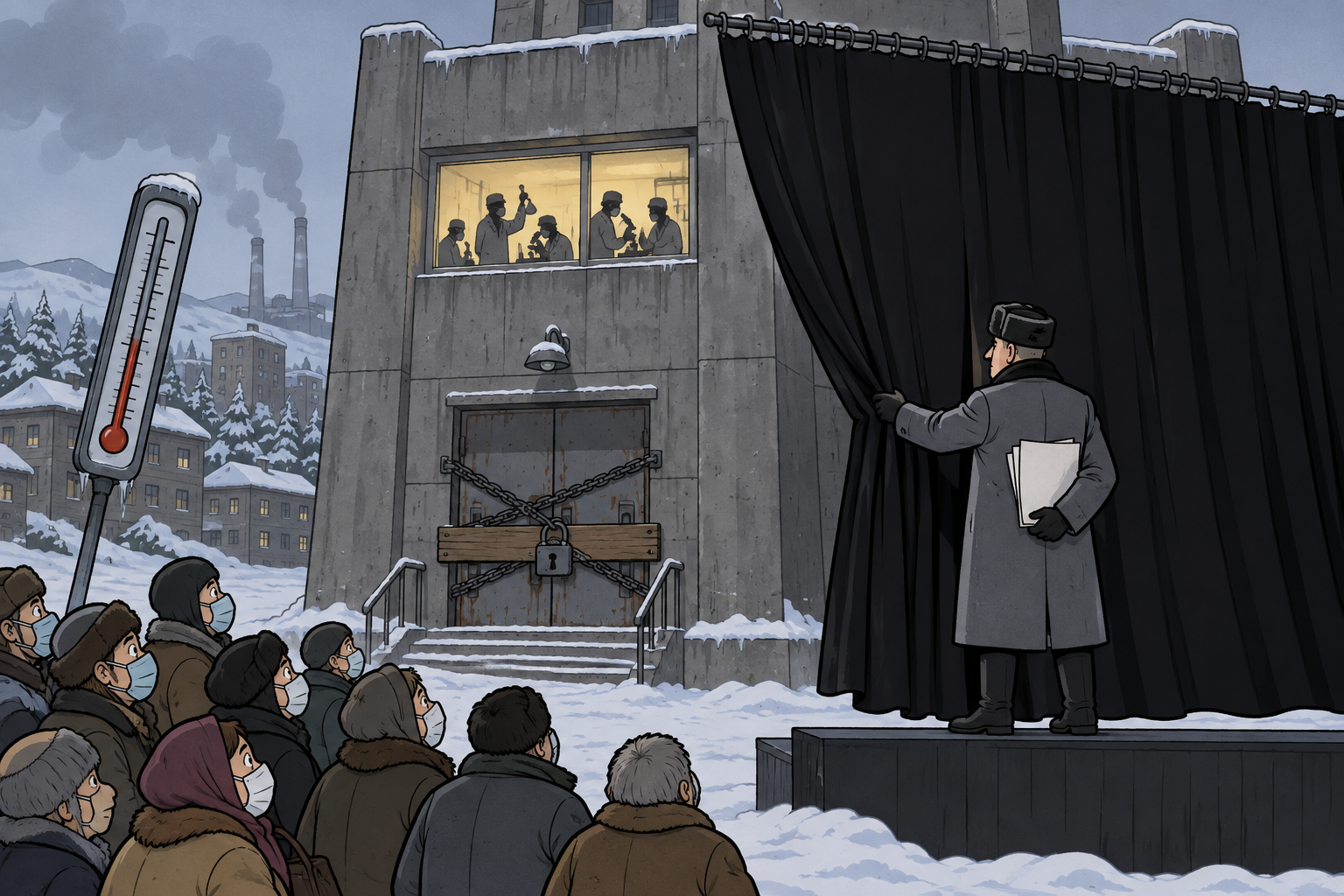
At least 26 vessels bypassed the blockade. Iran was still shipping 1.1 million barrels a day.
The U.S. naval blockade was never airtight. Iran has spent years — accelerated dramatically after the 2019 OFAC sanctions reimposition — building a shadow fleet of aging tankers that operate outside the normal maritime accountability system. These vessels sail under flags of convenience in obscure jurisdictions, disable their Automatic Identification System (AIS) transponders to go dark in transit, carry falsified cargo manifests, and use ship-to-ship transfers in international waters to launder the origin of Iranian crude into third-country supply chains.
According to Lloyd’s List — the authoritative maritime intelligence publication — at least 26 shadow fleet vessels bypassed the U.S. naval blockade during the height of the Hormuz crisis. Iran maintained an estimated export rate of approximately 1.1 million barrels per day even while CENTCOM reported redirecting 100+ commercial vessels attempting to reach Iranian ports. The blockade squeezed Iran’s revenue significantly — the Pentagon estimates a $4.8 billion loss by May 1 — but it did not choke the regime out entirely.
The shadow fleet is not an improvised workaround. It is a structured system. Iran uses front companies in Russia, China, the UAE, and smaller Gulf states to register vessels, arrange financing, and conduct port calls in jurisdictions that either lack the capacity to enforce OFAC sanctions or actively look the other way. The Lloyd’s List analysis notes the fleet was “disrupted but not completely deterred” — a formulation that captures the fundamental tension in any partial blockade: enough pressure to cost money, not enough to compel surrender.
At least 26 Iranian shadow fleet vessels have bypassed the US naval blockade in the Strait of Hormuz according to @LloydsListNews — disrupted but not deterred. Iran's export rate remains ~1.1M bpd despite the blockade. The pressure is real; the chokehold is not total.
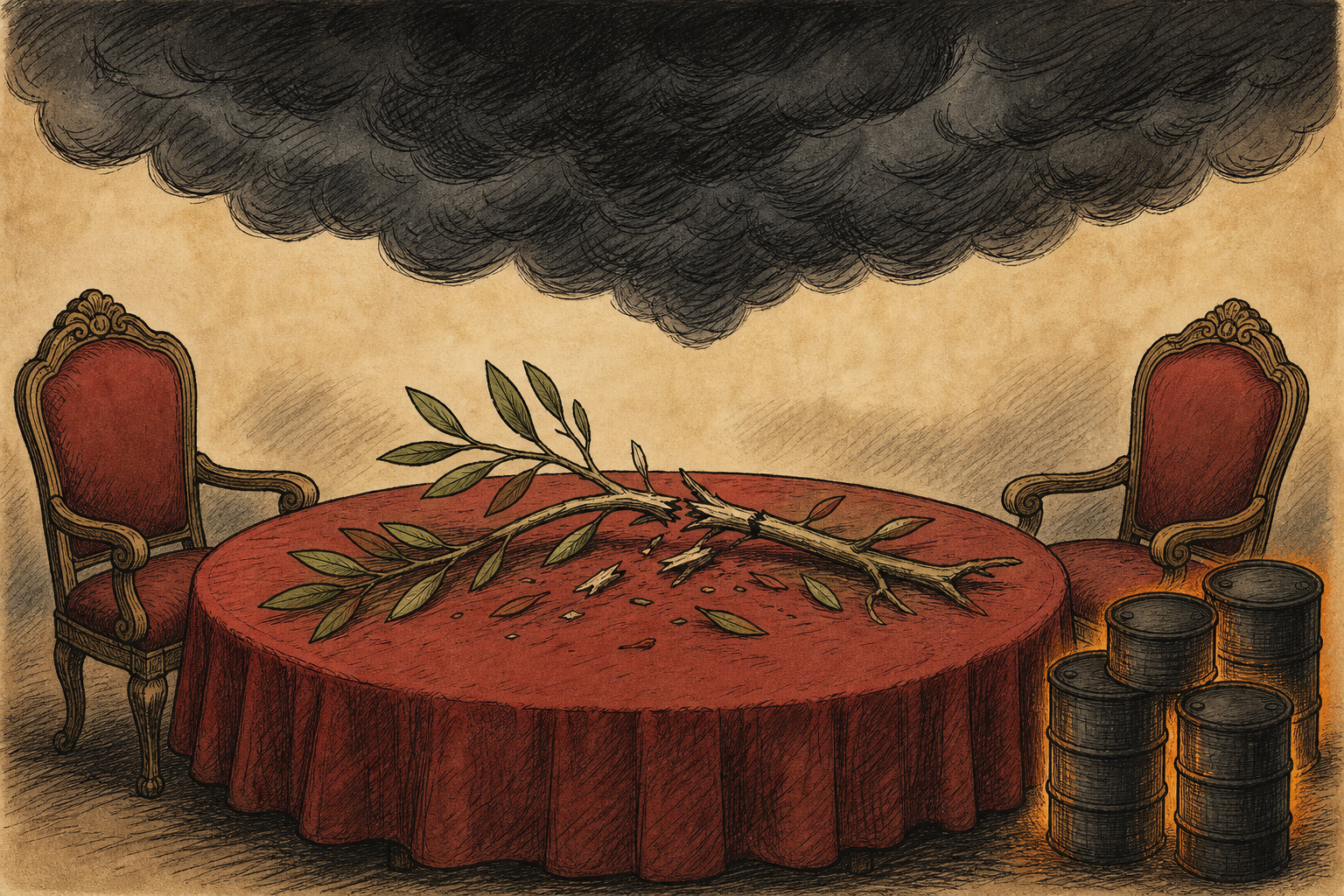
$126 Brent. $166 Dubai. $4.30 at the pump. $5.80 diesel. This is what a closed strait costs.
The Strait of Hormuz is not a geographic curiosity. It is the valve through which approximately 20% of the world’s total petroleum liquids flow on any given day — roughly 21 million barrels per day in pre-crisis conditions, according to the U.S. Energy Information Administration. When Iran closed it, the global oil market did not adapt through substitution. It spiked.
Brent crude, the global benchmark, peaked at $126 per barrel in March 2026 — its highest price since the immediate aftermath of Russia’s 2022 invasion of Ukraine. Dubai crude, the Gulf benchmark, briefly touched $166 per barrel as regional buyers competed for the limited supply able to route around Hormuz via Saudi Arabia’s East-West Pipeline and the UAE’s Abu Dhabi Crude Oil Pipeline.
For American consumers, the translation was immediate. Regular unleaded gasoline — already elevated by post-COVID inflation — peaked near $4.30 per gallon nationally. Diesel, the fuel that moves freight, agriculture, and construction, exceeded $5.80 per gallon — a figure that cascades through supply chains into the price of nearly everything Americans buy. The EIA Hormuz forecast of April 7, 2026 projected a sustained disruption scenario could push Brent toward $150+ within 60 days if no diplomatic resolution emerged.
Iran created a bureaucracy to administer the ransom. The US designated it a terrorist entity.
On May 18, 2026, Tehran announced the creation of the Persian Gulf Strait Authority (PGSA)— formally described as an administrative body to manage “safe and orderly transit passage” through the Strait of Hormuz. In practice, it was a toll collection mechanism: commercial vessels wishing to transit the strait would be required to obtain Iranian permits and pay fees to an IRGC-controlled entity. The regime framed it as a sovereign maritime rights claim under the United Nations Convention on the Law of the Sea. The U.S. and EU framed it as extortion.
Nine days later, on May 27, 2026, the U.S. Treasury Department designated the PGSA as a Specially Designated National (SDN) under OFAC — the same category as designated terrorist organizations and state-sponsored sanctions targets. The designation means any U.S. person or financial institution that interacts with the PGSA faces criminal liability. Any ship that pays PGSA transit fees using U.S.-dollar transactions or U.S. financial infrastructure is in violation of federal law.
Secretary of the Treasury Scott Bessent described the designation in direct terms: the PGSA is “the Iranian military’s latest attempt to extort global maritime trade.” The EU Council’s companion action on May 22 extended the EU’s existing Iran sanctions framework to specifically target individuals and entities involved in impeding lawful transit passage — the legal architecture needed to penalize PGSA affiliates and shadow fleet operators in European jurisdictions.
Legal status after May 27: OFAC Specially Designated National. U.S. persons and institutions are prohibited from any transactions with the PGSA. Dollar-clearing financial institutions that process PGSA transit fees face secondary sanctions exposure.
EU parallel action (May 22): EU Council extends existing Iran sanctions framework. New ground: targets entities involved in “actions impeding lawful transit passage and freedom of navigation” — directly covering PGSA affiliates, shadow fleet operators, and insurance providers.
Practical effect: Any commercial shipper that pays PGSA tolls using Western financial infrastructure is in violation of both U.S. and EU law. The designation does not physically stop the PGSA from operating — it makes the costs prohibitive for any legitimate operator.
Sources: US Treasury SDN designation sb0507; EU Council press release May 22, 2026; gCaptain; PBS NewsHour wire.
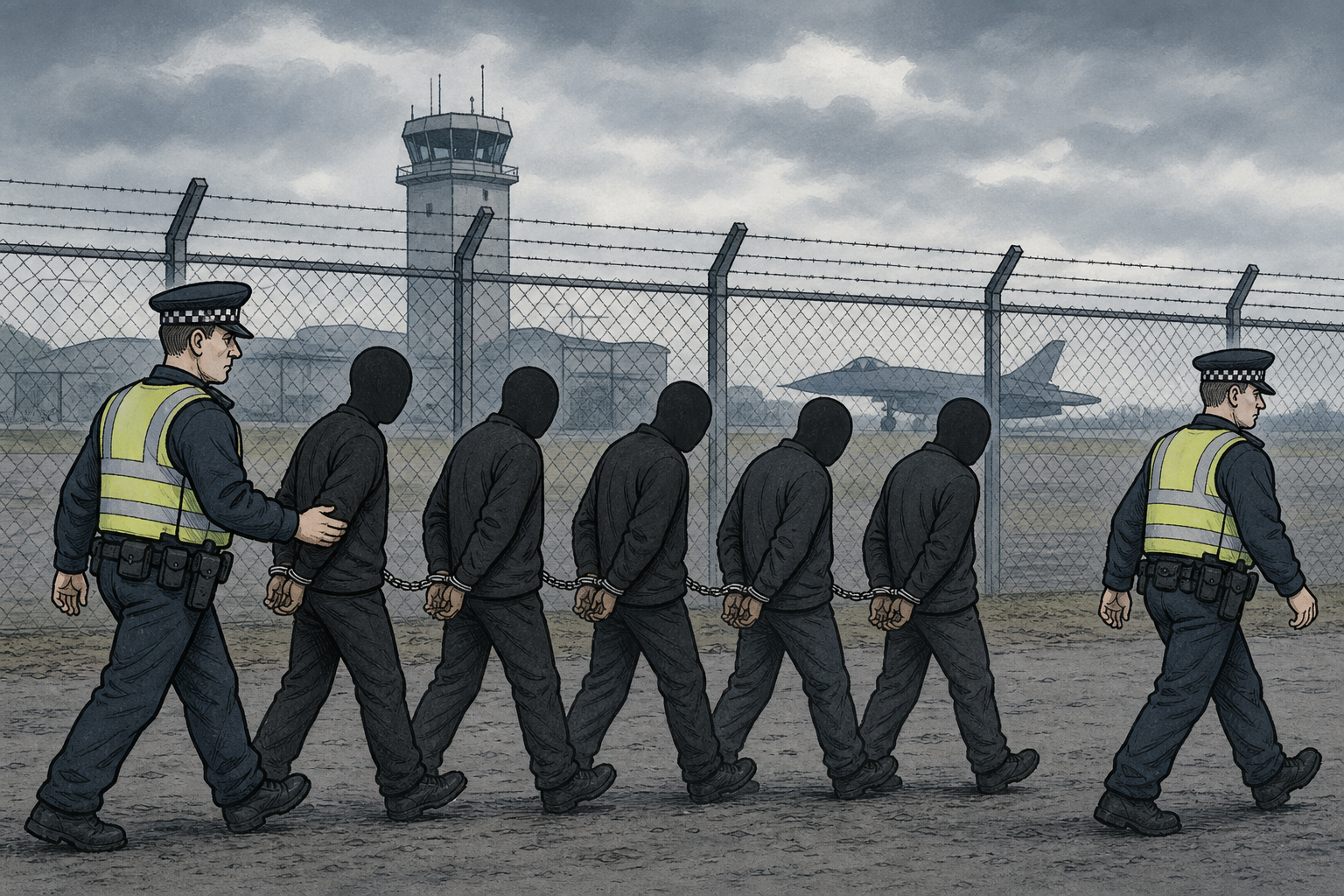
IRGC mine-layers and a Bandar Abbas SAM site destroyed. CENTCOM called it self-defense. Iran called it an act of war.
On May 25, 2026, CENTCOM confirmed U.S. forces conducted what it described as “self-defense strikes” in the Persian Gulf. The targets were two IRGC mine-laying boats that U.S. military commanders assessed posed an imminent threat to American warships enforcing the blockade, and a surface-to-air missile (SAM) site at Bandar Abbas — Iran’s primary naval base on the Strait and the headquarters of Iran’s naval mine warfare program. CENTCOM Spokesperson Capt. Tim Hawkins confirmed the strikes.
The mine-laying boats were the specific trigger. IRGC naval units had been deploying contact mines and anchor mines in the strait’s main shipping channels — a tactic designed to deter commercial traffic and raise insurance costs for any vessel attempting the transit under U.S. escort. U.S. minesweepers and helicopter units have been clearing mines under Project Freedom operations; destroying the boats laying them upstream reduced the pace of new mine placement.
The strikes were the second set of U.S. offensive actions during the ceasefire period. Iran’s public response was to threaten escalation while simultaneously continuing nuclear negotiations in Qatar via Special Envoy Steve Witkoff and Senior Adviser Jared Kushner. The gap between Tehran’s military actions and diplomatic posture has been the defining characteristic of the entire post-Khamenei period: every IRGC escalation has been paired with a parallel diplomatic signal that negotiations remain possible.
U.S. forces conducted self-defense strikes against two IRGC mine-laying vessels and a surface-to-air missile site at Bandar Abbas on May 25. These actions were taken to protect U.S. warships and commercial shipping operating under Project Freedom escort. CENTCOM continues to protect freedom of navigation in the Strait of Hormuz.
“The Iranian military's latest attempt to extort global maritime trade will not stand. We will not allow a closed chokepoint to become a permanent feature of the global energy system.”
Secretary of the Treasury Scott Bessent — PGSA SDN Designation, May 27, 2026
Trump says the blockade is ending. The deal conditions: no nuclear weapon, no tolls, open shipping. Say hello to your families.
On May 29, 2026, President Trump announced on Truth Social that the U.S. naval blockade is being lifted pending final deal terms. The announcement was addressed as much to the stranded sailors and shipping crews as to the geopolitical audience: Trump personally greeted the 20,000 sailors as a postscript to his strategic announcement.
Iran must agree that they will never have a Nuclear Weapon or Bomb. The Hormuz Strait must be immediately open, no tolls, for unrestricted shipping traffic... Say HELLO to your wives, husbands, parents, and families from me, your favorite President!
The announcement framed the deal around two non-negotiable conditions: no Iranian nuclear weapon, and an immediately open Strait with no tolls for unrestricted commercial shipping. Both conditions are consistent with the 14-point framework that Special Envoy Witkoff and Jared Kushner have been negotiating in Qatar. The CNBC report on the announcement noted that deal terms remain “pending final agreement” — meaning the naval blockade is being suspended as a good-faith gesture ahead of a final signature, not lifted as a consequence of one.
The significance of the blockade lifting should not obscure what drove Iran to the table. The combination of $4.8 billion in lost oil revenue, the PGSA designation that effectively criminalized the toll regime, coordinated EU sanctions that removed European financial infrastructure from the equation, and two rounds of direct CENTCOM strikes on IRGC military assets created a cost structure that made continued closure increasingly untenable. The shadow fleet softened the economic blow; it did not eliminate it.
Hormuz: The Strait must be immediately open, with no tolls, for unrestricted commercial shipping. The PGSA toll regime must be dismantled. Consistent with Treasury SDN designation of PGSA (sb0507) making toll collection a sanctions violation.
Blockade status: Naval blockade being lifted as a precondition to final signature, not a consequence of it. CENTCOM Project Freedom missions continue in an escort/protection posture rather than blockade enforcement.
What remains unresolved: Iran's 440.9 kg of 60%-enriched uranium stockpile; IAEA access restoration; ballistic missile program; sanctions relief timeline; PGSA dissolution mechanism.
Sources: CNBC deal announcement May 29, 2026; Trump Truth Social post May 29; Axios 14-point framework reporting; Treasury sb0507.