Ukraine Signed a Missile-Shield Pact in Paris —
Hours Later, Russia Hit Kyiv Again.
In Paris on Monday, Ukraine and nine European allies — Denmark, France, Germany, Italy, the Netherlands, Norway, Spain, Sweden, and the United Kingdom — signed a joint declaration founding the Integrated Anti-Ballistic Missile Coalition, a pact built around Ukraine’s homegrown Freya interceptor and designed to stop exactly the kind of ballistic-missile barrage that has hit Kyiv four times this month. President Volodymyr Zelensky called it a turning point, telling assembled leaders that the more interceptors Ukraine fields, the sooner Russia’s missiles stop working as leverage at the negotiating table.
He did not have to wait long to test that theory. Just after midnight on July 14 — hours after the ink dried at the Élysée — Russia fired six to eight ballistic missiles and a wave of drones at Kyiv, striking warehouses, vehicles, a boarding school, and Odesa-region port fuel infrastructure. It was the fourth Russian barrage on the Ukrainian capital in under two weeks.
This one, unlike the three that preceded it, killed no one — a fact Ukrainian officials credit to the very air defenses the new coalition exists to multiply.
- $700,000 — cost of one Ukrainian Freya interceptor — roughly a fifth of a $3.8 million U.S. Patriot PAC-3 · Source: Reuters; Defense News
- 10 nations — signed the Integrated Anti-Ballistic Missile Coalition declaration in Paris, July 13 · Source: Élysée (French Presidency)
- 0 — confirmed casualties in the July 13–14 strike, despite 6–8 ballistic missiles and dozens of drones · Source: Kyiv State Emergency Service; Mayor Klitschko
- 31 / 22 / 4 — dead in the three Russian strikes on Kyiv earlier in July — July 2, 6, and 8 · Source: Reuters; AP wire counts
- 12 months — Zelensky's target timeline for Freya to reach operational capability · Source: Reuters
The missile-defense declaration was signed alongside a larger, roughly 37-nation Coalition of the Willing summit at the Hôtel des Invalides, hosted by French President Emmanuel Macron. At that broader summit, France separately agreed to license Ukraine to produce SCALP cruise missiles and interceptor components on Ukrainian soil, and pledged 16 Rafale fighter jets for delivery in 2028 and 2029. Zelensky awarded Macron Ukraine’s Order of Freedom for the effort. German Chancellor Friedrich Merz, one of the ten signatories to the narrower anti-ballistic pact, said the arrangement would “help our defence industries in Europe work even more closely together and learn from one another.”
Then came the numbers no summit communiqué controls. Just after midnight local time, Russian ballistic missiles and drones began hitting Kyiv — the fourth such barrage on the capital since July 2, when 74 missiles and 496 drones killed 31 people and injured 102 in the deadliest strike of the month. A second attack on July 6 killed at least 22; a third on July 8 killed four. Whatever the coalition accomplished on paper in Paris, it did not stop a fourth attack from reaching Kyiv within hours.
The coalition’s founding document — published on the Élysée’s official site — states plainly: “Protecting Europe requires a comprehensive solution, in the form of an integrated missile defense architecture, to deter and neutralize future missile threats.” In practice, that means jointly funding and scaling Freya, also called the FP-7.X interceptor, a homegrown Ukrainian system developed by the Kyiv-based defense firm Fire Point and unveiled in May 2026.
Denmark · France · Germany · Italy · the Netherlands · Norway · Spain · Sweden · Ukraine · the United Kingdom
Signed in Paris, July 13, 2026. Source: Élysée (French Presidency), official Joint Declaration text.
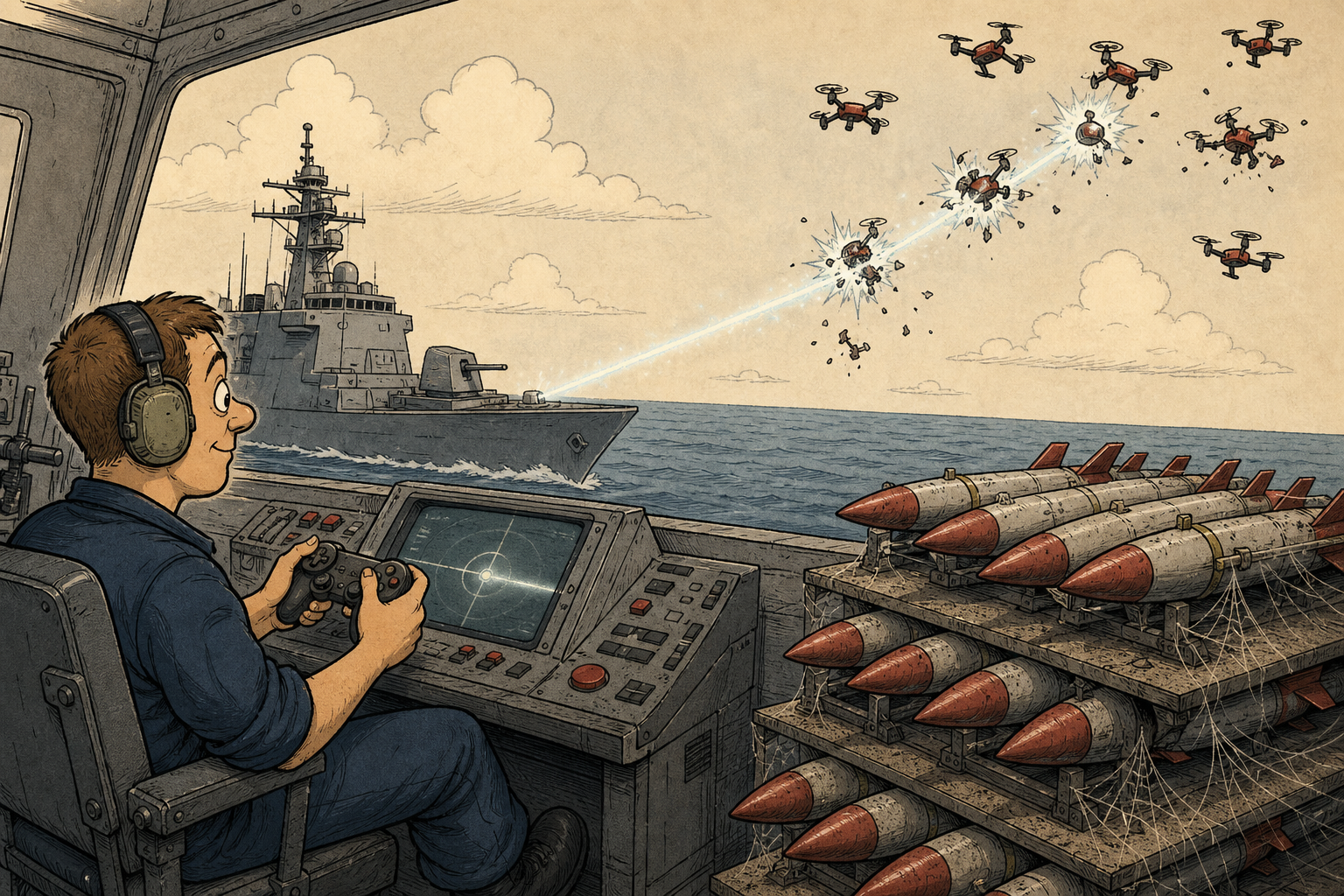
The reason Freya is the centerpiece is arithmetic, not sentiment. A single Freya interceptor costs roughly $700,000 to produce, according to Reuters reporting on Fire Point’s own figures — versus roughly $3.8 million for a U.S.-made Patriot PAC-3, the current gold standard for shooting down ballistic missiles. That is better than a five-to-one cost advantage, and it matters enormously in a war where Russia has shown it can fire dozens of ballistic missiles in a single night: no Western ally can supply Patriot interceptors fast enough, or cheaply enough, to match that rate indefinitely. Zelensky has set a target of getting Freya to full operational capability within twelve months, using the coalition’s members to help fund production and, eventually, license it abroad — the same model France is using for SCALP.
“The more means Ukraine has to shoot down Russian ballistic missiles, the greater the chance that Putin will come to the negotiating table, as his last argument in this war will no longer work.”
President Volodymyr Zelensky, Paris, July 13, 2026 — via Reuters
Here in France, we began today with the founding meeting of our anti-ballistic coalition. I hope that the FREYJA project will succeed and strengthen our anti-ballistic defense.
Zelensky has been careful to frame Freya as additive, not substitutive: “Our work on a joint system – Freyja – is not intended to replace existing systems. It is a way to supplement our defence,” he said. Macron, posting on X after the signing, framed the choice as one of collective security: “Face à la menace balistique, nous faisons un choix clair: protéger l’Ukraine, renforcer notre sécurité collective et bâtir l’Europe de la défense” — “Facing the ballistic threat, we are making a clear choice: protect Ukraine, strengthen our collective security and build the Europe of defense.”
Face à la menace balistique, nous faisons un choix clair : protéger l'Ukraine, renforcer notre sécurité collective et bâtir l'Europe de la défense. ('Facing the ballistic threat, we are making a clear choice: protect Ukraine, strengthen our collective security and build the Europe of defense.')
Russia’s barrage began just after midnight on July 14 and continued into the early morning, with air-raid alerts across the capital until roughly 4:29 a.m. local time. Ukraine’s air force said it intercepted five of the six to eight ballistic missiles fired — its first confirmed ballistic intercepts in nearly two weeks, after Russian warheads evaded Kyiv’s air defenses in the July 2, 6, and 8 strikes. Fires broke out at warehouses in the capital’s Holosiivskyi district and among vehicles in Darnytskyi; windows were blown out at a boarding school; separate strikes hit port fuel infrastructure in the Odesa region.
For the first time in four strikes this month, no one died. Kyiv’s State Emergency Service confirmed no casualties, and Mayor Vitali Klitschko said plainly, “No one was hurt.” A Business Recorder wire dispatch carried the same finding in its headline: “Russian missiles strike Kyiv, but no casualties, Ukrainian officials say.” The contrast with the month’s earlier strikes is stark — 31 dead on July 2, 22 dead on July 6, four dead on July 8 — and Ukrainian officials pointed to the intercepts, not luck, as the reason.
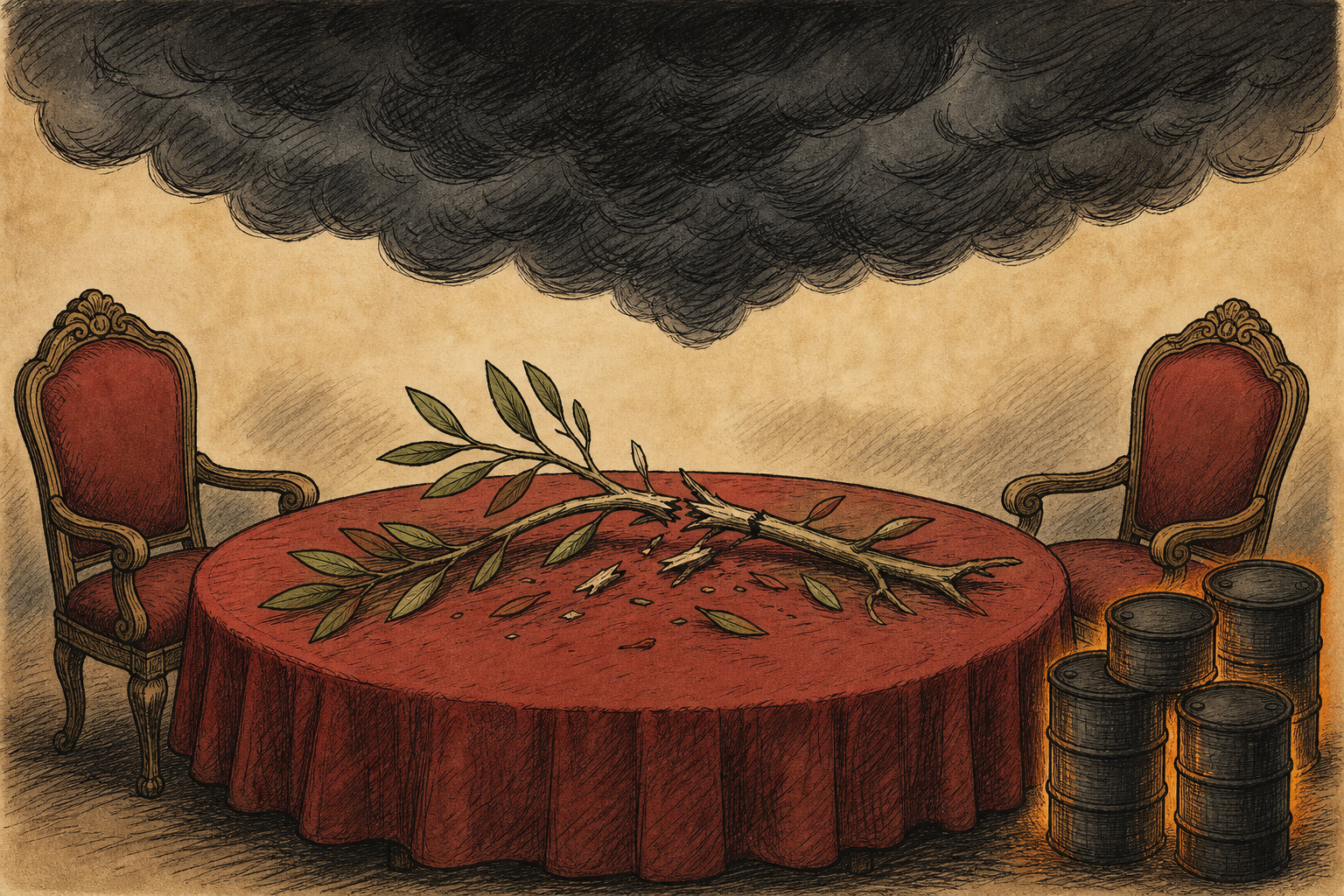
Russia’s government did not wait long to respond to the new coalition, either. Kremlin spokesman Dmitry Peskov dismissed it outright, in remarks carried by the Associated Press and PBS NewsHour, calling it “a coalition of warmongers” driven by “the profound delusion that it’s possible to inflict a strategic defeat on our country” — “a coalition of the deluded, a coalition of those who incite the war.” Russia’s Defense Ministry, separately, claimed its strikes on Kyiv hit “military-industrial facilities involved in the development and production of various types of missiles and drones” — a claim Ukrainian officials did not confirm and that Civic Intelligence has not independently verified.
“This is a coalition of warmongers... They are driven by the profound delusion that it's possible to inflict a strategic defeat on our country, so this is a coalition of the deluded, a coalition of those who incite the war.”
Dmitry Peskov, Kremlin spokesman — via Associated Press, PBS NewsHour
Zelensky’s framing runs the opposite direction. Ukrainska Pravda quoted him thanking Macron directly: “I am thankful to President Emmanuel Macron for organising and hosting the first meeting of the European Anti-Ballistic Coalition.” For Kyiv, the coalition is proof of allied resolve; for Moscow, it is proof of allied escalation. Neither framing, on its own, changes what either side does next.
None of this happened in a vacuum. Five days earlier, at NATO’s Ankara summit on July 8, President Donald Trump (R) agreed to license Ukraine to produce U.S. Patriot interceptors domestically, and NATO allies pledged roughly €70 billion — about $80 billion — in 2026 aid to Ukraine, with a two-year commitment reported as high as €140 billion. Paris and Ankara together represent the broadest allied push yet to arm Ukraine’s air defenses at scale. But scale is exactly what neither pledge yet delivers: a licensing agreement is not a functioning production line, and Zelensky’s own twelve-month target for Freya is an aspiration, not a delivered capability. Ukraine has never mass-produced an interceptor at the volume this war demands.
That gap is the story underneath the story. A pact signed in Paris and a barrage over Kyiv, hours apart, are not really in tension — they are two data points on the same timeline, one describing what allies intend to build and the other describing what Russia can already do tonight. Until Freya, or something like it, is manufactured and fielded at the rate Russia fires ballistic missiles, the ten-nation coalition’s real test is not the declaration it signed on July 13. It is every night after.
Ukraine and nine allies signed a declaration in Paris on July 13 founding a missile-defense coalition built around a $700,000 interceptor a fifth the cost of a Patriot — and less than 24 hours later, Russia fired six to eight ballistic missiles at Kyiv anyway. This time, unlike the three Russian strikes earlier in July that killed 57 people combined, no one died; Ukraine’s air force says it intercepted five of the incoming missiles. Zelensky calls the coalition proof his air defenses can outlast Putin’s missiles; the Kremlin calls it warmongering. Both are claims about a system that, by Zelensky’s own timeline, does not yet exist at scale.