Qatar Rushes to Save the Talks. Iran Warns Israel Won’t Be Spared.
And Israel Warns the US of a Plot to Kill Trump.
Ayatollah Ali Khamenei was finally lowered into the ground this week — his coffin lifted by helicopter over the crowds for the final stretch into Mashhad’s Imam Reza shrine, as mourners chanted “I swear by the blood of the supreme leader, Trump, we will kill you!” beneath banners reading “We Will Kill Trump” and “There will be blood.” His son and successor, Mojtaba Khamenei, still has not appeared in public. As this site has reported, that funeral came after months of war, a fragile April ceasefire, and two consecutive nights of American strikes — CENTCOM’s July 7–8 barrage on more than 80 targets and a second wave on July 9 that Iran’s Health Ministry says killed at least 14 people.
What’s new is the plot. A Wall Street Journal exclusive, corroborated by CNN, Fox News, The Hill, the Times of Israel, Newsmax, and Haaretz, reports that Israel handed Washington intelligence on a specific, new Iranian plan to assassinate President Trump (R) — separate from the generic threat chatter that has surrounded him for months, and reportedly the real reason he switched planes leaving the NATO summit in Ankara. Asked about it at a press conference there, Trump shrugged: “I’m number one on the kill list [for Iran]… I don’t really care because I’m doing my job.”
Around that plot, everything else this week orbits: Qatari negotiators shuttling into Tehran to save a collapsing ceasefire memorandum, Iran warning Israel it “will not be spared” from any future strike, a Hebrew University poll showing Trump’s standing with the Israeli public in freefall, an indicted terror cell inside Israel’s own borders, and an unresolved argument between Jerusalem and Washington over selling F-35 fighter jets to Turkey. This page sources each thread individually and focuses on what is new since the night of July 9 — not a rehash of the strikes themselves.
- 28% — of Israelis now say Israel's security is a “central consideration” for Trump, down from 61% in March 2026 · Source: Hebrew University poll, via The Jerusalem Post
- -23 net — Trump's net favorability rating among Israelis, down from +16 in March — now behind Netanyahu, Naftali Bennett, and Gadi Eisenkot · Source: Hebrew University poll
- 69.1% — of Israelis call Trump's handling of the Iran war “failed” or “poor”; 92.1% believe Iran came out ahead · Source: Hebrew University poll
- 4 indicted — Segev Shalom residents charged July 10 in an alleged plot targeting Beersheba's central bus station · Source: The Jerusalem Post
- $68/bbl — North Sea Dated crude by early July — the lowest since January — before the July 7–8 escalation “clouded” the 2027 outlook · Source: IEA July 2026 Oil Market Report, via Al Jazeera
Mashhad: Khamenei's coffin is buried; Mojtaba Khamenei still hasn't spoken publicly.
Washington: the WSJ reports Israel gave the US intelligence on a specific plot to kill Trump.
Doha & Tehran: Qatari negotiators race to save the ceasefire; Trump says the "Cease Fire is OVER" while agreeing to keep talking.
Jerusalem: Trump's support among Israelis craters, even as four Segev Shalom residents are indicted in a domestic terror plot.
Ankara: Netanyahu and Trump clash — mostly in public — over a possible F-35 sale to Turkey.
The oil market: the IEA warns the standoff could undercut a forecast 2027 supply surplus.
The seven-day mourning procession this site previewed before it began ended this week with the actual burial: Khamenei’s coffin carried through Mashhad, Iran’s second-largest city and home to the Imam Reza shrine, one of Shia Islam’s holiest sites. For the final approach through the densest crowds, organizers lifted the coffin by helicopter rather than attempt to move it through the packed streets below — a logistical choice that also doubled as the procession’s most visually striking moment, broadcast across Iranian state media and picked up by international outlets within hours.
The crowd’s chants left little ambiguity about where grief ended and threat began. Mourners were recorded chanting, “I swear by the blood of the supreme leader, Trump, we will kill you!” while banners overhead read “We Will Kill Trump” and, more bluntly, “There will be blood.” This is consistent with what this site documented in the run-up to the funeral — explicit, public threats against the American president woven directly into state-tolerated mourning rhetoric, not fringe commentary at the margins of the crowd. That the banners were visible to international camera crews rather than confined to closed rooms is itself a signal: Iranian authorities either could not, or chose not to, suppress open calls for the assassination of a sitting American president at the country’s single largest public gathering in years.
“I swear by the blood of the supreme leader, Trump, we will kill you!”
Chant recorded among mourners at Khamenei's burial procession, Mashhad, Imam Reza shrine, July 2026
Iran had billed the week-long procession as a potential draw of up to twenty million mourners, a scale this site has previously reported reflects deliberate state stage-management as much as spontaneous grief — a funeral timed not to the death itself, which came in the February 28 strike, but to a ceasefire stable enough to safely gather millions of people in one place without inviting another strike on the crowd. This week’s burial supplied the spectacle Tehran had spent months building toward. The chants supplied a headline of their own.
One figure remained conspicuously absent from all of it. Mojtaba Khamenei, installed as Iran’s new Supreme Leader after his father’s death in the February 28 strike, still has not appeared publicly — not at the funeral, not in the week since. As this site has noted in its prior coverage of the succession, that absence leaves genuine uncertainty about who is actually directing Iran’s posture toward the United States and Israel during the most volatile week of the ceasefire’s short life.
The chants over Khamenei’s coffin are rhetoric, not intelligence — a crowd’s fury is not a plan. But they establish the atmosphere into which the next story lands: a specific, actionable threat against Trump, reported not by Iranian state media but by Israeli intelligence services and broken by one of the world’s most rigorous financial newsrooms.
The single thread tying this week’s developments together is a Wall Street Journal exclusive: Israel shared intelligence with the United States describing a new, specific Iranian plot to assassinate Trump. The Journal’s reporting distinguishes this from the broad, ongoing threat chatter that has followed Trump since the war began — officials described it as a concrete plan, not a generalized warning. CNN, Fox News, The Hill, the Times of Israel, Newsmax, and Haaretz have each independently corroborated the core of the report.
According to the reporting, the intelligence explains why Trump switched planes leaving the NATO summit in Ankara — a change in travel arrangements that drew notice at the time but no public explanation. The United States, notably, had not independently vetted the Israeli intelligence as of the reporting. Some U.S. officials cited in the coverage went further, voicing suspicion that Israel may be shading or emphasizing threat intelligence specifically to influence Trump’s decision-making on Iran — a suspicion sharpened by Prime Minister Netanyahu’s documented skepticism of Trump’s diplomatic approach and by a separate, simultaneous dispute over a potential F-35 fighter jet sale to Turkey, detailed further below.
The Wall Street Journal broke the story. It has since been independently corroborated, with additional reporting and detail, by CNN, Fox News, The Hill, the Times of Israel, Newsmax, and Haaretz — a corroboration spread across the ideological spectrum of the outlets covering it.
What remains unconfirmed is the underlying intelligence itself: the United States has not independently vetted the specific threat Israel described, which is the detail driving the suspicion described below.
Trump himself addressed the threat directly at the Ankara press conference, with a shrug rather than alarm: “I’m number one on the kill list [for Iran]… I don’t really care because I’m doing my job.” Whether that intelligence is fully independent, partially shaped by Israeli strategic interests, or both is precisely the question U.S. officials themselves are reportedly still trying to answer — this page reports the dispute as reported, not as resolved.
It is worth being precise about what makes this report different from the routine security posture around any sitting president, let alone one who has been at war with Iran for months. Generalized threat chatter targeting Trump has been a background fact of this conflict since February. What the Journal describes is something narrower and more specific: a plan, attributed to a specific intelligence stream, that Israeli officials considered credible enough to hand directly to Washington rather than fold into the ordinary flow of threat briefings. That distinction — specific plan versus generic chatter — is the entire reason this story broke through where months of background threat reporting did not.
While the assassination-plot story dominated headlines, the more urgent diplomatic action moved through Doha and Tehran. Mohammad Bagher Zolghadr, secretary of Iran’s Supreme National Security Council, warned publicly that Israel “will not be spared from the response” to any future attack on Iranian infrastructure — and, separately, called President Trump “the world’s most hated figure.” It is the kind of rhetoric this site has tracked throughout the war, but it lands differently this week, layered directly on top of a ceasefire that collapsed and reopened within 48 hours.
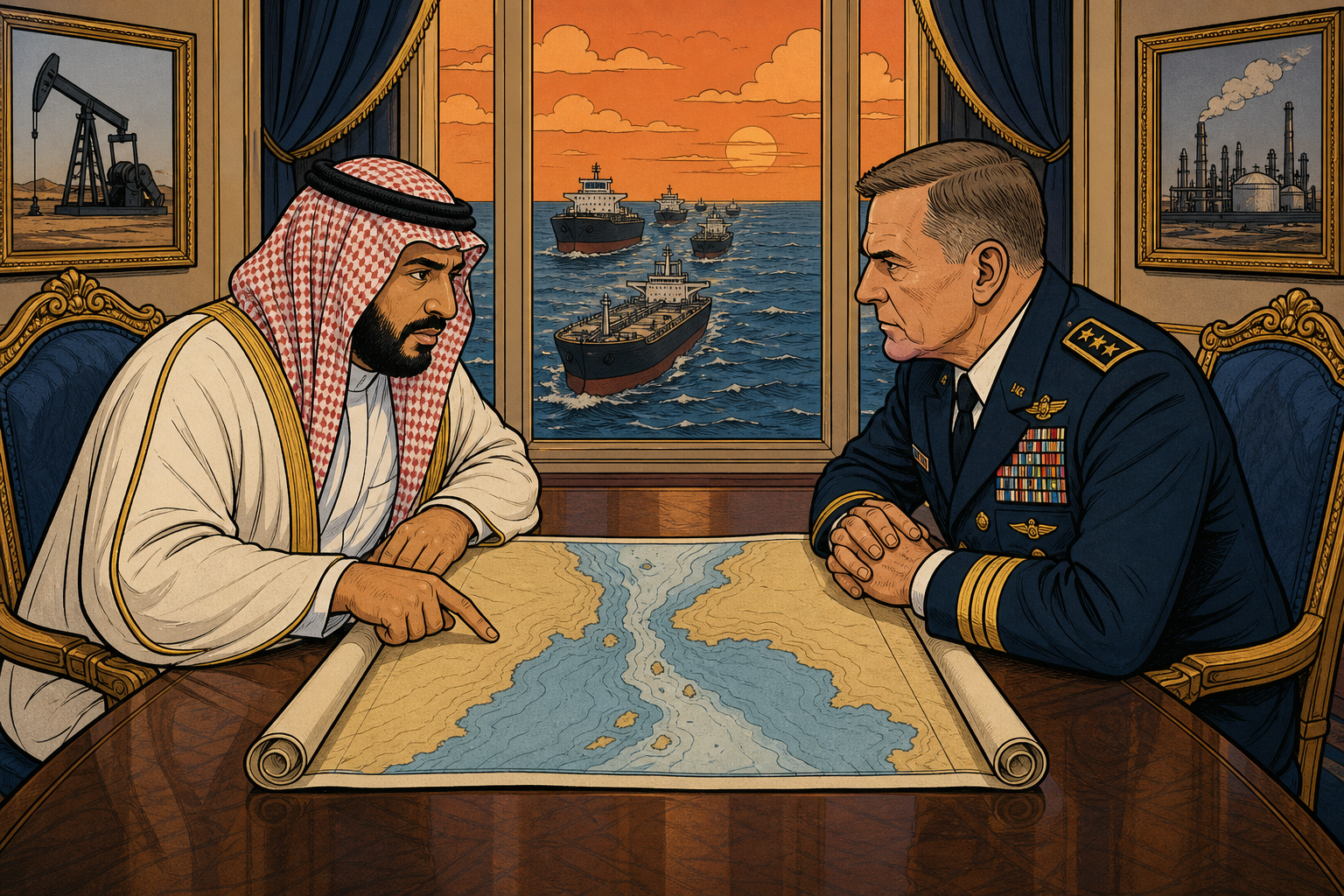
Qatari negotiators, coordinating with Washington, are now in Tehran attempting to salvage the ceasefire memorandum of understanding and resolve the underlying Strait of Hormuz dispute that triggered the July 7–9 strikes in the first place. As this site has reported, that dispute traces to Iranian threats against Gulf shipping through the Strait, the chokepoint that carries roughly a fifth of the world’s oil supply — the same chokepoint whose status now shapes the IEA’s market forecasting, detailed further below. Trump, characteristically, is running both tracks at once — talking and threatening simultaneously. He is publicly threatening strikes on Iranian power, water, and desalination infrastructure if the escalation continues, even as his administration engages the Qatari-brokered process.
“The world's most hated figure.”
Mohammad Bagher Zolghadr, Secretary, Iran's Supreme National Security Council, describing President Trump, July 2026
The Islamic Republic of Iran has asked us to continue 'talks.' We have agreed to do so, but the United States has stated to them, in no uncertain terms, that the Cease Fire is OVER!
Verbatim, independently verified via five or more news outlets reporting the same text.
That combination — declare the ceasefire over while continuing to negotiate, threaten civilian infrastructure while accepting mediated talks — is what Al Jazeera opinion writer Farhad Pashavand describes, in an analysis piece rather than a straight news report, as the United States “building a new pressure architecture against Iran”: using the threat of further strikes as leverage inside the diplomatic track rather than as an alternative to it. That framing is one analyst’s argument, not a settled fact, and this page presents it as such — but it is a useful lens for a week that otherwise looks contradictory on its face.
A Hebrew University of Jerusalem poll, fielded June 17–20, 2026, offers previously unpublished context on this site for why Israeli officials might be inclined to sharpen the threat picture they hand Washington: Trump’s standing with the Israeli public has collapsed since the war’s early months. The fieldwork is roughly three weeks old as of this story’s publication, but the analysis and framing built around it are new, and the numbers are stark enough to matter regardless of the three-week lag.
Only 28% of Israelis now say Israel’s security is a “central consideration” for Trump — down from 61% in March 2026.
Trump’s net favorability among Israelis fell from +16 to -23, putting him behind Prime Minister Netanyahu, former Prime Minister Naftali Bennett, and former IDF Chief of Staff Gadi Eisenkot.
69.1% of respondents call Trump’s handling of the war “failed” or “poor.”
92.1% of respondents believe Iran, not Israel or the United States, came out ahead in the conflict.
A standard caveat applies to any single poll: fieldwork three weeks old can move, sample sizes carry margins of error, and one survey is not a trend line. This page reports the Hebrew University figures as reported — a single, specific measurement of Israeli sentiment at a specific moment — not as a permanent verdict on how Israelis will ultimately judge Trump’s handling of the war once it fully ends.
None of this proves the suspicion, cited in the Journal’s assassination-plot reporting, that Israel is shading its intelligence sharing to influence Trump’s Iran decision-making. But it does establish the political backdrop those U.S. officials would have had in mind when they raised the question: a Netanyahu government watching its own public turn sharply against the American president’s handling of a war fought partly on Israel’s behalf.
There is a coalition-management angle here that goes beyond any one poll. Wars fought by more than one country tend to fray at exactly this kind of seam — not over battlefield disagreements, but over whether each partner believes the other is prioritizing its interests. A Netanyahu government that reads its own public as souring on Trump has every incentive to make sure Washington keeps treating Israeli security as inseparable from American decision-making on Iran, whether that means intelligence sharing, strike coordination, or simply public messaging. The poll numbers do not prove intent. They do explain motive.
Separately from the Iran-facing story, Israeli prosecutors on July 10, 2026 indicted four residents of Segev Shalom, a Bedouin town in the Negev, following a joint investigation by Israel Police, the Shin Bet internal security service, and the State Prosecutor’s Office. The four were arrested during undercover Border Police operations conducted in May and June 2026 — before the indictment was unsealed this week.
According to the indictment as reported, the alleged plot evolved over time: what investigators say began as a plan to carry out a stabbing attack escalated into an alleged mass-shooting plan targeting Beersheba’s central bus station, a high-traffic civilian transit hub, alongside a separate planned attack on the Segev Shalom police station itself. The primary Jerusalem Post reporting this page relies on does not establish a confirmed Hamas affiliation for the four defendants; a secondary aggregator implied such a link, but absent stronger sourcing this page does not assert it.
Who: four residents of Segev Shalom, a Bedouin town in Israel's Negev region. None have been named in press reporting as of publication.
When: arrested during undercover Israel Border Police operations in May and June 2026; indicted July 10, 2026.
What's alleged: a plot that began as a planned stabbing attack and evolved into an alleged plan for a mass shooting at Beersheba's central bus station, plus a separate planned attack on the Segev Shalom police station.
Investigated by: a joint Israel Police, Shin Bet, and State Prosecutor's Office operation.
Status: indicted, not convicted. All four are presumed innocent.
The case underscores that Israel’s security establishment is managing threats on more than one front simultaneously this week — an external war footing against Iran running in parallel with a domestic counterterrorism investigation inside Israel’s own borders. All four defendants are presumed innocent unless and until convicted; this page uses “indicted” and “alleged” throughout because the case has not gone to trial.
The months-long undercover operation that preceded the arrests — Border Police working the case since at least May, well before this week’s indictment — also indicates this was not a rushed or reactive announcement timed to the broader Iran news cycle. The investigation predates the current round of Iran-Israel escalation; its public unveiling this week is a coincidence of timing rather than a response to it, though the two stories are now inevitably read together by an Israeli public already on edge.
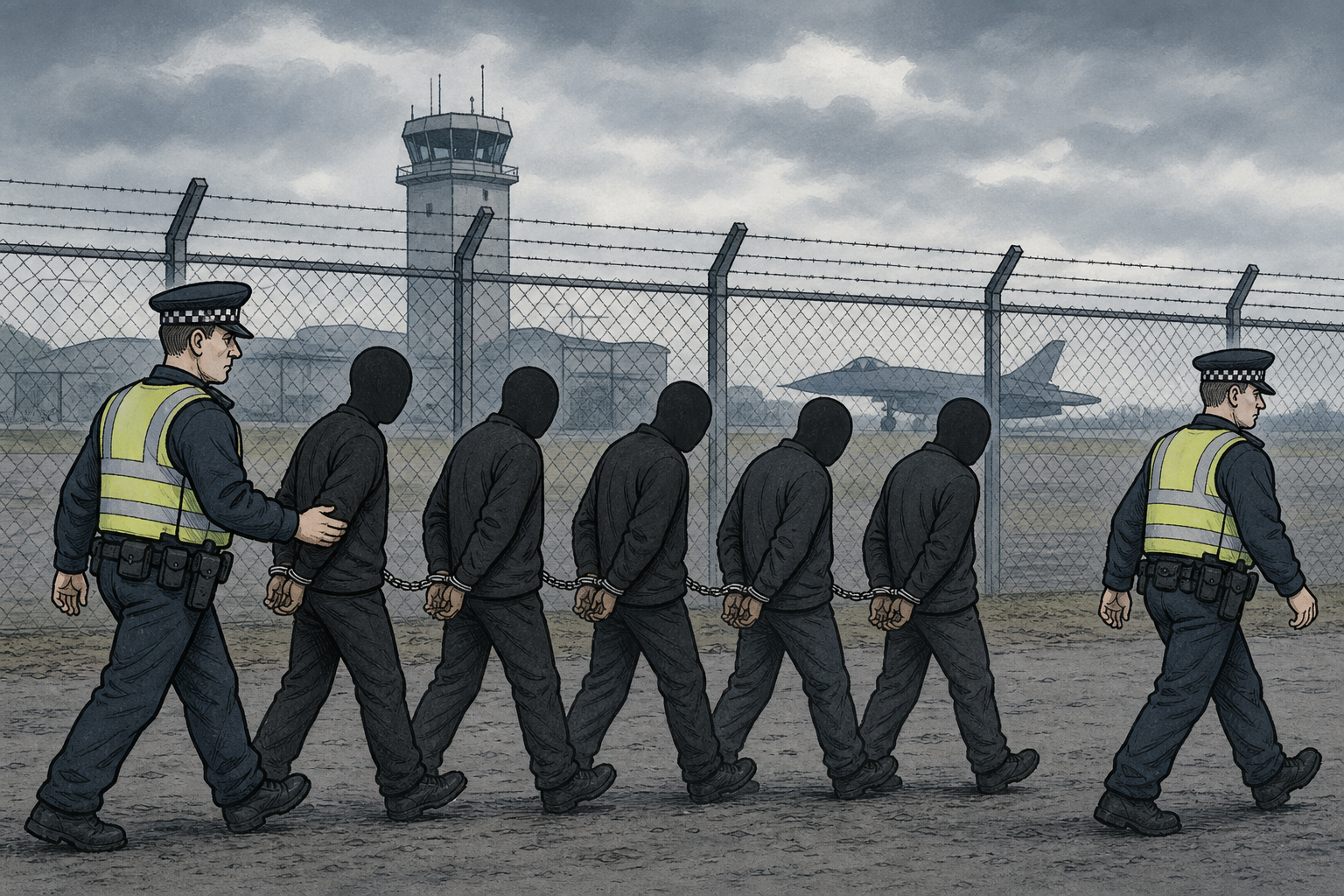
Unnamed sources in Jerusalem, cited by the New York Post and relayed by the Jerusalem Post, signaled openness to Israel rejoining U.S. strikes on Iran if needed.
“We're willing to do it again, if needed… we realize that we need to stretch our muscles.”
Unnamed Jerusalem sources, relayed via the New York Post and the Jerusalem Post, July 2026
That framing was quickly countered from a different direction: unnamed IDF officials told reporters that Israel is not currently planning to join further U.S.-Iran exchanges, and that its posture could change only if the United States explicitly requests IDF participation. The two accounts are not necessarily contradictory — a political willingness to escalate again is a different thing from an active military plan to do so — but they reflect real daylight inside Israel’s own government over how forward-leaning to be. An explicit U.S. request for IDF participation would itself be a significant escalatory signal, converting Israel from an intelligence-sharing partner into a co-belligerent in a shooting war it has, so far, watched the United States fight largely on its own.
That daylight showed up directly in a phone call between the two leaders. Trump briefed Prime Minister Benjamin Netanyahu (Likud) on the Gulf strikes; in the same conversation, Netanyahu raised objections to a potential F-35 fighter jet sale to Turkey and voiced concerns about Turkish President Recep Tayyip Erdogan’s rhetoric — a dispute significant enough that it merits its own section below. It is a striking detail on its own: even while briefing Israel's prime minister on active U.S. military strikes fought in coordination with Israeli intelligence, Trump and Netanyahu spent part of the same call arguing about a fighter jet sale to a third country. That the alliance can absorb both conversations at once says something about how transactional the relationship has become even amid a shared war.
In a smaller, unrelated episode the same week, a Givat Ze’ev man accidentally drove into Palestinian-administered territory in A-Ram on July 9 after a GPS error sent him off course; Israeli Border Police located and rescued him unharmed. It is a minor incident on its own, but a reminder of how thin the margin for error remains along Israeli-Palestinian lines even when the week’s bigger story is unfolding hundreds of miles away in Iran and the Gulf.
A Jerusalem Post analysis piece ties the Trump-Netanyahu phone call directly to a public dispute that surfaced days earlier. In a July 7 interview with CNN’s Dana Bash, Netanyahu said selling F-35 fighter jets to Turkey “would destroy the power balance in the Middle East,” called Ankara “infected with the Muslim Brotherhood,” and said Turkish President Erdogan “is not exactly a model ally.” It is unusually blunt language for one NATO-adjacent U.S. partner to use about another in public.
“It would destroy the power balance in the Middle East… Erdogan is not exactly a model ally.”
Prime Minister Benjamin Netanyahu, interview with CNN's Dana Bash, July 7, 2026
Trump, appearing at the Ankara summit alongside Erdogan, took the opposite position: the United States “would consider” the F-35 sale, and he called Turkey “much more loyal than other countries.” The Jerusalem Post’s analysis — framed explicitly as forward-looking strategic assessment, not a confirmed military development — connects this disagreement to the broader suspicion raised in the assassination-plot reporting: that Netanyahu’s government has its own reasons, independent of any single piece of threat intelligence, to want Trump more skeptical of diplomacy generally, at a moment when Washington is simultaneously courting Ankara. Nothing here is settled policy; it is one outlet’s reading of where the pieces currently sit, and this page presents it as analysis rather than fact.
The International Energy Agency’s July 2026 Oil Market Report gives the clearest numerical read on how the week’s whiplash — ceasefire, collapse, second collapse, Qatari mediation — is landing on global energy markets. North Sea Dated crude, the benchmark IEA tracks, fell to roughly $68 per barrel by early July, its lowest level since January, as the interim ceasefire briefly took hold. The July 7–8 escalation, the IEA says plainly, has now “clouded” the outlook for a market surplus the agency had been forecasting for 2027.
Global oil supply rebounded by 4.1 million barrels a day to 98.8 million barrels a day in June, but that figure remains 9.4 million barrels a day below pre-war levels — a gap that has not closed even during the ceasefire window. IEA Executive Director Fatih Birol is reportedly cautious about whether Iran can return to its pre-war export levels at all without a full reopening of the Strait of Hormuz, the chokepoint through which roughly a fifth of global oil supply transits and the same waterway dispute Qatari negotiators are now trying to help resolve in Tehran.
$68/bbl: North Sea Dated crude by early July 2026 — lowest since January, reached during the brief ceasefire window.
98.8 million bbl/day: global oil supply in June 2026, up 4.1 million bbl/day — but still 9.4 million bbl/day below pre-war levels.
2027 surplus forecast: now "clouded," per the IEA, by the July 7–8 escalation.
The open question: whether Iranian exports can return to pre-war levels without a full reopening of the Strait of Hormuz.
None of these figures translate directly, on their own, into a specific price at an American gas pump — that depends on refining capacity, regional benchmarks, and taxes that vary by state, none of which the IEA report addresses. What the report does establish is the shape of the risk: a global oil market that had begun to loosen during the ceasefire is now being asked to price in the possibility that the Strait of Hormuz dispute reopens the same volatility that drove prices up earlier this year. Qatar’s diplomats, in that sense, are negotiating over more than a ceasefire memorandum — they are negotiating over whether that volatility returns.
Whether Qatar's mediation holds. A ceasefire memorandum that collapsed once already needs more than a signature to survive a second time.
Whether the US independently verifies the assassination intelligence. That vetting, if it happens, will shape how much weight Washington puts on future Israeli threat-sharing.
Whether the IDF gets an explicit request. Israeli officials have drawn a bright line: no request, no participation. That line could move quickly if Washington asks.
Whether the F-35 sale to Turkey moves forward. Trump has said the US "would consider" it despite Netanyahu's public objections — a decision that would test the alliance regardless of how the Iran talks resolve.
On Friday, July 10, 2026, Trump answered the assassination-plot reporting detailed in § 02 above with a cluster of on-the-record statements — an interview, two Truth Social posts, and Oval Office remarks — each more explicit than the last. In an interview with the New York Post, published Friday morning and reported further by the Daily Wire, Trump described standing orders he says he has already left in place:
“The only thing is, I've left instructions — if anything happens, to just literally bomb them at levels that they've never seen before.”
President Trump (R), interview with the New York Post, July 10, 2026
“The only thing is, I've left instructions — if anything happens, to just literally bomb them at levels that they've never seen before.” — Trump, in a New York Post interview.
When the Post pressed him specifically on the Wall Street Journal’s assassination-plot reporting covered in § 02, Trump waved the story off rather than confirming or elaborating on it: “No, no. Israel came up with nothing. No, no.” That dismissal sits in tension with the rest of his own comments this week — a president who calls the underlying intelligence “nothing” while, hours later, issuing the most explicit public retaliation threat of the war.
That same night, Trump posted to Truth Social. No direct permalink to the post could be independently recovered as of publication, but Fox News, Bloomberg, RedState, and India TV each independently quote the same text verbatim, giving high confidence in its accuracy:
1000 Missiles are Locked and Loaded and aimed at the Islamic Republic of Iran, with thousands of more to immediately follow, should the Iranian Government act on its threat, pronounced in many corners of the Globe, to assassinate, or attempt to assassinate, the sitting President of the United States of America, in this case, ME! Orders have already been given, and the U.S. Military is ready, willing, and able, for a one year period of time, subject to extension, to completely decimate and destroy all areas of Iran.
Close to verbatim per independent cross-outlet quotation (Fox News, Bloomberg, RedState, India TV); no primary Truth Social permalink was recoverable as of publication.
Trump repeated the point later the same day to reporters in the Oval Office, more tersely: “If they did that, they would be obliterated. That would be the end.”
We hit them very hard last night — very, very hard — and we'll probably hit them hard again tonight... They're cuckoo... For 47 years, they've been the bully of the Middle East.
Reaction to the standing-order threat split along familiar lines. On Fox News’s “The Five,” the panel treated the threat as a straightforward warning to Tehran. Separately, John Bolton, who served as Trump’s National Security Advisor during his first term, told CNN’s Jake Tapper it remains “entirely possible” that Iran’s Islamic Revolutionary Guard Corps or its Ministry of Intelligence and Security is still actively plotting the assassination — an assessment that cuts directly against Trump’s own “Israel came up with nothing” dismissal to the Post.
Some legal experts, quoted in a Jerusalem Post article that also drew on New York Times reporting, note that a sitting president cannot actually bind future U.S. military action from beyond the grave — that authority would transfer to whoever succeeds him in office. That is a real caveat about how the threat would function as a matter of law, not a claim that it undermines Trump’s rhetorical point in the moment.
None of this resolves whether the underlying Israeli intelligence described in § 02 has since been independently verified by the United States — Trump’s own comments to the Post argue against it, while Bolton’s CNN remarks argue the threat should still be taken seriously. What is no longer in question is how publicly and specifically the president is now prepared to describe his retaliation plans — on the record, in his own words, across an interview, two Truth Social posts, and an Oval Office exchange, all inside a single day.
Khamenei is buried, and his son still hasn’t spoken. Qatar is racing to hold a ceasefire together while Iran warns Israel it “will not be spared” and Trump declares the cease-fire “over” on Truth Social in the same breath he agrees to keep talking. Underneath all of it sits a Wall Street Journal report that Israel handed Washington intelligence on a real plot to kill the American president — intelligence the U.S. has not independently verified, shared by a government whose own public has turned sharply against Trump’s handling of this war, and whose prime minister is simultaneously fighting Washington over a fighter jet sale to Turkey. None of that proves the intelligence is wrong. It also doesn’t prove it’s clean. The oil market, the Israeli public, and a newly indicted terror cell in the Negev are all, in their own way, keeping score while the diplomats in Doha and Tehran try to buy more time.