
Israel Bombed Beirut Days After the Truce — and Iran Answered With Missiles
Israeli warplanes struck Dahiyeh, the dense southern suburbs of Beirut, without warning on the afternoon of Sunday, June 7, 2026 — the first strike on the Lebanese capital since a U.S.-brokered ceasefire between Israel and Lebanon was renewed days earlier. Lebanon’s state-run National News Agency reported that two apartments in two separate residential buildings were hit, killing at least two people and wounding at least eleven; some accounts put the number of wounded higher.
Prime Minister Benjamin Netanyahu and Defense Minister Israel Katz said in a joint statement that the military had struck a Hezbollah command center, and that the strike was a response to the group firing into northern Israel. The Israel Defense Forces said it hit a Hezbollah headquarters in the group’s Dahiyeh stronghold. The attack came, Netanyahu’s office said, after Hezbollah struck Israeli forces with fighter drones and rocket fire.
Within hours the strike had detonated the fragile regional calm Washington spent weeks assembling. Lebanon’s president and prime minister condemned the attack as a blow to the peace process; the United States, which had asked Israel not to bomb the capital, offered no immediate public comment; and Iran — which had warned that an attack on Beirut would reignite a wider war — launched its first missile salvo at Israel since the April ceasefire. This is a developing story; casualty figures and details remain preliminary.
- 2 KILLED — and at least 11 wounded when Israel struck two residential buildings in Dahiyeh, Beirut's southern suburbs · Source: Lebanon's National News Agency
- 9 DEAD — in Israeli strikes on southern Lebanon a day earlier, including three Lebanese army soldiers — a brigadier general, a captain, and another soldier · Source: Lebanese Army / NPR
- FIRST SINCE THE TRUCE — Beirut strike since the U.S.-brokered ceasefire was renewed — answered the same night by Iran's first missile barrage at Israel since the April ceasefire · Source: NPR / Al Jazeera
The attack hit Dahiyeh on Sunday afternoon, sending plumes of smoke over the densely populated suburbs south of central Beirut — a Hezbollah stronghold that has absorbed repeated Israeli bombardment over the past year. Lebanon’s National News Agency reported that two apartments in two separate buildings were targeted, and images of the aftermath showed apartment blocks heavily damaged. The agency put the toll at two killed and at least eleven wounded; other outlets, citing Lebanese officials, reported as many as twenty injured.
Unlike many earlier Israeli strikes on the suburbs, this one came without an evacuation warning, according to Lebanese reporting — residents had no notice to flee. It landed in a civilian neighborhood during daylight hours, and it was the first time Israel had struck the capital itself since the renewed truce took hold.

In their joint statement, Netanyahu and Katz said the IDF struck a Hezbollah command center in Dahiyeh, and framed the operation as retaliation for the group firing into Israel. The military said the target was a Hezbollah headquarters embedded in the suburb. Netanyahu’s office said the strike followed a Hezbollah attack on Israeli forces using fighter drones; the IDF separately said Hezbollah had fired rockets toward northern Israel.
Netanyahu struck a defiant note in remarks to his cabinet. Israel’s position throughout the truce talks has been that it reserves the right to act against what it calls imminent threats — a carve-out written into the U.S.-brokered framework — even as Washington pressed it to hold fire on the capital. Critics in Beirut and Tehran read the carve-out as a license to keep bombing; Israel reads it as self-defense against a group that never stopped shooting.
“We are striking them very hard, and we know that Hezbollah is on the run.”
Prime Minister Benjamin Netanyahu, to his cabinet · June 7, 2026
The IDF struck a Hezbollah command center in the Dahiyeh area of Beirut. The strike was carried out in response to Hezbollah's launches toward Israeli territory. The IDF will continue to act against any threat to the citizens of Israel.
The strike is impossible to read without the ceasefire it appears to have ruptured. The 2026 Israel–Lebanon ceasefire, brokered by the United States, took effect on April 16, 2026 as an initial ten-day truce after Israeli bombardment that Lebanese authorities said had killed more than 300 people. President Donald Trump (R) announced an extension later that month, and U.S. mediators kept pushing for a durable settlement built around Hezbollah pulling its fighters north of the Litani River and a concept of “pilot security zones” free of the group.
On June 1, Lebanese and Israeli envoys announced a conditional ceasefire in Washington. But Hezbollah’s leader, Naim Qassem, rejected it within days, saying it ignored his group’s demands and would require its fighters to effectively surrender; Qassem insisted that a full Israeli withdrawal from southern Lebanon was non-negotiable. The deal, in other words, was struck over Hezbollah’s head — and Hezbollah kept firing. That is the gap the June 7 strike fell into.
April 16, 2026 — A U.S.-brokered ceasefire takes effect, halting fighting after a bombardment Lebanon said killed 300+.
June 1, 2026 — Lebanese and Israeli envoys announce a conditional ceasefire in Washington; Hezbollah is not a party to it.
June 4, 2026 — Hezbollah leader Naim Qassem rejects the deal, demanding full Israeli withdrawal.
June 6, 2026 — Israeli strikes on southern Lebanon kill nine, including three Lebanese soldiers.
June 7, 2026 — Israel strikes Dahiyeh; Iran answers with missiles that night.
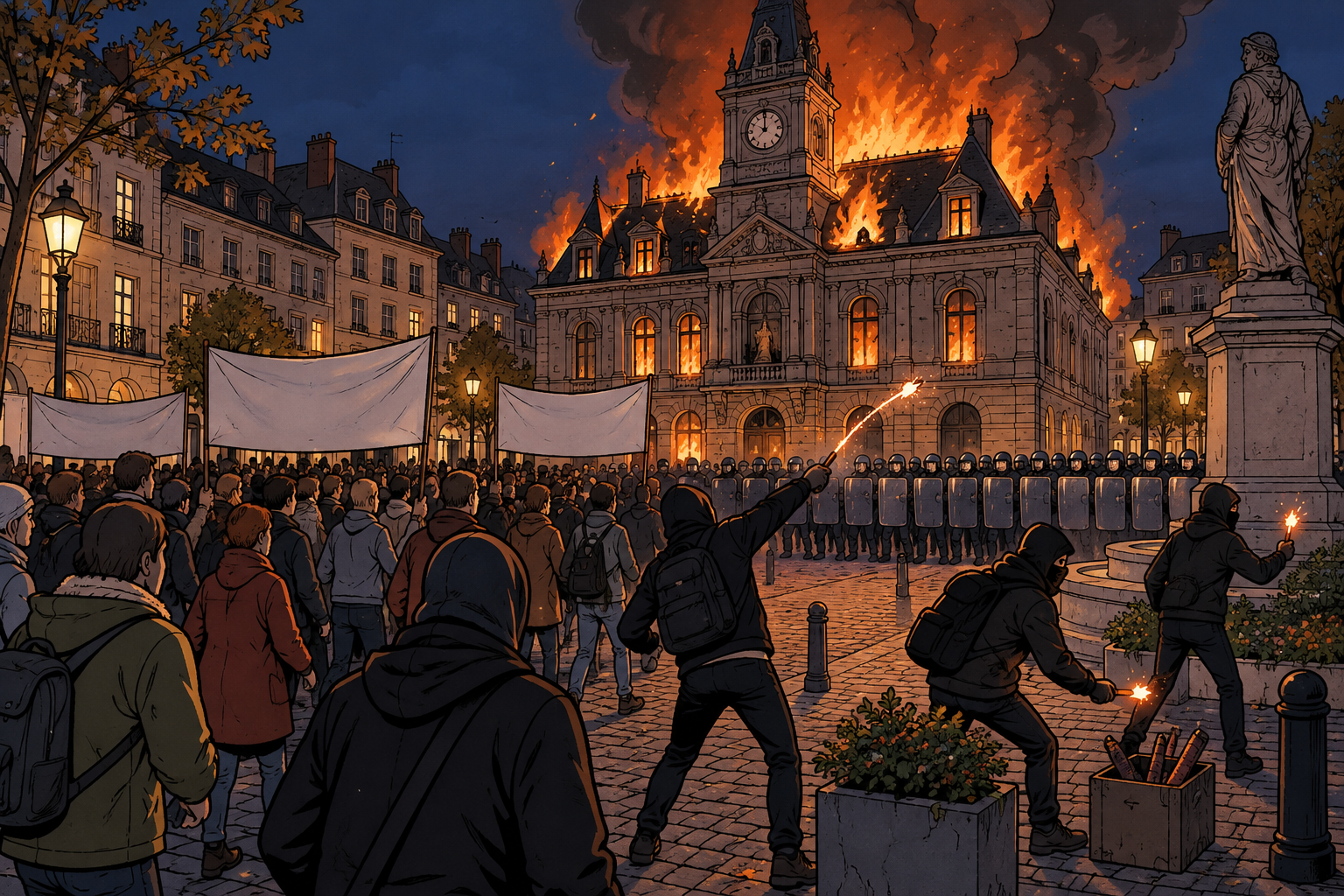
Lebanon’s government condemned the strike in unusually direct terms. President Joseph Aoun, a former army commander who has staked his presidency on restoring state authority over Hezbollah, said the attack was “aimed at thwarting all efforts to reach a solution.” Prime Minister Nawaf Salam called it “a heinous crime and an attack on Lebanon and all Lebanese people.” Both men have been trying to position the Lebanese state — not the militia — as Washington’s negotiating partner, and both framed the bombing as sabotage of that effort.
The condemnation carried added weight because of what had happened the day before. On June 6, Israeli strikes on southern Lebanon killed nine people, including three members of the Lebanese armed forces — a brigadier general, a captain, and another soldier — in a vehicle on the road linking Nabatiyeh and Marjayoun, the army said. Killing soldiers of the very state Washington is trying to empower, days after a truce, sharpened Beirut’s argument that the strikes were undermining the peace, not enforcing it.
“A heinous crime and an attack on Lebanon and all Lebanese people.”
Prime Minister Nawaf Salam of Lebanon · June 7, 2026
The strike landed squarely in a diplomatic effort the Trump administration had been running for weeks. The White House offered no immediate comment, and a senior U.S. official, speaking anonymously, said only that Washington “was not surprised” by the attack, declining to say whether the United States had advance notice. U.S. officials reiterated that Washington “supports Israel’s right to self-defense and stands with the legitimate government of Lebanon,” and pointed to further talks they hoped to convene later in the month.
President Trump had personally leaned on Netanyahu to wind the conflict down — he announced the truce extension himself, and earlier reporting described a sharp call in which Trump pressed the prime minister to accept a ceasefire. Asked about Israel’s approach in an interview that aired Sunday on NBC’s “Meet the Press,” Trump said he wanted to see Israel hit Hezbollah more precisely: “I’d like to see a more surgical attack on Hezbollah. I think it should be more surgical.”
I want this conflict ended. I'd like to see any action against Hezbollah be far more surgical. We brokered a ceasefire and I expect all sides to honor it. Hezbollah cannot keep shooting, and the bombing of a great city like Beirut helps no one. Peace is within reach if everyone is smart.
Paraphrased commentary · not a verbatim post
The United States supports Israel's right to defend itself and stands firmly with the legitimate government of Lebanon. The path forward is the negotiating table, not the bombing of Beirut. We urge all parties to return to talks and uphold the ceasefire.
Paraphrased commentary · not a verbatim post
Iran had drawn a line in advance: an attack on Beirut, Tehran warned, would reignite full-scale war across the region. On Sunday night, after the Dahiyeh strike, the Israeli military said Iran launched missiles toward Israel — the first such barrage since the April ceasefire — triggering sirens across the country. Iran’s Islamic Revolutionary Guard Corps cast the launches as a warning and threatened broader attacks if Israeli strikes in Lebanon continued. Al Jazeera reported that Iran said the Beirut attack had “crossed all red lines.”
Iran’s parliament speaker, Mohammad Bagher Qalibaf, went further on X, writing that Washington’s posture and the strike together made “U.S. and Israeli bases and assets in the region legitimate targets.” The exchange threatened to unravel both the Israel–Lebanon truce and the parallel U.S.–Iran negotiating track. What began as a single airstrike on a suburb had, within a day, pulled three governments and a militia back toward the brink — and left the ceasefire Washington built looking thinner than ever.
Israel struck Beirut's southern suburbs on Sunday, killing at least two, the first attack on the Lebanese capital since a US-brokered ceasefire was renewed. Hours later, Israel said Iran launched missiles toward it — the first such barrage since the April truce.


- 1.NPR — 'Israel hits Beirut's suburbs in retaliatory attack against Hezbollah,' June 7, 2026
- 2.Al Jazeera — 'Israel hits civilian area in Beirut's southern suburbs, kills at least two,' June 7, 2026
- 3.The Times of Israel — 'IDF strikes Beirut's Dahiyeh after Hezbollah fires rockets at northern Israel,' June 7, 2026
- 4.The Jerusalem Post — 'IDF strikes in Beirut after Hezbollah fires towards Israel, Benjamin Netanyahu says,' June 7, 2026
- 5.The Christian Science Monitor — 'Israel strikes Beirut's southern suburbs days after US-backed ceasefire deal,' June 7, 2026
- 6.NPR — 'Israeli airstrikes kill 9 including Lebanese army officers after ceasefire deal,' June 6, 2026
- 7.NPR — 'Israel says Iran launched a missile at it, in a first during fragile ceasefire,' June 7, 2026
- 8.Al Jazeera — 'Iran fires missiles at Israel after Beirut attack ‘crossed all red lines’,' June 7, 2026
- 9.Wikipedia — '2026 Israel–Lebanon ceasefire' (timeline and terms, with primary citations)
- 10.Jewish Telegraphic Agency — 'Hezbollah rejects US-brokered ceasefire deal struck by Lebanon and Israel,' June 4, 2026
- 11.The Jerusalem Post — 'US brokers Israel-Lebanon ceasefire and military ‘pilot zones’ plan,' June 2026
- 12.The Times of Israel — 'Trump announces fresh Lebanon truce as Netanyahu appears to call off Beirut strikes,' June 2026
- 13.NBC News — 'Israel says Iran launched missiles toward it after Beirut strikes,' June 7, 2026
- 14.JNS — 'IDF strikes Beirut's Dahiyeh district in response to Hezbollah attacks,' June 7, 2026
- 15.Axios — 'Iran fires missiles at Israel after Beirut strike,' June 7, 2026
Last updated June 7, 2026