Three Settlements, One Green Light. Could Israel Really Rebuild in Gaza?
On June 29, 2026, Israeli Finance Minister Bezalel Smotrich stood in Sderot and said the Defense Ministry’s Settlement Administration had “completed the groundwork” to establish three settlements in northern Gaza — ready to build “immediately,” the moment Prime Minister Benjamin Netanyahu and the defense minister give the green light. A day later, Netanyahu declined to rule it out. The obvious question, the one Al Jazeera used for its own headline: could this actually happen?
The honest answer requires holding several true things at once. The plans exist on paper. The political push is real and organized. But building settlements in Gaza would collide head-on with Point 16 of the very peace plan President Donald Trump (R) wrote and Israel signed onto — “Israel will not occupy or annex Gaza” — with a UN Security Council resolution, with the reason Israel left Gaza in the first place in 2005, and with the money, security math, and Saudi-normalization stakes now riding on the ceasefire holding.
This is a contested, multi-sided story, so we lay out every side in its own words and attribute every figure — including Gaza casualty and destruction numbers, which come from Hamas-era authorities and are disputed. Here is who is pushing, who is not deciding, what the law says on both readings, and everything that currently stands between a blueprint and a bulldozer.
- 3settlementsSmotrich says the Settlement Administration has planned for northern Gaza, ready on a green light — Smotrich, June 29, 2026
- 0cabinet votesIsraeli government decisions authorizing Gaza settlements as of July 4, 2026 — no cabinet decision exists
- 16the pointof Trump's 20-point plan: “Israel will not occupy or annex Gaza” — PBS full text, Sept. 29, 2025
- 21dismantledIsraeli settlements Israel evacuated from Gaza in the 2005 disengagement — Britannica / Jerusalem Post

The trigger was a short video. On Monday, June 29, 2026, after meeting Sderot Mayor Alon Davidi, Smotrich — finance minister and, separately, a minister inside the Defense Ministry who oversees its Settlement Administration — announced that the administration had “completed the groundwork to establish three settlements in the north Gaza area,” and that implementation could begin “immediately” on a government green light. Times of Israel, the Jerusalem Post, and Haaretz all carried the same core claim; Al Jazeera and the wire feeds amplified it.
“We are prepared to establish three settlements in the northern perimeter immediately, the moment we receive the green light from the prime minister and the minister of defense.”
Bezalel Smotrich · Israeli Finance Minister · June 29, 2026 (Jerusalem Post)
Smotrich did not stop at three settlements. In remarks carried by Middle East Eye, he framed the settlements as part of a wider goal — completing what he called the “conquest” of the strip — asserting the Israeli military already controls nearly 70 percent of Gaza and demanding the remaining 30. That 70 percent figure is Smotrich’s own claim; the ceasefire that took effect in October 2025 mapped the Israeli pullback to a “yellow line” that left roughly 53 percent of Gaza behind it. Each number belongs to its claimant, and they do not agree.
'We must complete the conquest of the remaining 30 per cent.' Israeli Finance Minister Bezalel Smotrich called for the establishment of Jewish settlements within Gaza, claiming that the Israeli military controls nearly 70 per cent of the strip.
The announcement did not come from nowhere. Since 2010, the settler group Nachala — founded by Daniella Weiss, often called the “godmother” of the settlement movement — has organized specifically to resettle Gaza, and says it has registered more than 500 families in six “nuclei” of roughly 100 each (Nachala’s own count). Its January 2024 Jerusalem conference, “Settlement Brings Security and Victory,” drew cabinet ministers including Smotrich and National Security Minister Itamar Ben-Gvir. In December 2025, Nachala activists physically crossed into Gaza and planted Israeli flags.
A minister announcing that plans are ready is not a government deciding to build. As of July 4, 2026, no Israeli cabinet decision authorizes settlements in Gaza. Smotrich himself framed the plan as awaiting approval from two men — the prime minister and Defense Minister Israel Katz (Likud) — neither of whom has granted it. That gap between a proposal and a policy is the single most important fact in the story.
On June 30, on Channel 14’s “The Patriots,” Netanyahu was asked directly about Gaza settlements and refused to answer either way. The two outlets that rendered his Hebrew into English disagree on the exact wording, so we give both. Al Jazeera translated it as: “The question is whether you prefer to do or to talk… And yes, I prefer not to address it.” Times of Israel rendered the same remarks as Netanyahu saying it is “sometimes advisable to separate” actions from public statements, and “therefore, I have nothing further to add on that matter.” Either way, it is a non-answer — not an endorsement.
“The question is whether you prefer to do or to talk… And yes, I prefer not to address it.”
Benjamin Netanyahu · Israeli Prime Minister · Channel 14, June 30, 2026 (Al Jazeera's translation)
Netanyahu’s record cuts against the loudest reading of his silence. In June 2024 he called resettling Gaza “not realistic,” and he has repeatedly said resettlement is not government policy. He is also, at the same moment, a prime minister on trial for corruption, leading a coalition that most polls show falling short of a 61-seat Knesset majority ahead of an election now scheduled for October 27, 2026. Whether his refusal to slam the door is conviction, coalition management, or pre-election positioning is a judgment readers can make — but the factual state of play is that he has neither approved the plan nor killed it.
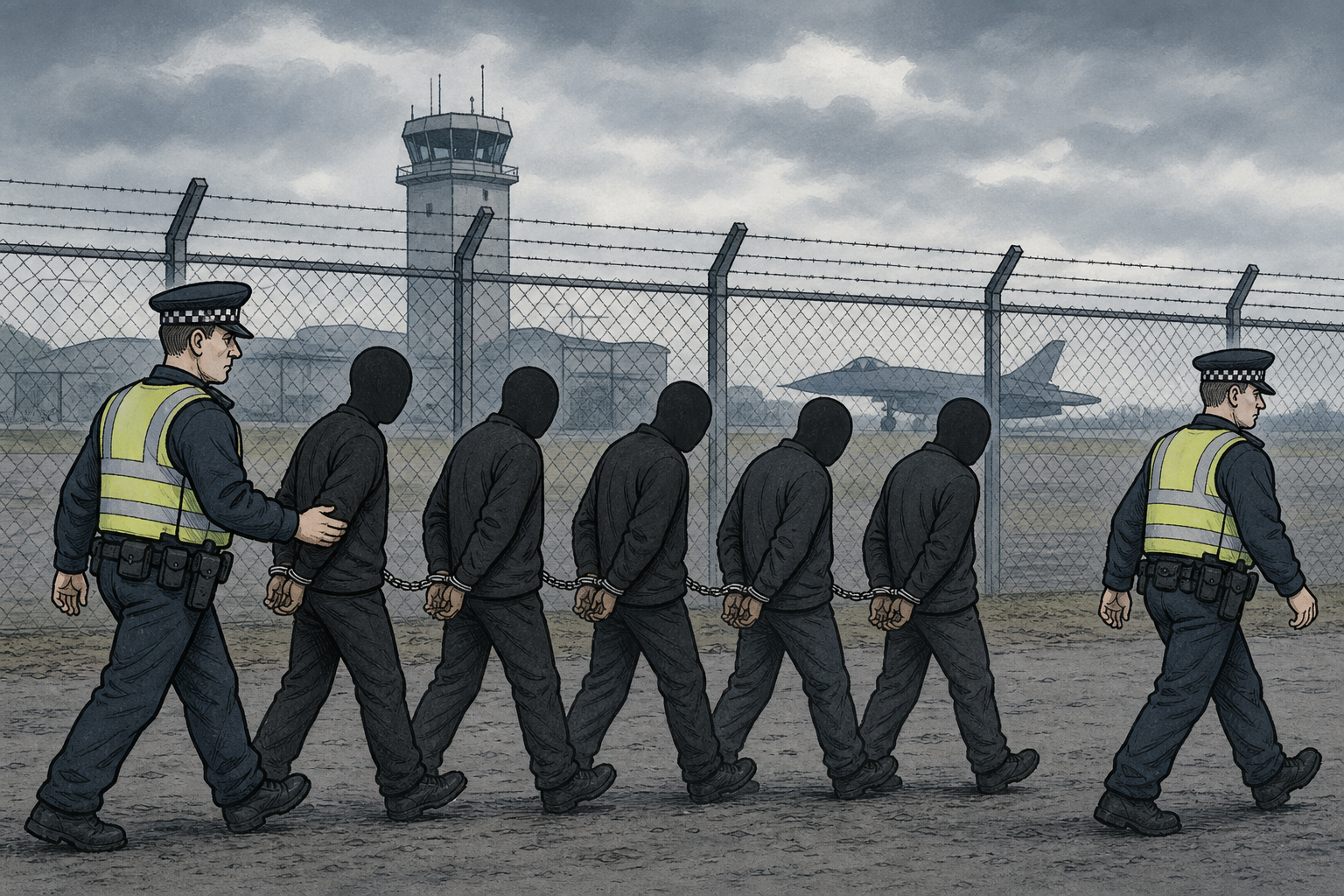
The biggest obstacle to Smotrich’s plan may be a document with Trump’s name on it. Trump’s 20-point plan to end the war, released September 29, 2025, and later enshrined by UN Security Council Resolution 2803, contains an unambiguous Point 16: “Israel will not occupy or annex Gaza.” Israel accepted that plan. Building settlements — establishing permanent Israeli civilian communities inside the strip — is difficult to square with a clause Israel itself signed.
Point 16, verbatim: “Israel will not occupy or annex Gaza.” (PBS NewsHour full text of the 20-point plan, Sept. 29, 2025.)
The force behind it: UN Security Council Resolution 2803 (Nov. 17, 2025) enshrined the plan, creating a two-year International Stabilization Force under a “Board of Peace” chaired by Trump.
Why it bites: multiple outlets report a return to Gaza settlement is “strongly opposed by the United States.” A settlement drive would put Netanyahu against an administration otherwise friendly to him.
The complication is that Trump’s own record on Gaza points in two directions. In February 2025, months before the 20-point plan, he floated the United States “taking over” Gaza and turning it into a “Riviera of the Middle East,” and posted on Truth Social that Gaza “would be turned over to the United States by Israel,” with Palestinians resettled elsewhere “in the region.” That vision drew condemnation from US allies and Arab states alike. It sits awkwardly beside his September no-occupation clause. Both are Trump’s positions; we present both, dated.
Gaza would be turned over to the United States by Israel at the conclusion of the fighting. The Palestinians would already have been resettled in far safer and more beautiful communities, with new and modern homes, in the region. No U.S. soldiers would be needed.
Paraphrased commentary · not a verbatim post
Truth Social · paraphrasing Trump's Feb. 6, 2025 post, as reported by NBC News
The administration’s more recent signals have run the other way. When Israel’s Knesset held a preliminary West Bank annexation vote during a visit by Vice President JD Vance (R) in October 2025, Vance called it “a very stupid political stunt” and an “insult,” and Secretary of State Marco Rubio (R) called such moves “counterproductive” to the Gaza plan. No specific White House or State Department response to Smotrich’s June 29 settlement announcement had surfaced by publication — so we do not assert one — but the administration’s posture on annexation gestures has been consistently cold.
On the international-law question there are two positions, and pretending only one exists would be dishonest. The dominant view, expressed by the International Court of Justice in its July 19, 2024 advisory opinion, is that Israeli settlements in occupied Palestinian territory are illegal: by 14 votes to 1, the court held that Israel must cease all settlement activity and that settlements breach Article 49(6) of the Fourth Geneva Convention, which bars an occupying power from transferring its own civilian population into occupied territory.
Israel rejects that opinion. Its long-standing legal position is that Article 49(6) does not apply — it was drafted against forced WWII-era population transfers, not voluntary settlement — that there was no prior legitimate sovereign in the territories, and that the land is therefore “disputed,” not “occupied,” so only direct negotiation, not a court, can settle its status. The ICJ opinion is advisory and non-binding. But it is not without teeth: in June 2025, five allied governments — the UK, Canada, Australia, New Zealand, and Norway — sanctioned Smotrich and Ben-Gvir personally, a preview of the diplomatic exposure a settlement drive would widen.
This isn't a random person, he's a high-ranking Israeli official declaring the intent to illegally seize Gaza. No Western media outlet wants to report this?
The pro-settlement camp makes its case in its own terms, too. Its argument, laid out by Smotrich and echoed in a Washington Examiner op-ed, is that a settlement belt is a security instrument — that permanent Israeli presence, not withdrawal, is what prevents another October 7. Whatever one makes of that claim, it is the argument being advanced, and readers are owed it alongside the ICJ’s consensus and the plain text of the plan Israel signed.
Israel has done this in reverse before, and the memory shapes the whole debate. Between August 15 and September 12, 2005, under Prime Minister Ariel Sharon, Israel unilaterally disengaged from Gaza: it dismantled 21 settlements and evacuated roughly 8,000 to 8,600 Israeli settlers, most from the Gush Katif bloc, in scenes of soldiers physically carrying residents from their homes. Two years later Hamas seized control of the strip.
For the pro-settlement movement, that sequence is the entire point: the October 7, 2023 Hamas attack that killed about 1,200 people in Israel is, in their telling, the delayed cost of leaving. For Sharon and much of Israel’s security establishment at the time, the calculus ran the other way — guarding a few thousand settlers deep inside a hostile, densely populated strip consumed a disproportionate share of the army, and the retrospective coverage of the withdrawal returns again and again to that burden. That same math is why analysts quoted by Al Jazeera doubt any settlement plan currently exists beyond paper: much of northern Gaza is now rubble, and a new settlement belt would require permanent troop protection inside a territory of some two million hostile residents.
“There is a definite and consistent push from across much of Israel's politics to resettle the Gaza Strip.”
Neve Gordon · Queen Mary University of London (Al Jazeera, July 4, 2026)
Israeli public opinion, meanwhile, is genuinely split, and the split changes with the pollster and the question. A Times of Israel poll found almost 4 in 10 Israelis back a revival of Gaza settlements; a separate ToI poll in July 2025 found 53.2 percent oppose annexing parts of Gaza; an Israel Hayom survey put support for resettlement at 52 percent. The spread is the story: there is a real constituency for this, but not a settled majority, and the push reads at least partly as base mobilization by Smotrich’s Religious Zionism party, which polls near the Knesset’s electoral threshold ahead of October’s vote.
Stack up the gates a settlement would have to pass, and every one of them is currently closed or closing. Approval: no cabinet has voted, and Netanyahu has not given the green light Smotrich says he needs. The US position: Point 16 of Israel’s own accepted plan bars occupation and annexation, and Vance and Rubio have already slapped down lesser annexation gestures. The ceasefire architecture: phase two — Hamas disarmament, further IDF withdrawal, reconstruction — is stalled, and the framework demands Israel pull back, not entrench; in May 2026 Israel told the Board of Peace it would not withdraw from the yellow line at all.
The Board of Peace will prove to be the most consequential International Body in History, and it is my honor to serve as its Chairman.
Paraphrased commentary · not a verbatim post
Truth Social · paraphrasing a mid-February 2026 post, as reported by PBS News
The money: the Board of Peace claimed $5 billion in pledges at its first meeting, and the United States floated more, but the Washington Post reported on June 1, 2026 that the reconstruction effort had “stalled out,” with expected donations largely nonexistent. Settlement construction would compete for concrete and cash with a reconstruction bill Arab states have pegged in the tens of billions — atop a strip the Gaza Government Media Office says (via Al Jazeera, and disputed by Israel) is 90 percent destroyed and 80 percent seized. The regional prize, Saudi normalization, is explicitly conditioned by Riyadh on calm and a Palestinian horizon; the Israeli think tank INSS warns a settlement drive would likely kill it for years.
The United States has informed the guarantor nations of the Gaza peace agreement of credible reports indicating an imminent ceasefire violation by Hamas against the people of Gaza. This planned attack against Palestinian civilians would constitute a direct and grave violation…
None of that means the push is theater. The plans are real, the movement is organized, Netanyahu will not rule it out, and an October election gives the pro-settlement bloc every incentive to keep the issue live. The watch items are concrete: whether Netanyahu or Katz ever grants the green light; whether the White House responds to Smotrich by name; the outcome of the October 27 vote; and whether Nachala’s flag-planting incursions ever become facts on the ground. But between a blueprint and a settlement stands a wall of the government’s own making — and as of July 4, 2026, the wall is still standing.
Could Israel build settlements in Gaza? On paper, the plans exist and a real political movement is pushing hard. In practice, every gate says no right now: no cabinet decision, no green light from Netanyahu, a US plan Israel signed that bars occupation, a stalled ceasefire that demands withdrawal, a reconstruction effort that is out of money, and a Saudi-normalization prize that a settlement drive would forfeit.
The most defensible answer is the one the facts support: it is politically live and legally contested, but it is not happening without Israel blowing up the deal it just accepted — and no one with the authority to order it has done so.