
Bigger Army. Bigger Budget. Bigger Body Count. Russia brought more men and more money to Ukraine than any nation since World War II — and became the one getting humiliated, its bombers burning in their own hangars and its refineries on fire 2,000 miles from the front.
On June 29, 2026, Vladimir Putin went on Russian television and admitted something the Kremlin had spent months insisting was Western fiction: Russia has a fuel problem. Gas stations rationing sales. Regions capping how much a driver can buy. The country that sits on some of the planet’s largest oil reserves, standing in line for gasoline — because Ukrainian drones, some built from parts that cost a few thousand dollars, keep setting its refineries on fire.
This was supposed to be a three-day operation. In February 2022, Russia fielded what analysts ranked as the second-most-powerful military on Earth against a neighbor whose defense budget was one-tenth the size. Four years and four months later, Russia has poured in more soldiers, more money, and more materiel than it has spent on any war since 1945 — and it is the one bleeding. Its strategic bombers have been blown up inside Russia. Its Black Sea flagship is on the seabed. Its casualty count now dwarfs every American war since World War II combined, several times over.
A caveat up front, because this page cites hard numbers and the numbers matter: Russia is not losing ground. It still grinds forward, slowly and at ruinous cost, in the east. The tables have turned on the exchange rate and on reach — how much Russia pays for every yard, and how deep into its own territory the war now reaches — not on the map. Here is what that looks like, with the receipts.
- ~229,000 named dead — Russian soldiers confirmed killed one-by-one by name — a documented floor; statistical models put the true death toll at ~250,000–350,000+ · Source: Mediazona / BBC News Russian
- 1.2 million casualties — total Russian killed-and-wounded by UK military intelligence (Ukraine's own General Staff claims ~1.4 million) · Source: UK MoD; Ukraine General Staff
- ~103,000 — total U.S. military deaths in every war since 1945 combined — Korea, Vietnam, the Gulf, Iraq, Afghanistan, all of it · Source: Congressional Research Service (RL32492)
- ~41 aircraft claimed — hit in Ukraine's June 2025 'Operation Spiderweb' drone raid on five bomber bases; independent satellite analysis confirmed at least 11–13 destroyed · Source: SBU; NBC News; Militarnyi
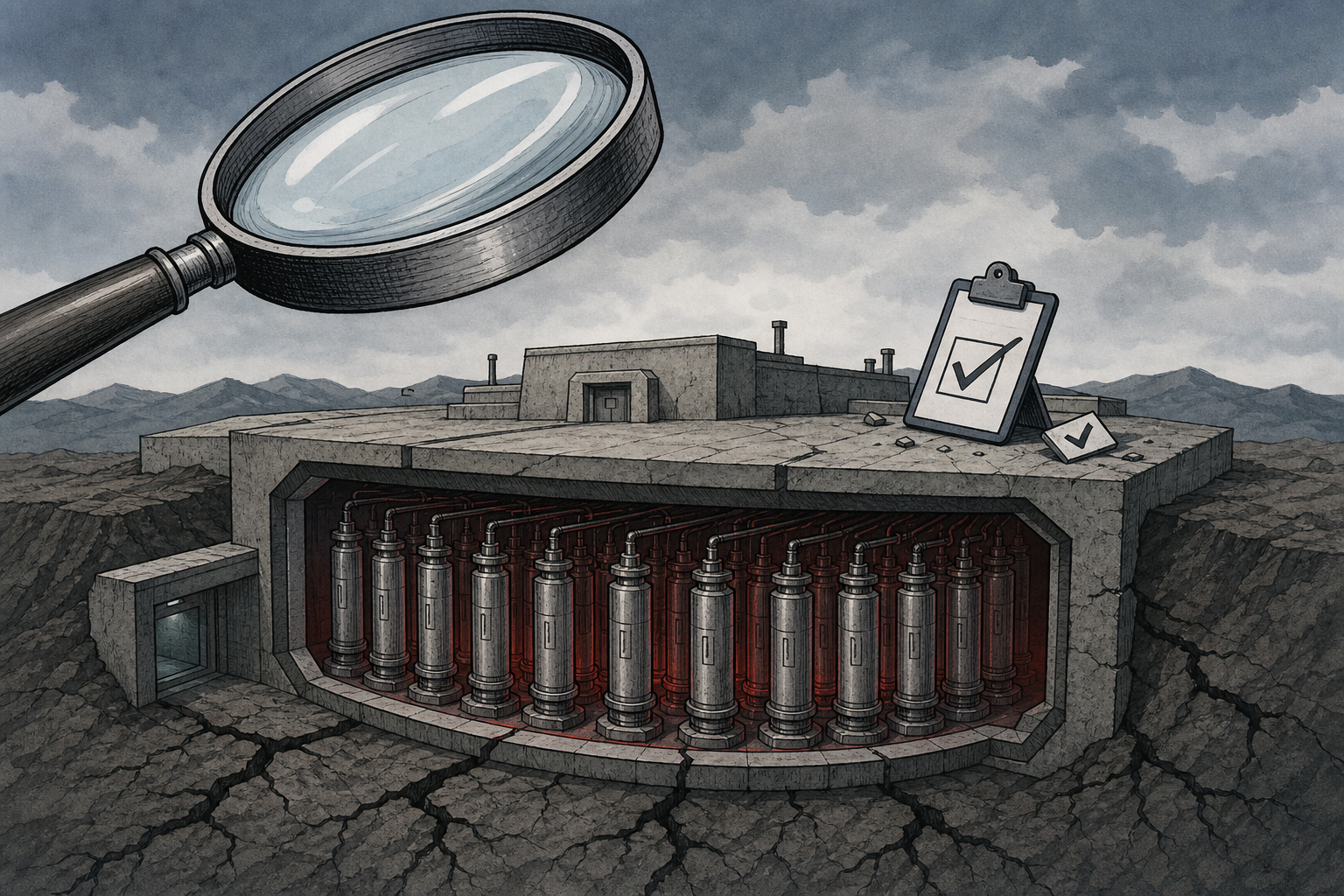
- 20%+ of refining offline — share of Russian oil-refining capacity knocked out at the 2026 peak; the IEA called the disruption 'unprecedented' · Source: RFE/RL; Reuters
- 'No navy,' beat the fleet — Ukraine has essentially no warships, yet sank or damaged roughly a third of Russia's Black Sea Fleet and drove it out of Sevastopol · Source: The Conversation; UK MoD
For most of 2026, the Kremlin’s line was that reports of fuel shortages were Western propaganda. On June 29, that line broke. Putin publicly acknowledged that Russia faces gasoline and diesel shortages, after a sustained Ukrainian drone campaign against the refineries that turn Russia’s crude into usable fuel. By late June, more than a dozen regions had imposed some form of rationing, and the International Energy Agency described the disruption to Russian refining as “unprecedented.”
The mechanics are almost comically lopsided. Ukraine cannot match Russia plane-for-plane or shell-for-shell. So it stopped trying to. Instead it built cheap, long-range one-way attack drones — some assembled from components costing a few thousand dollars — and aimed them at the handful of large refineries and fuel depots that keep the Russian war machine, and Russian civilian life, running. At the 2026 peak, reporting placed more than 20% of Russia’s refining capacity offline, with eight of the country’s ten biggest refineries hit and Moscow’s main supplier, the Kapotnya plant, damaged badly enough to be projected offline into 2027.
The geography is the humiliation. These are not border skirmishes. Ukrainian drones have struck the Engels-2 strategic-bomber base in Saratov Oblast, roughly 1,300 kilometers from the border, and refineries in Tatarstan, a similar distance inside Russia. By mid-2026, strikes were causing fuel shortages thousands of miles away, in Siberia. A country eleven time zones wide is discovering that none of those time zones is actually out of range.
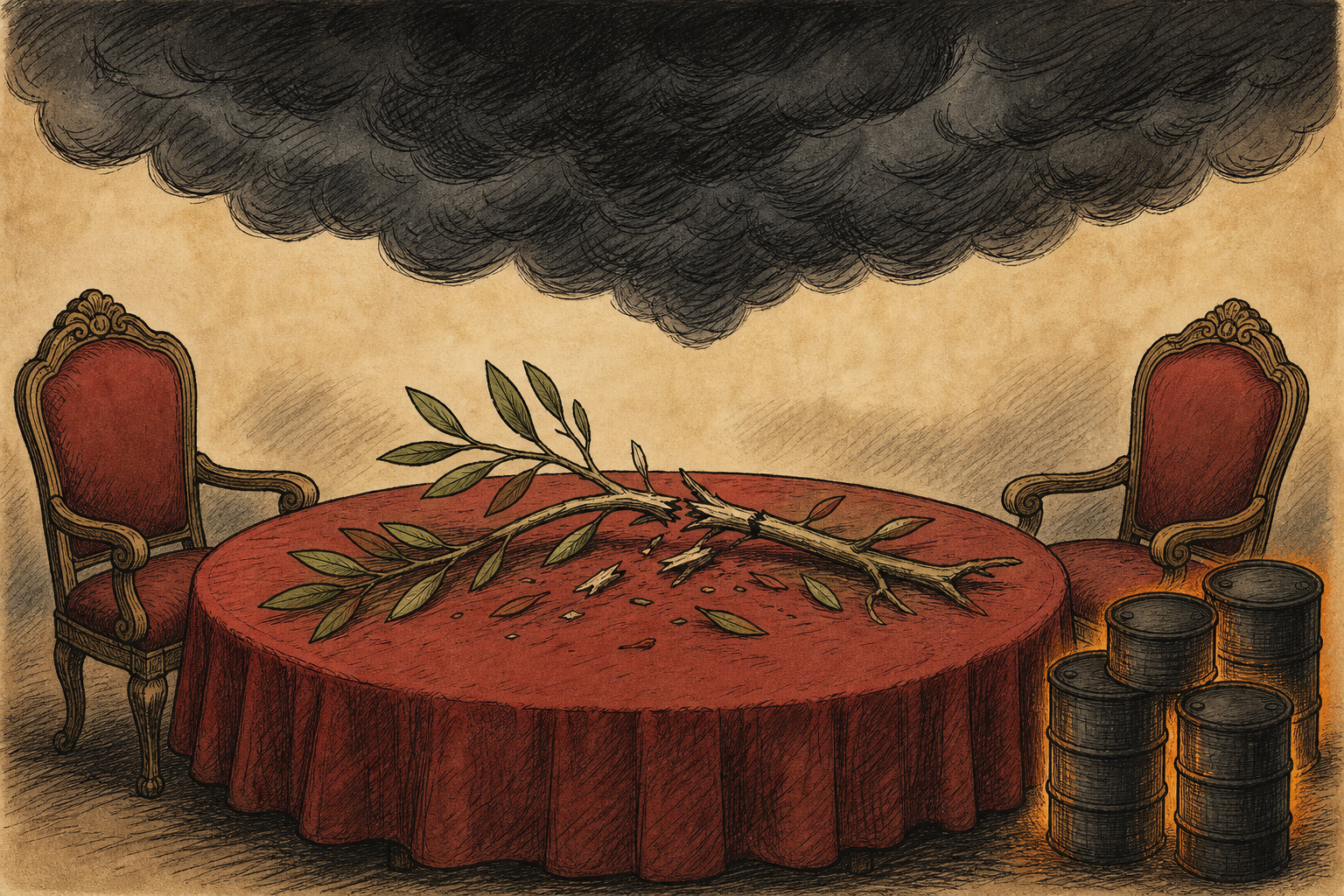
I've always had a good relationship with Vladimir Putin, but something has happened to him. He has gone absolutely CRAZY! He is needlessly killing a lot of people, and I'm not just talking about soldiers. Missiles and drones are being shot into cities in Ukraine, for no reason whatsoever.
Paraphrased commentary · not a verbatim post
Paraphrase of President Trump's widely reported Truth Social remarks on Putin and the war, in which he called Putin's conduct 'CRAZY' and said he was 'needlessly killing a lot of people.' Source: reporting on Trump's Truth Social posts, 2025–2026.
The single most humiliating day of the war for Russia may have been June 1, 2025. In an operation Ukraine code-named Spider’s Web, the SBU spent roughly 18 months smuggling small quadcopter drones deep into Russia, concealed inside wooden cabins mounted on ordinary cargo trucks. On cue, the roofs opened and 117 drones lifted off — not near the front, but beside airfields as far away as Murmansk in the Arctic and, by some accounts, the Far East. Their targets: the strategic bombers Russia uses to launch cruise missiles at Ukrainian cities.
Ukraine claimed it hit around 41 aircraft — about a third of Russia’s strategic cruise-missile carriers — and put the damage near $7 billion. Independent analysts were more conservative: satellite imagery and open-source investigators confirmed at least 11 to 13 bombers destroyed outright, with more damaged, and two U.S. officials put the figure around ten destroyed. Take even the low end, and Ukraine traded roughly $2,000 drones for irreplaceable Tu-95 and Tu-22M3 bombers that Russia no longer manufactures. The point the operation made, in the words of one military-affairs scholar, was that it “tore apart the old idea that bases far behind the front lines are safe.”
Satellite imagery and open-source analysis of the Spiderweb strikes: confirmed destruction of multiple Tu-95 and Tu-22M3 strategic bombers at their home bases, deep inside Russia. These airframes are out of production. They cannot be replaced.
Here we have to be careful, because the difference between killed and casualties (killed plus wounded) is where sloppy accounts get torn apart. So, precisely: the Russian independent outlet Mediazona, working with BBC News Russian, has confirmed the deaths of more than 229,000 Russian soldiers by name — and Mediazona is explicit that this is an incomplete floor, not the total. Their statistical model, which accounts for the deaths they can’t yet name, points to roughly 352,000 Russian war dead through the end of 2025. Western intelligence estimates cluster in the same 250,000–352,000 range.
Now the wider figure. When you add the wounded, UK military intelligence estimates more than 1.2 million total Russian casualties since February 2022 — and Ukraine’s General Staff, which publishes a running daily tally, claims about 1.4 million. Those two numbers, one from a NATO defense ministry and one from Kyiv, corroborate each other closely enough that the scale is not seriously in dispute. UK intelligence estimated roughly 382,000 Russians killed or wounded in 2025 alone — more than a thousand men a day, every day, for a year, for gains a British government statement called “catastrophic losses for minimal gains.”
Killed:~229,000 confirmed by name (Mediazona/BBC) · ~250,000–352,000 estimated (Mediazona statistical model; Western intelligence).
Casualties (killed + wounded): 1.2 million (UK MoD) · ~1.4 million (Ukraine General Staff).
So “500,000” is wrong in both directions: too high for deaths, and a wild undercount of casualties. We use the precise figures because a pointed story built on a loose number is a story that gets torn down.
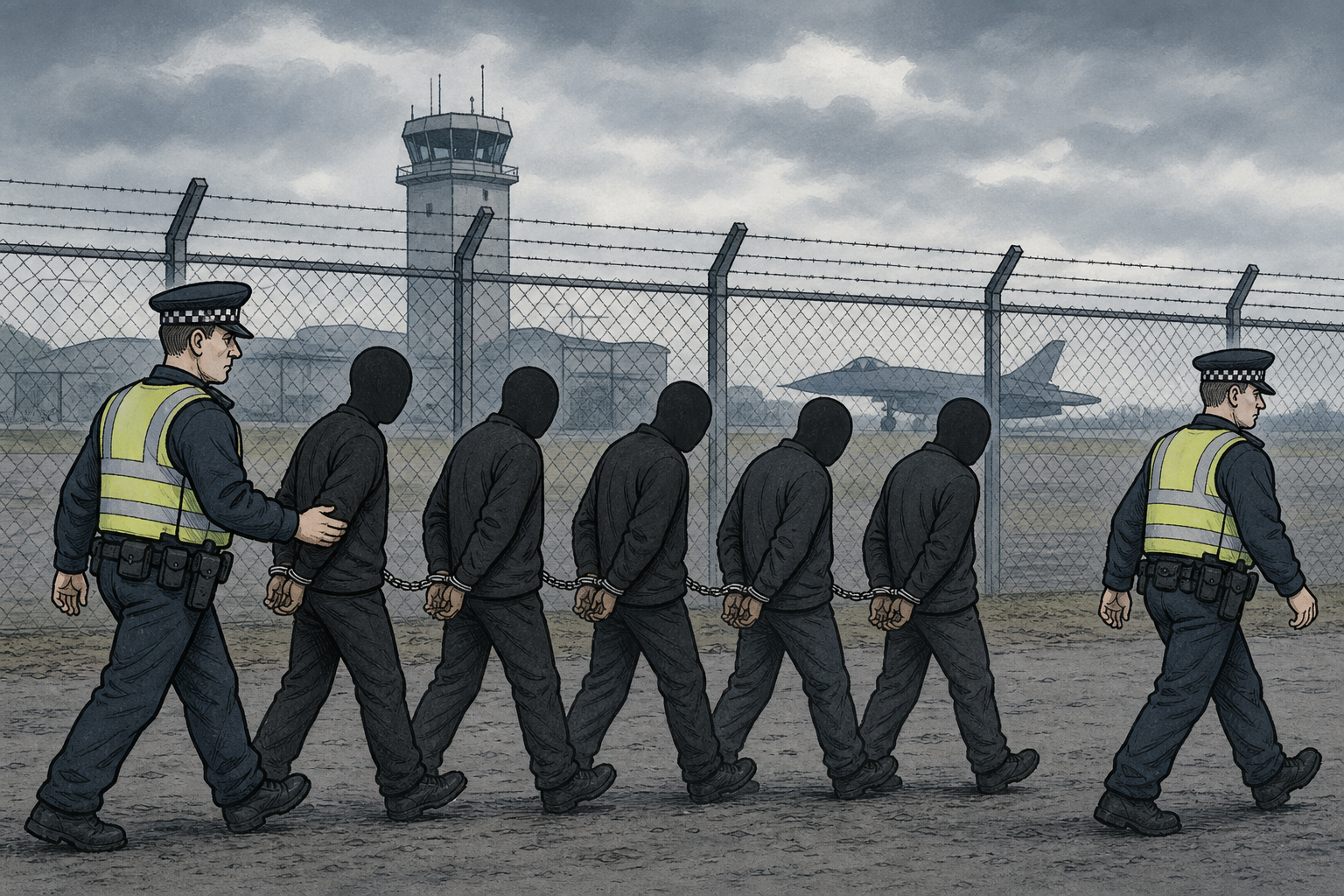
To feel the scale, put it against a yardstick Americans know. Add up every U.S. military death in every war since World War II — Korea (36,574), Vietnam (58,220), the 1991 Gulf War (294), Iraq (4,492), Afghanistan (2,325), plus Lebanon, Somalia, Grenada, Panama and the rest — and the total, per the Congressional Research Service, comes to roughly 103,000. That is 80 years of American war, from Inchon to Kabul, in one number.
Against that yardstick, the numbers stop being abstract. Russia’s confirmed-by-name dead alone (~229,000) is more than double every American who died in every war across 80 years. Its estimated death toll (~250,000–352,000) runs roughly two-and-a-half to three-and-a-half times the entire post-1945 American total. And its total casualties — 1.2 to 1.4 million — are on the order of eleven to thirteen times all American war deaths since World War II. Even “four times over,” the figure people reach for, understates the casualty gap.
There is an even sharper mirror, and it is Russia’s own. The Soviet Union’s decade in Afghanistan — the war widely credited with helping break the USSR — killed roughly 15,000 Soviet soldiers. Putin has now buried something like fifteen times that many Russians in four years in Ukraine, and by the statistical estimate, more than twenty times. The man who framed this war as restoring Russian greatness has produced the deadliest Russian military catastrophe since the Second World War.
“Catastrophic losses for minimal gains, in an unsustainable war.”
United Kingdom statement to the OSCE, on Russia's casualties in Ukraine
If Spider’s Web was the most humiliating day, the Black Sea is the most humiliating campaign. Ukraine began the war with essentially no navy to speak of. It has nonetheless sunk or damaged roughly a third of Russia’s Black Sea Fleet using missiles and cheap uncrewed surface drones, and forced the survivors to flee their historic home port of Sevastopol for Novorossiysk. UK military intelligence has assessed the fleet as “functionally inactive.”
The centerpiece was the cruiser Moskva, the fleet’s flagship, sunk in April 2022 by two Ukrainian Neptune missiles — the largest warship sunk in wartime since World War II and the first Russian flagship lost since 1905. For nearly four years Moscow insisted it was an accidental onboard fire. Then, in January 2026, a Russian military court, ruling on compensation claims from sailors’ families, accidentally confirmed the ship was destroyed by a Ukrainian missile strike — before officials scrambled to walk it back. Russia’s own courtroom outed the cover story.
The flagship — Moskva, sunk April 2022; Russia’s own court later confirmed the missile strike.
The Kerch Bridge — Putin’s signature $3.7B link to Crimea, struck in October 2022 and again by sea drones in July 2023.
The strategic bombers — hit at their bases from the Arctic to, by some accounts, the Far East in June 2025.
Moscow’s airports — repeatedly forced to halt flights by drone threats through 2025.
Ukraine has driven Russia's Black Sea Fleet out of occupied Crimea and rendered much of it combat-ineffective — using missiles and naval drones, without a conventional navy of its own. The fleet that once dominated the Black Sea now hides in Novorossiysk.
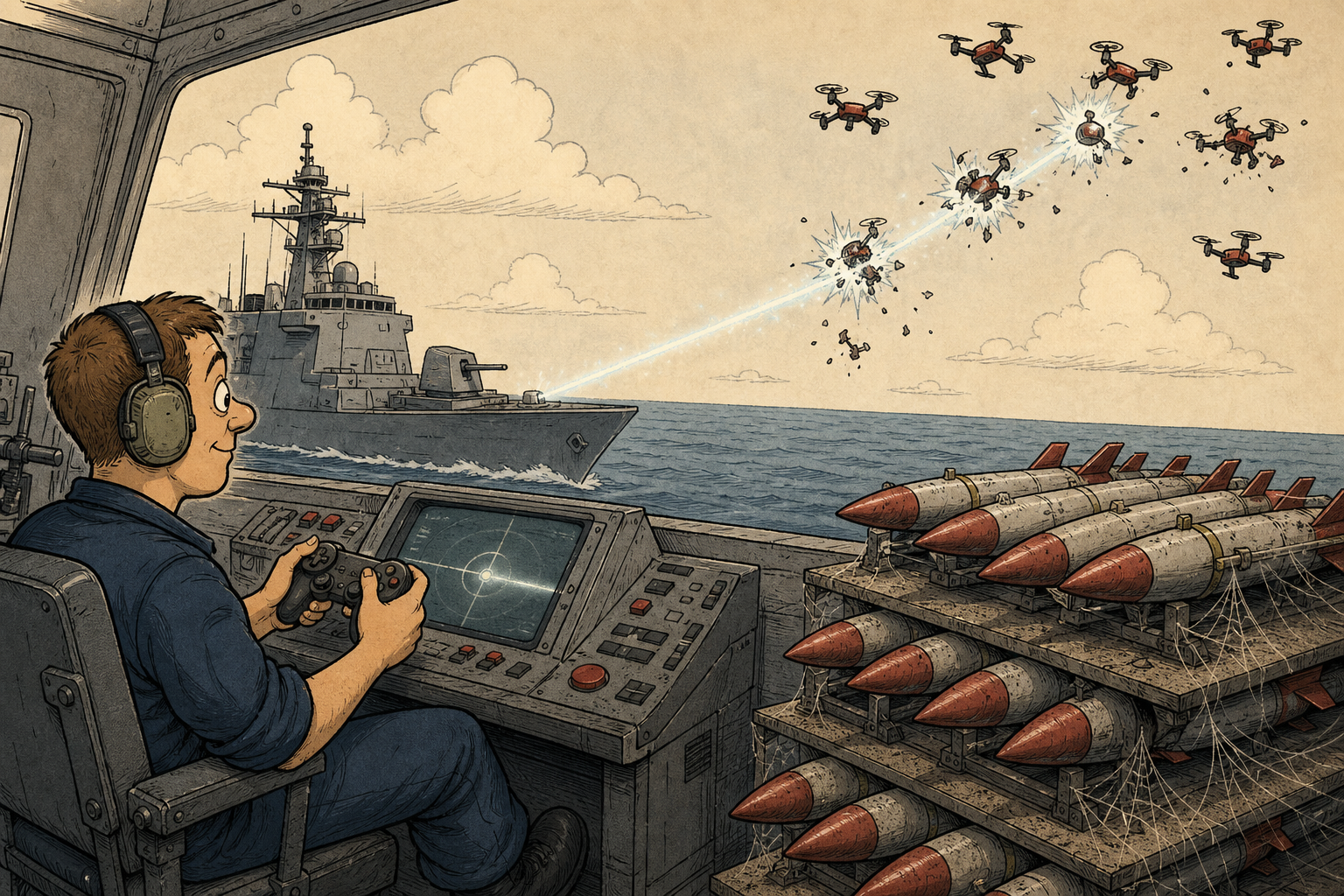
Nothing captures the fall from “second-strongest army on Earth” like the company Russia now keeps. To sustain the fight, Moscow has leaned on two of the most isolated regimes in the world. According to South Korean and Ukrainian intelligence, North Korea has sent an estimated 11,000–12,000 troops to help Russia claw back its own Kursk region — and taken thousands of casualties doing it — while shipping Russia up to 12 million artillery shells. Iran, meanwhile, supplied the Shahed attack drones that became Russia’s signature weapon against Ukrainian cities; by 2025, roughly 90% of Shahed assembly had been moved inside Russia.
Sit with that. The nation that told the world it was a peer of the United States is firing artillery shells supplied by Kim Jong Un, launching attack drones of Iranian design, and backfilling its own ranks with North Korean infantry. And it is paying a staggering price at home to do it: Russia disclosed, for the first time, direct war spending exceeding $137 billion in 2025, with military outlays around 7% of GDP by SIPRI’s count and defense-and-security consuming an estimated 38–40% of the entire federal budget. More than a million mostly young, educated Russians left the country in the war’s first two years, though some have since returned.
The war did not turn in a single moment; it turned in a pattern. Russia opens with overwhelming force, fails to land the knockout, and then discovers that its expensive, prestigious assets are the ones most exposed.
It is fair, and accurate, to say Russia is being humiliated. It is not accurate to say Russia is being beaten back. As of mid-2026, Russian forces are still making slow, grinding, blood-soaked advances in the east, with the Pokrovsk sector of Donetsk the focal point, per the Institute for the Study of War. Neither side has achieved a decisive breakthrough along the roughly 1,200-kilometer front. US-brokered peace talks — Abu Dhabi, then Geneva — stalled by spring over the same two questions that have haunted the war: Donbas territory and Western security guarantees.
So the honest summary is this. On the map, Russia is inching forward. On every other ledger — men, money, materiel, prestige, and reach — it is losing badly, and increasingly in public. It brought the world’s second-most-powerful military and a ten-to-one budget advantage, and four years later its bombers are scrap, its flagship is a reef, its refineries are burning, and it is standing in a gas line while buying shells from North Korea. That is not a great power flexing. That is a great power discovering that spending more and killing more is not the same as winning — and that a smaller, poorer, more inventive opponent can make the bigger army look like exactly what the cartoon shows: a bandaged giant, swatting at drones it cannot catch.
Vladimir Putin is playing with fire. If it weren't for me, lots of really bad things would have already happened to Russia. He's costing his country dearly and doesn't even realize it. This war would never have started if the election hadn't been rigged.
Paraphrased commentary · not a verbatim post
Paraphrase of President Trump's Truth Social remarks warning that Putin was 'playing with fire' and 'costing his country' over the war. Source: reporting on Trump's Truth Social posts, 2025.
We will update this page as the front, the strike campaign, and the peace talks move. The numbers here are deliberately conservative and precisely attributed, because the story tells itself without exaggeration: the bigger army brought more of everything, and got more of its own people killed for less, than any military since 1945.
- 1.CNBC — 'Putin admits Russia is facing fuel shortages as Ukraine's drone strikes hit refineries,' June 29, 2026
- 2.Fortune — 'Ukraine's drone attacks on Russian refineries are causing fuel shortages thousands of miles away, in Siberia,' June 28, 2026
- 3.RFE/RL — 'Ukraine's Strikes On Russian Refineries Spark Fuel Shortages The Kremlin Can't Hide,' June 2026
- 4.Reuters (via Militarnyi) — 'Ukrainian strikes on 10 oil refineries knock out 17% of Russia's refining capacity,' Aug 2025
- 5.Wikipedia — 'Operation Spiderweb' (SBU June 1, 2025 strike on five strategic-bomber bases; aggregates SBU/Reuters/RFE-RL reporting)
- 6.NBC News — 'Satellite images and OSINT show the scale of Ukraine's Spiderweb drone attack,' June 2025
- 7.Militarnyi — 'Satellite imagery confirms destruction of 13 aircraft at Belaya and Olenya air bases,' June 2025
- 8.Kyiv Independent — 'New footage of Operation Spiderweb from the SBU,' June 2025
- 9.The Moscow Times — 'Huge blast rocks Engels airbase as Ukraine launches major drone assault,' March 20, 2025
- 10.Mediazona + BBC News Russian — 'Russian losses in the war with Ukraine' (confirmed, name-by-name dead), updated June 2026
- 11.Mediazona + Meduza — 'How many Russian soldiers have died in the war? A statistical estimate' (~352,000 through end-2025), May 9, 2026
- 12.UK Ministry of Defence / Defence Intelligence (via Defense Express) — 'Russian forces sustained an estimated 382,000 killed and wounded in 2025 alone,' Jan 14, 2026
- 13.Ukrinform / UK MoD — 'British intelligence estimates overall Russian casualties in the Ukraine war at 1,118,000,' Oct 14, 2025
- 14.Congressional Research Service — 'American War and Military Operations Casualties: Lists and Statistics' (RL32492), U.S. deaths by war
- 15.Wikipedia — 'United States military casualties of war' (DoD-sourced per-war death table)
- 16.Al Jazeera — 'Zelenskyy reveals 55,000 Ukrainian soldiers killed fighting Russia,' Feb 5, 2026
- 17.The Conversation — 'How the Ukrainians, with no navy, defeated Russia's Black Sea Fleet,' 2024
- 18.CNN — 'Russia's own court accidentally confirms Ukraine sank the Moskva — then backtracks,' Jan 26, 2026
- 19.NBC News — 'US intel helped Ukraine sink Russian flagship Moskva, officials say,' April 2022
- 20.CNN — 'North Korean troops in Kursk: what we know about the casualties,' Jan 31, 2025
- 21.Bloomberg — 'North Korea supplies Russia with 12 million shells, Seoul says,' July 14, 2025
- 22.SIPRI — 'Preparing for a fourth year of war: military spending in Russia's budget for 2025' (~7.2% of GDP)
- 23.Meduza — 'Russia discloses direct war spending for the first time, estimating over $137 billion in 2025,' Dec 17, 2025
- 24.Institute for the Study of War / Critical Threats — 'Russian Offensive Campaign Assessment, June 1, 2026'
- 25.Euronews — 'Russia and Ukraine both claim front-line progress with US-brokered peace talks on hold,' March 10, 2026
- 26.CNN — 'Russia-Ukraine military comparison' (pre-war budgets: ~$45.8B vs ~$4.7B), Feb 25, 2022
- 27.Jamestown Foundation — 'Military Spending Now Half of Russia's Budget' (defense + security share of the federal budget)
- 28.Wikipedia — 'Shahed drones' (Iranian drone transfers to Russia; assembly relocated inside Russia)
- 29.NPR — 'Russia's brain drain: more than a million people left after the invasion of Ukraine,' May 31, 2023
Last updated June 30, 2026