
Amnesty: RSF Committed Crimes Against Humanity and Ethnic Cleansing in El-Fasher — a City Starved, Trapped Behind 57 Kilometers of Berms, and Executed on Camera.
Amnesty International published a report on July 1, 2026, titled “City Under Siege, Children Under Fire,” documenting what it says are crimes against humanity and ethnic cleansing committed by Sudan’s Rapid Support Forces (RSF) during the siege and eventual fall of El-Fasher, the capital of North Darfur. Amnesty Secretary General Agnès Callamard called the findings “a stain on the conscience of humanity,” and said flatly: “The war in Sudan is a war on civilians.” The report was launched at an event in Nairobi, Kenya.
The report covers roughly early 2024 through October 2025, culminating in the RSF’s final assault on October 26, 2025. Amnesty interviewed 247 people — including 208 survivors of the siege and the city’s fall, and 45 people who were unlawfully detained by the RSF, among them eight children — and independently verified 19 videos of massacres to corroborate testimony. The acts documented include murder, forcible transfer, imprisonment, torture, rape, sexual slavery, other sexual violence, enslavement, extermination, and persecution, with the persecution and forcible-transfer patterns specifically targeting the non-Arab Zaghawa and Fur communities — the ethnic-cleansing element of Amnesty’s findings.
For roughly 17 months, from May 2024 to the city’s fall in October 2025, the RSF blockaded food, water, and aid into El-Fasher, according to the report, reducing trapped civilians to eating ambaz, an animal-feed byproduct, to survive. When the final offensive came, RSF fighters used a 57-kilometer network of earthen berms to trap people trying to flee. One witness told Amnesty he saw more than 1,000 bodies. This page lays out what the report documents, who it names, and how three separate institutions — Amnesty, the U.S. State Department, and a UN fact-finding mission — have each characterized the same atrocities differently and at different times.
- 247 survivors and witnesses — interviewed for Amnesty's report, including 208 survivors of the siege and fall of El-Fasher and 45 unlawfully detained people, among them 8 children · Source: Amnesty International
- 19 verified massacre videos — analyzed by Amnesty to corroborate testimony, including footage the report says shows RSF fighters personally executing captives · Source: Amnesty International; Darfur24
- 57-kilometer network of berms — the earthen barrier the report documents RSF forces building to trap civilians fleeing the city's October 26, 2025 fall · Source: Amnesty International; Radio Tamazuj
- 26 survivors of sexual violence — documented in the report, including a 13-year-old girl abducted 350km from El-Fasher and gang-raped · Source: Amnesty International
- $2.9 billion — what the UN says it needs in 2026 to reach 20.4 million of the 33.7 million Sudanese it counts as in need · Source: UN OCHA Sudan Humanitarian Needs and Response Plan 2026
- 3 governments, same 3 names — the U.S. Treasury sanctioned the same three RSF field commanders Amnesty's report names, in February 2026, after the UK (Dec. 2025) and EU (Jan. 2026) designated them first · Source: U.S. Treasury (OFAC)
El-Fasher had been the last major North Darfur city outside RSF control since the civil war between the paramilitary group and Sudan’s army broke out in April 2023. Amnesty’s methodology, described in the report, combined survivor interviews conducted between July 2024 and January 2026 with frame-by-frame analysis of the 19 verified videos, cross-referenced against satellite imagery of the berm network and detention sites. The report documents murder, forcible transfer, imprisonment, torture, rape, sexual slavery, other sexual violence, enslavement, extermination, and persecution — the acts that make up the legal definition of crimes against humanity when committed as part of a widespread or systematic attack on a civilian population.
Amnesty is explicit that it stops short of independently declaring genocide. The report says the pattern of acts against Zaghawa and Fur civilians “may be relevant to the crime of genocide,” a deliberately narrower legal formulation than the findings issued separately by the outgoing Biden administration’s State Department and, later, a UN fact-finding mission — both of which used the word genocide directly. Keeping those three findings straight, and correctly attributed, matters: they were made by three different institutions, using three different legal standards, at three different points in the war. Section 5 below lays out each one on its own terms.
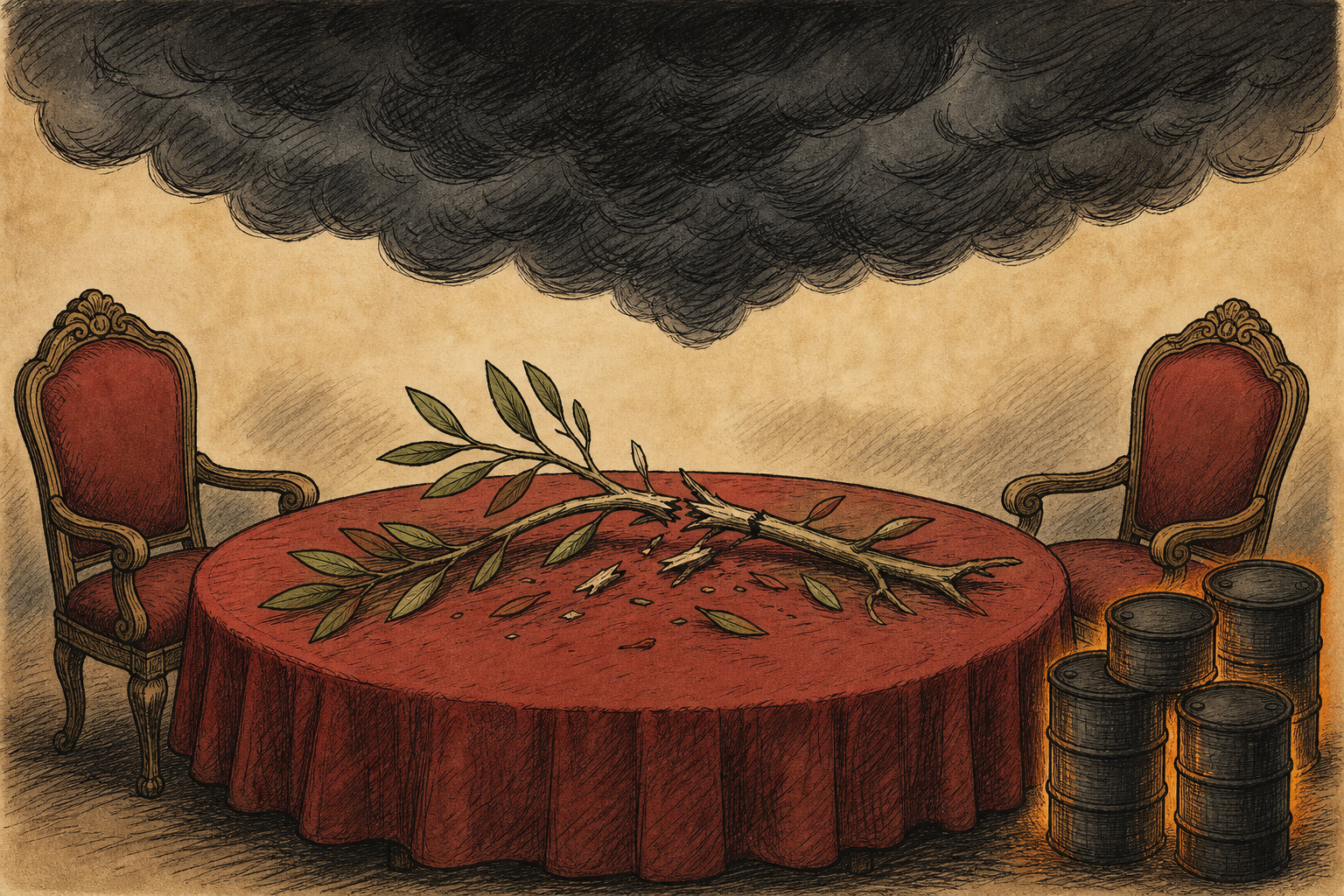
The report documents a deliberate blockade running from roughly May 2024 through October 2025, during which RSF forces restricted food, water, and humanitarian aid from entering El-Fasher. Survivors described being reduced to eating ambaz, a byproduct normally used as animal feed, just to stay alive. The report documents an attack on the city’s Saudi Maternity Hospital that Amnesty says killed “scores of people.” The UN’s human rights office had separately warned, as far back as October 2025, that it was “appalled” by the continued killing of civilians in the city even before the final assault came.
According to the report, the siege was not incidental to the fighting — it was a tactic, used alongside the eventual ground assault to break the city’s defenses and its civilian population at the same time. That combination, Amnesty argues, is what elevates the case from wartime hardship to a documented pattern of crimes against humanity: starvation used deliberately against a civilian population, followed by mass violence when the city fell.
When the RSF’s final offensive came on October 26, 2025, the report documents that fighters had built a 57-kilometer network of earthen berms around the city’s approaches, funneling civilians attempting to flee into checkpoints where, according to survivor testimony, hundreds were executed. One witness told Amnesty he personally saw more than 1,000 bodies. The 19 verified videos Amnesty analyzed include footage the report says shows individual RSF fighters shooting captives at close range.
Survivors who were detained rather than killed described being held in shipping containers with water deliberately withheld; detainees told Amnesty they witnessed fellow prisoners die of dehydration and disease inside the containers. The BBC separately gathered testimony from survivors describing the same pattern of brutality during and after the city’s fall.
“The atrocities that are unfolding in El-Fasher were foreseen and preventable — but they were not prevented. They constitute the gravest of crimes.”
Volker Türk, UN High Commissioner for Human Rights
The report documents sexual violence against 26 survivors, including cases of rape, sexual slavery, and other sexual violence. Among the cases Amnesty documents: a 13-year-old girl who was abducted roughly 350 kilometers from El-Fasher and gang-raped. The report also documents enslavement, including forced labor, and cases the report characterizes as sexual slavery, in addition to the wider pattern of rape and other sexual violence during and after the city’s fall.
The report also documents the RSF forcing boys into child soldiering — used in combat roles, intelligence-gathering, and herding livestock for RSF units. Taken together with the detention-container deaths and the berm-line executions, Amnesty presents these as a single, coordinated pattern rather than isolated incidents of wartime misconduct: a campaign that combined starvation, mass killing, sexual violence, and forced labor against a civilian population identified largely along ethnic lines.
Amnesty’s report identifies three RSF field commanders as bearing responsibility for crimes documented in the verified videos: Major General Gedo Hamdan Ahmed Mohamed (“Abu Shok”), Lieutenant Colonel Abbas Khater Bakhit, and Al-Fateh Abdullah Idris (“Abu Lulu”), the latter shown in the footage personally executing captives, according to the report. None of the three has been indicted by the International Criminal Court. Amnesty’s language throughout is “documented,” “accused,” and “identified as bearing responsibility” — not “convicted” or “guilty.” No court has yet ruled on these individuals’ guilt.
The U.S. Treasury’s February 2026 sanctions used slightly different English transliterations of Arabic names for what appear to be the same three individuals Amnesty names. To avoid implying two separate rosters of commanders, here is how the two documents refer to each person:
“Abu Shok” — Amnesty: Maj. Gen. Gedo Hamdan Ahmed Mohamed · Treasury: Maj. Gen. Jedo Hamdan Ahmed Mohamed (“Abu Shouk”)
“Abu Lulu” — Amnesty: Al-Fateh Abdullah Idris · Treasury: Brig. Fath al-Rahman Abdullah Idris Adam
Third commander — Amnesty: Lt. Col. Abbas Khater Bakhit · Treasury: field commander Tijani Ibrahim Musa Mohamed (“al-Zeer Salem”)
RSF commander-in-chief Mohamed Hamdan “Hemedti” Dagalo was sanctioned separately by the United States, under Section 7031(c), in January 2025 for command responsibility over mass rape committed by forces under his control — a designation that predates and sits alongside the three field-commander sanctions that followed a year later.
It is easy to blur these into a single verdict. They are not one. On January 7, 2025, the State Department under the outgoing Biden administration, led by Secretary Antony Blinken, made a formal determination that the RSF had committed genocide in Darfur — a legal and political finding, not a court ruling. That determination came more than a year and a half before Amnesty’s July 2026 report.
January 7, 2025 — The Biden State Department (Secretary Blinken) formally determines the RSF committed genocide in Darfur.
February 2026 — The UN Independent International Fact-Finding Mission for the Sudan finds RSF conduct in El-Fasher bears “hallmarks of genocide.”
July 1, 2026 — Amnesty International documents crimes against humanity and ethnic cleansing, saying the pattern “may be relevant to the crime of genocide” without itself declaring genocide.
Separately, in February 2026, the UN’s Independent International Fact-Finding Mission for the Sudan found that RSF conduct in El-Fasher bore “hallmarks of genocide,” targeting non-Arab communities. That finding, too, is distinct from both Amnesty’s report and the earlier State Department determination — three institutions, using three different evidentiary standards, arriving at overlapping but not identical conclusions at three different points across more than a year.

On the sanctions track, there is bipartisan continuity. The Trump administration has not reversed the Biden-era genocide determination and has built on it: in February 2026, the Treasury Department’s Office of Foreign Assets Control sanctioned the same three RSF field commanders Amnesty’s report names, following the United Kingdom’s designation of the same individuals in December 2025 and the European Union’s in January 2026. Secretary of State Marco Rubio (R) said: “Something needs to be done to cut off the weapons and support that the RSF is getting.”
On the humanitarian-response side, the picture is more contested. The Trump administration’s restructuring of USAID — a roughly 83% cut to the agency’s operations announced in February 2025, following the January 20, 2025 foreign-aid freeze, and the State Department’s subsequent absorption of USAID’s remaining functions — reduced U.S. humanitarian capacity in Sudan during the same window the El-Fasher siege intensified and the city ultimately fell. Aid groups say roughly 1,500 emergency community kitchens in Sudan closed almost immediately after the January 2025 freeze, with about 80% of emergency kitchens shut down in the months that followed. By the State Department’s July 2025 reorganization, aid groups say just nine U.S. staff were left covering the entire Sudan region.
Tremendous atrocities are taking place in Sudan. It has become the most violent place on Earth and, likewise, the single biggest Humanitarian Crisis. Food, doctors, and everything else are desperately needed.
Paraphrased commentary · not a verbatim post
Paraphrase of Trump's November 19, 2025 remarks on the Sudan crisis; no independently verified Truth Social post ID was confirmed against truthsocial.com.
President Donald Trump (R) has publicly called Sudan “the single biggest Humanitarian Crisis” in the world. In February 2026, Senior Advisor for Africa Massad Boulos unveiled a five-pillar Sudan peace plan and announced a Quad-brokered framework with a $1.5 billion reconstruction and support fundraising goal. “Sudan’s future cannot be decided by generals,” Boulos said. “It must be shaped by civilians.” That ambition sits alongside a UNHCR regional appeal, issued the same month, seeking $1.6 billion to support 5.9 million Sudanese refugees across seven neighboring countries.
What this is — A documented account, sourced to Amnesty International’s July 2026 report, of RSF crimes against humanity and ethnic cleansing in El-Fasher, and of how three separate institutions have characterized the same conduct.
What this is not — A conviction. No named commander has been indicted by the ICC or tried in any court; Amnesty’s own language is documentary, not adjudicative.
Why the U.S. policy angle is here — Sanctions accountability has been bipartisan and continuous across two administrations; humanitarian funding did not follow the same path. Both facts sit inside the same story of what Washington did, and did not do, while El-Fasher fell.
The bottom line: Amnesty’s report documents a two-year campaign of murder, forced starvation, mass executions, sexual violence, and enslavement against a civilian population in North Darfur, targeted in significant part along ethnic lines. Three named commanders and RSF leader Mohamed Hamdan “Hemedti” Dagalo now sit under U.S., UK, and EU sanctions for it. Two separate institutions — the outgoing Biden State Department in January 2025, and a UN fact-finding mission in February 2026 — have gone further than Amnesty and used the word genocide. Amnesty has not, while noting the pattern “may be relevant” to that crime. Meanwhile the humanitarian response remains billions of dollars short of what the UN says Sudan needs, and U.S. aid capacity on the ground was cut sharply during the exact window El-Fasher fell.
“It is a stain on the conscience of humanity. The war in Sudan is a war on civilians.”
Agnès Callamard, Secretary General, Amnesty International
Türk, the UN’s human rights chief, warned that without international action, “we can only expect worse to come.” We will update this page as the ICC, national prosecutors, or further UN findings develop.
- 1.Amnesty International — 'Sudan: RSF atrocities in El-Fasher a "stain on the conscience of humanity" — new report,' July 1, 2026
- 2.Amnesty International Australia — mirror of the July 1, 2026 report release
- 3.Amnesty International — 'Sudan: El-Fasher survivors tell of deliberate RSF killings and sexual violence — new testimony,' November 2025 (predecessor report)
- 4.Darfur24 — 'Amnesty accuses three RSF commanders of crimes against humanity in El-Fasher,' July 1, 2026
- 5.Radio Tamazuj — 'RSF committed crimes against humanity in El-Fasher, Amnesty says'
- 6.Arab News — coverage of the Amnesty El-Fasher report
- 7.Yahoo News (wire syndication) — 'Sudan's RSF committed crimes against humanity in El-Fasher, Amnesty says'
- 8.OHCHR — 'Sudan: UN Human Rights Chief appalled by continued killing of civilians in El-Fasher,' October 2025
- 9.OHCHR / UN Independent International Fact-Finding Mission for the Sudan — 'Evidence from El-Fasher reveals a genocidal campaign targeting non-Arab communities,' February 2026
- 10.U.S. Department of the Treasury (OFAC) — sanctions press release on named RSF commanders, February 2026
- 11.Human Rights Watch — 'US State Department determines genocide in Sudan,' January 8, 2025
- 12.UN OCHA — 'Sudan Humanitarian Needs and Response Plan 2026' (summary)
Last updated July 1, 2026