
Rubio and Witkoff Brief Congress on the Iran Deal — as Democrats Demand Details and the “Doha Meeting” May Not Be a Meeting at All.
Secretary of State Marco Rubio (R-FL) and Trump special envoy Steve Witkoff briefed all members of the House and Senate by phone on Monday, June 29, 2026 — the first formal congressional briefing since President Trump and Iran signed a memorandum of understanding earlier this month to pause a roughly four-month war. The briefing was unclassified, brief, and, in the words of more than one lawmaker, light on specifics.
The careful word for what exists between Washington and Tehran right now is “framework,” not “deal.” The June 14 understanding — formalized in a 14-point document Trump and Iranian President Masoud Pezeshkian signed remotely on June 17 — is a ceasefire plus a 60-day window to negotiate a permanent agreement. No final accord is signed. The hardest questions, including what happens to Iran’s enriched uranium, are explicitly deferred into that window.
On Monday Trump said U.S. envoys were en route to Doha for a meeting he called “perhaps important, perhaps not.” House Democratic Leader Hakeem Jeffries (D-NY) demanded a full unclassified briefing for the House, and Iran flatly denied that any direct U.S.-Iran negotiation was even on the Doha schedule. This page lays out what is actually agreed, what was said behind closed doors, and where the conflicting claims diverge.
Update, July 1, 2026: the indirect Doha channel is now confirmed to be running, focused on Iran’s frozen funds and Strait of Hormuz access — and a separate, more candid fight has broken into the open over just how far apart Washington and Israel are on what “done” with Iran actually means. See §06 below.
- 14-point MOU — the framework Trump and Iran's president signed remotely June 17, 2026 — a ceasefire, not a final nuclear deal · Source: CNN; Al Jazeera
- 60-day window — the negotiating clock to reach a permanent agreement, extendable only by mutual consent — running out around mid-August · Source: Axios; NBC News
- Monday phone briefing — Rubio and Witkoff briefed all House and Senate members June 29; the call was unclassified and, Democrats said, short on detail · Source: Jerusalem Post
- 'Deficient and devoid of details' — Senate Democratic Leader Chuck Schumer (D-NY)'s verdict on the briefing; Jeffries (D-NY) demanded a full unclassified House briefing · Source: Jerusalem Post; NBC News
- Doha: disputed — Trump said envoys Witkoff and Jared Kushner flew to Qatar for a 'perhaps important' meeting; Iran and Qatar said no direct U.S.-Iran talks were scheduled · Source: Al Jazeera; France 24
- Uranium: unresolved — the MOU defers the disposition of Iran's enriched stockpile to down-blending on site under IAEA supervision — terms still to be negotiated · Source: CNN; Jerusalem Post
The document at the center of this story is a memorandum of understanding, not a treaty and not a finished agreement. The two sides reached it on June 14, 2026, to settle a war that had run roughly three and a half months and had effectively closed the Strait of Hormuz. Trump and President Pezeshkian signed it remotely on June 17. CNN published the 14-point text. Its core terms, as reported by CNN and Al Jazeera: an immediate and permanent end to the war on all fronts, including Lebanon; Iranian commitments to let commercial vessels transit the Strait of Hormuz with no charge for 60 days; and a 60-day clock to negotiate a final deal, extendable only by mutual consent.
The nuclear question — the hardest one — was deferred, not solved. The MOU says the parties “agreed to resolve the disposition of stockpiled, enriched material” through a mechanism to be mutually agreed, with the minimum being down-blending on site, inside Iran, under IAEA supervision. In plain terms: Iran’s enriched uranium is not being shipped out of the country under this framework, and the exact terms remain to be hammered out before the clock runs. That is a long way from “the denuclearization of Iran” that Trump has described as the goal.
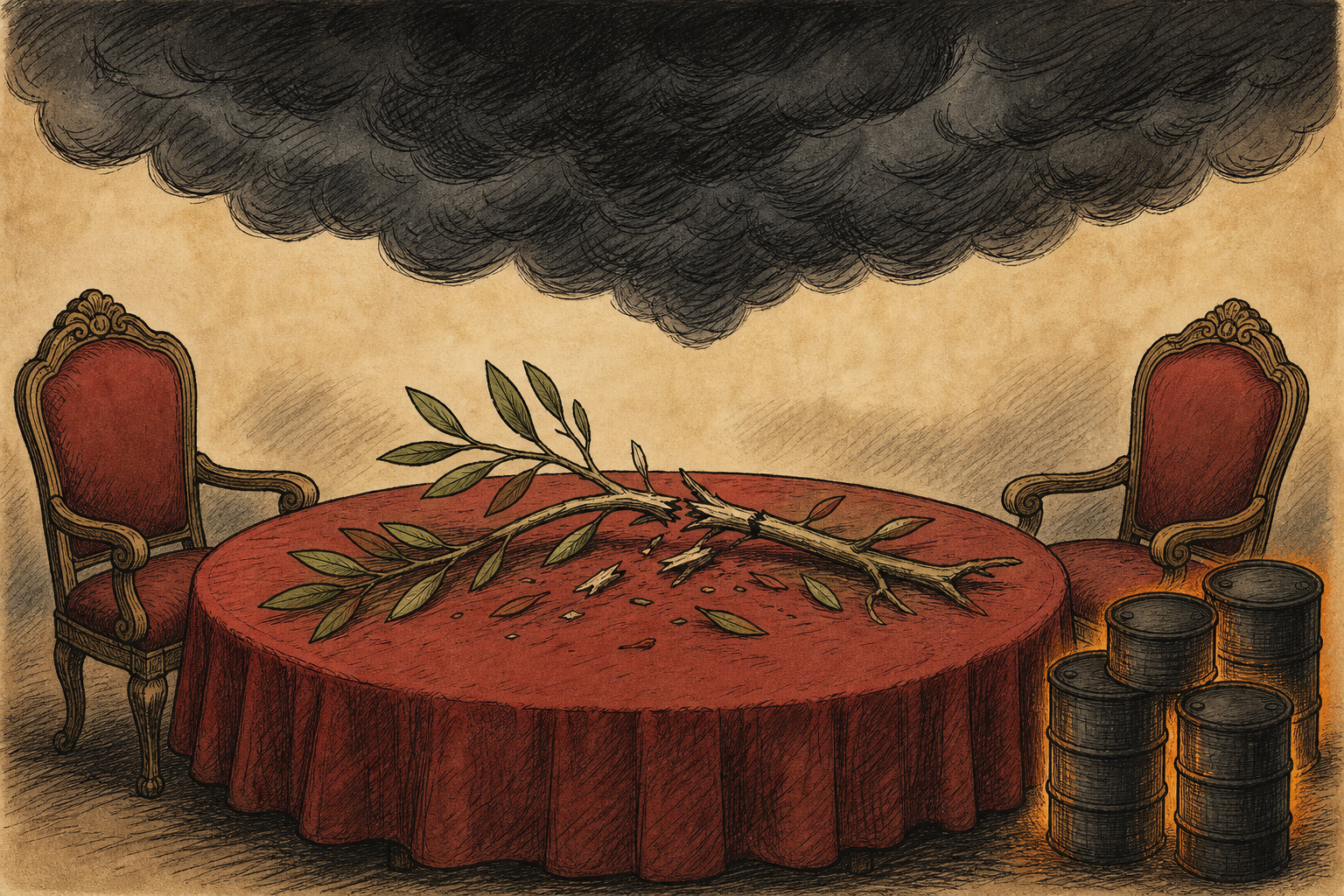
Iran has requested a meeting. It will take place tomorrow in Doha. We are winning militarily — it's almost won, I would say — and it's really very simple: the denuclearization of Iran.
Paraphrased commentary · not a verbatim post
Paraphrase of Trump's June 29 remarks/posts on the Doha meeting and his stated objective. Source: PBS NewsHour; Al Jazeera.
Rubio and Witkoff briefed members of Congress by phone on Monday afternoon, June 29, in an unclassified call open to all House and Senate members — the first such briefing since the MOU was signed. Several representatives joined remotely because they were still traveling back to Washington. According to reporting from the Jerusalem Post and Reuters, a separate classified briefing for members of select committees was expected later in the week.
Reaction split along familiar lines but not entirely along party lines. Republican Sen. Steve Daines (R-MT) called the conversation “constructive” while noting the administration kept its remarks to a minimum. Senate Democratic Leader Chuck Schumer (D-NY) called it “deficient, and devoid of details,” and said Rubio had confirmed to him that Iran stood to reap billions in oil revenue while retaining leverage over the Strait of Hormuz. The phrase that recurred from lawmakers in both chambers was a version of the same complaint: not enough specifics.
The United States and Iran have a framework to end the war, reopen the Strait of Hormuz, and place Iran's enriched material under IAEA-supervised down-blending. We have 60 days to finish the job, and we intend to brief Congress as the negotiations proceed.
At a press conference ahead of the briefing, House Democratic Leader Hakeem Jeffries (D-NY) argued that the war had “adversely impacted the national security interests of the American people” and that the conflict therefore required a full unclassified briefing for the entire House of Representatives. “It’s my hope that that will happen sooner rather than later,” he said. Jeffries also contended that Iran sat in a stronger position relative to the United States than before what he called Trump’s “reckless and costly war” — a contested characterization the administration rejects.
The Democratic demand for transparency is not purely partisan theater: a memorandum of understanding signed remotely, with the nuclear core deferred and a hard 60-day clock running, is exactly the kind of commitment Congress has a constitutional interest in scrutinizing. House Armed Services Committee Democrats had already written to Rubio on June 17 pressing for the MOU’s terms. The open question is whether the administration’s promised classified committee briefing answers the specifics that Monday’s unclassified phone call did not.
The American people deserve the full truth about this war and the agreement that followed it. The House needs a complete, unclassified briefing on the U.S.-Iran situation — and it should happen sooner rather than later.
On Monday Trump announced that Iran had requested a meeting and that it would take place the next day in Doha. He framed it cautiously: “The meeting in Doha is going to be perhaps important, perhaps not. We’re going to find out,” he said, adding that the U.S. was “winning militarily.” Trump White House press secretary Karoline Leavitt said envoys Steve Witkoff and Jared Kushner, the president’s son-in-law, were flying to Qatar, with technical negotiations expected on the sidelines.
Tehran told a different story. Iran’s Foreign Ministry spokesman Esmail Baghaei said Iran had no plans to meet the American side at any level in the coming days, and that its technical delegation was in Doha only to follow up with the Qatari side on implementing parts of the MOU — including the release of Iran’s blocked assets — not to negotiate with Washington. Qatar’s Foreign Ministry spokesman Majed al-Ansari confirmed that no high-level or direct U.S.-Iran talks were planned in Doha, even as U.S. envoys arrived to meet Qatari mediators. The result was three governments describing the same day in three materially different ways.
Trump — “Iran has requested a meeting”; envoys en route for a “perhaps important” session in Doha on Tuesday.
Iran (Baghaei) — No meeting with the U.S. at any level; the Iranian delegation is in Doha only to discuss MOU implementation with Qatar.
Qatar (al-Ansari) — No direct or high-level U.S.-Iran talks scheduled; U.S. envoys are meeting Qatari mediators on regional issues.
Here is the precise state of play as of June 30, 2026: a ceasefire is holding, fragilely, after weekend skirmishes; a 14-point framework is signed; a final deal is not. The hardest issue, Iran’s enriched uranium, is parked for negotiation, with the agreed floor being on-site down-blending under IAEA supervision rather than removal. A 60-day clock that started in mid-June expires around mid-August. The administration briefed Congress once, by phone, and Democrats from Jeffries to Schumer say they were given too little to evaluate it. And the “Doha meeting” that was supposed to advance things was, by Iran’s and Qatar’s own accounts, not a U.S.-Iran negotiation at all.
What to watch next: whether the promised classified committee briefing answers the specifics the public call did not; whether the Doha track produces an actual face-to-face or stays a mediated, implementation-only channel; and whether the down-blending mechanism and sanctions relief get nailed down before the window closes. Until a final agreement is signed and its terms are public, the honest description is the one the framework itself uses: a 60-day attempt, not a finished deal. We will update this page as the negotiations and the congressional briefings proceed.
“The meeting in Doha is going to be perhaps important, perhaps not. We're going to find out.”
President Donald Trump, June 29, 2026, on the Doha talks
A historic framework to end the war with Iran, reopen the Strait of Hormuz, and put a stop to Iran's nuclear ambitions. The fake news won't give us credit, but the world is far safer than it was four months ago.
Paraphrased commentary · not a verbatim post
Paraphrase of Trump's characterization of the June MOU. The framework is a ceasefire plus a 60-day negotiating window; major nuclear terms remain unresolved. Source: CNN; Al Jazeera.
The indirect Doha channel Trump previewed is real, if narrower than his “perhaps important” framing suggested. Iranian Deputy Foreign Minister Kazem Gharibabadi confirmed to Iranian state media that talks continued through Tuesday night into Wednesday, mediated entirely by Qatari officials — the American and Iranian delegations did not meet in person. A senior Iranian official told Reuters the focus is the release of Iran’s frozen funds and the terms of continued access through the Strait of Hormuz, implementing pieces of the June 17 memorandum rather than negotiating new ones. Gharibabadi separately held a trilateral session with Qatar and Pakistan on the same implementation questions.
More striking than the Doha logistics is how openly Israeli officials are now describing daylight between Washington and Jerusalem on the underlying goal. Israeli Defense Ministry Director-General Maj.-Gen. Amir Baram put it in five words: “We think Tehran, they think Taiwan.” His fuller point: “The difference between us is not in how we understand the threat, but in our priorities: for us, Iran is an existential threat; for the United States, it is a chronic regional challenge, while China and the Indo-Pacific theater remain the core concern.” With American munitions stretched between the Iran ceasefire and preparing for a possible confrontation over Taiwan, a prolonged Middle East commitment cuts against Washington’s broader global posture — exactly the gap a fragile 60-day negotiating window was supposed to paper over.
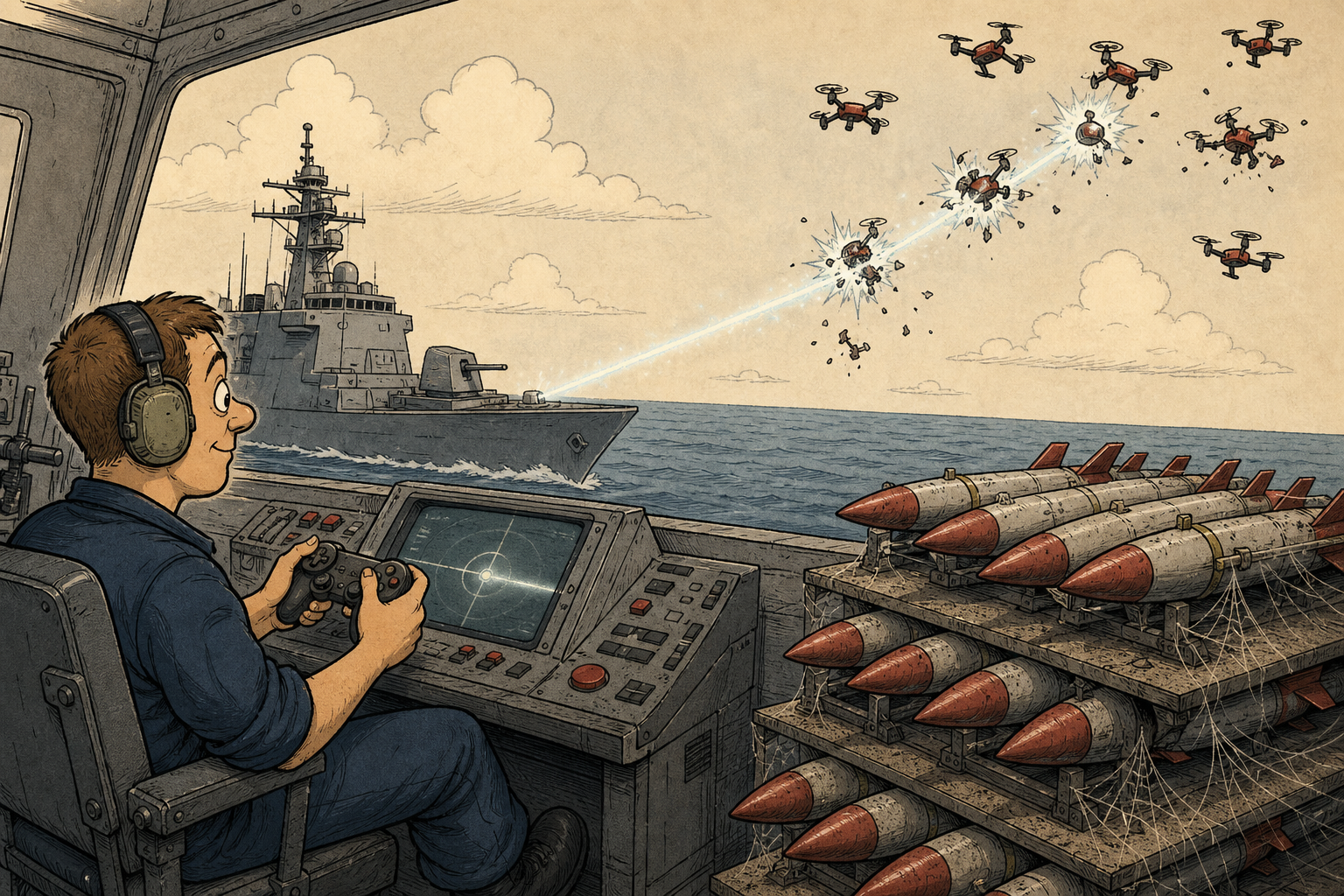
Israeli Defense Minister Israel Katz made the same point from the other direction, at a memorial ceremony for soldiers killed in the Second Lebanon War. October 7, he said, taught Israel “not to wait until threats are at its door.” Katz described two “proactive preemptive attacks” on Iran that “crushed the nuclear program it was advancing and removed an existential threat,” and said Israel had “thwarted its leaders, headed by former supreme leader Ayatollah Ali Khamenei” — a reference to Khamenei’s killing on February 28, 2026, after which his son, Mojtaba Khamenei, was installed as Iran’s new supreme leader in a March 3–9 Assembly of Experts process that outside analysts say was pushed through under IRGC pressure. Katz also vowed Hezbollah’s Naim Qassem “will pay with his head,” and said IDF troops in southern Lebanon operate under “no restrictions” to remove threats — a considerably more maximalist posture than the diplomatic-implementation language coming out of Doha the same week.
A third pressure point emerged from inside Iran’s own borders. Fox News and the Jerusalem Post both reported a wave of clashes in Iran’s western Kurdish regions between the IRGC and fighters from the Eastern Kurdistan Defense Units (YRK), the armed wing of the Kurdistan Free Life Party (PJAK) — at least seven dead, including three Iranian military personnel. Kurdish opposition groups were viewed as a potential second front against Tehran during the earlier US-Israeli war on Iran; Trump told Reuters at the time he’d be “all for it” if Kurdish forces moved against the regime. That front never fully opened then. Its re-emergence now, just as Washington and Tehran try to hold a ceasefire together, adds a variable neither side’s negotiators control.
Doha — A real, Qatari-mediated channel on frozen funds and Hormuz access; not the face-to-face “meeting” Trump initially described.
Jerusalem — Israeli officials are now saying openly what usually stays private: Washington sees Iran as one regional problem among several, with China as the priority; Israel sees an existential one it will act on unilaterally regardless.
Tehran’s west — A Kurdish-IRGC clash cycle that could become a second internal front for a regime already managing a leadership succession and a fragile ceasefire.
- 1.The Jerusalem Post — 'Rubio, Witkoff to address Congress on US-Iran agreement,' June 29, 2026
- 2.The Jerusalem Post — 'Hakeem Jeffries calls for unclassified briefing on US-Iran talks,' June 30, 2026
- 3.The Jerusalem Post — 'Witkoff, Rubio face bipartisan scrutiny over US-Iran deal, removal of Tehran's enriched uranium' (live updates), June 30, 2026
- 4.NBC News / Reuters — 'U.S. and Iran negotiators head to Doha, but meeting uncertain,' June 29, 2026
- 5.Al Jazeera — 'Trump: US envoys enroute to Doha for "perhaps important" Iran meeting,' June 30, 2026
- 6.Al Jazeera — 'What the Trump-Iran agreement says about Lebanon, Hormuz and uranium' (the 14-point plan), June 18, 2026
- 7.CNN — 'US releases official agreement with Iran. Read the 14-point text,' June 17, 2026
- 8.Axios — 'US, Iran reach deal to extend ceasefire, open strait,' June 14, 2026
- 9.NBC News — 'Trump and Iran's president sign initial deal to end war, open Strait of Hormuz and ease sanctions,' June 17, 2026
- 10.The Hill — 'Jared Kushner, Steve Witkoff headed to Qatar for Iran talks,' June 29, 2026
- 11.PBS NewsHour — 'Trump says Iran has requested a meeting with U.S., but Iranian officials say nothing has been scheduled,' June 29, 2026
- 12.CNBC — 'Trump says U.S. and Iran to hold fresh talks in Qatar on Tuesday following weekend clashes,' June 29, 2026
- 13.France 24 — 'Middle East live: Qatar says no direct US-Iran talks to take place in Doha,' June 30, 2026
- 14.U.S. House Armed Services Committee Democrats — Ranking Members' letter to Secretary Rubio on the Iran MOU (primary document), June 17, 2026
- 15.Wikipedia — '2025–2026 Iran–United States negotiations' (timeline aggregation, sourced to primary reporting)
- 16.The Jerusalem Post — 'Doha meeting focusing on interim US-Iran deal ongoing, Tehran's deputy FM tells state media,' July 1, 2026
- 17.Al Jazeera — 'Are US and Iranian negotiators meeting in Doha? What we know about talks,' June 30, 2026
- 18.The Jerusalem Post — ''We think Tehran, they think Taiwan': Israeli official exposes US-Israel strategic divide,' July 1, 2026
- 19.The Jerusalem Post — 'October 7 taught Israel not to wait until threats imminent, Katz claims at fallen soldier memorial,' July 1, 2026
- 20.The Jerusalem Post — 'Spreading Kurdish militant attacks pressure Tehran as regime navigates fragile US diplomacy,' July 1, 2026
- 21.Fox News — 'Wave of attacks on Iran's IRGC raises questions about renewed Kurdish insurgency,' June 30, 2026
- 22.Al Jazeera — 'Iran names Khamenei's son as new supreme leader after father's killing,' March 8, 2026
Last updated July 1, 2026