
Twenty Targets in Three Waves: U.S. Strikes Iran’s Hormuz Defenses. And Keeps Negotiating.
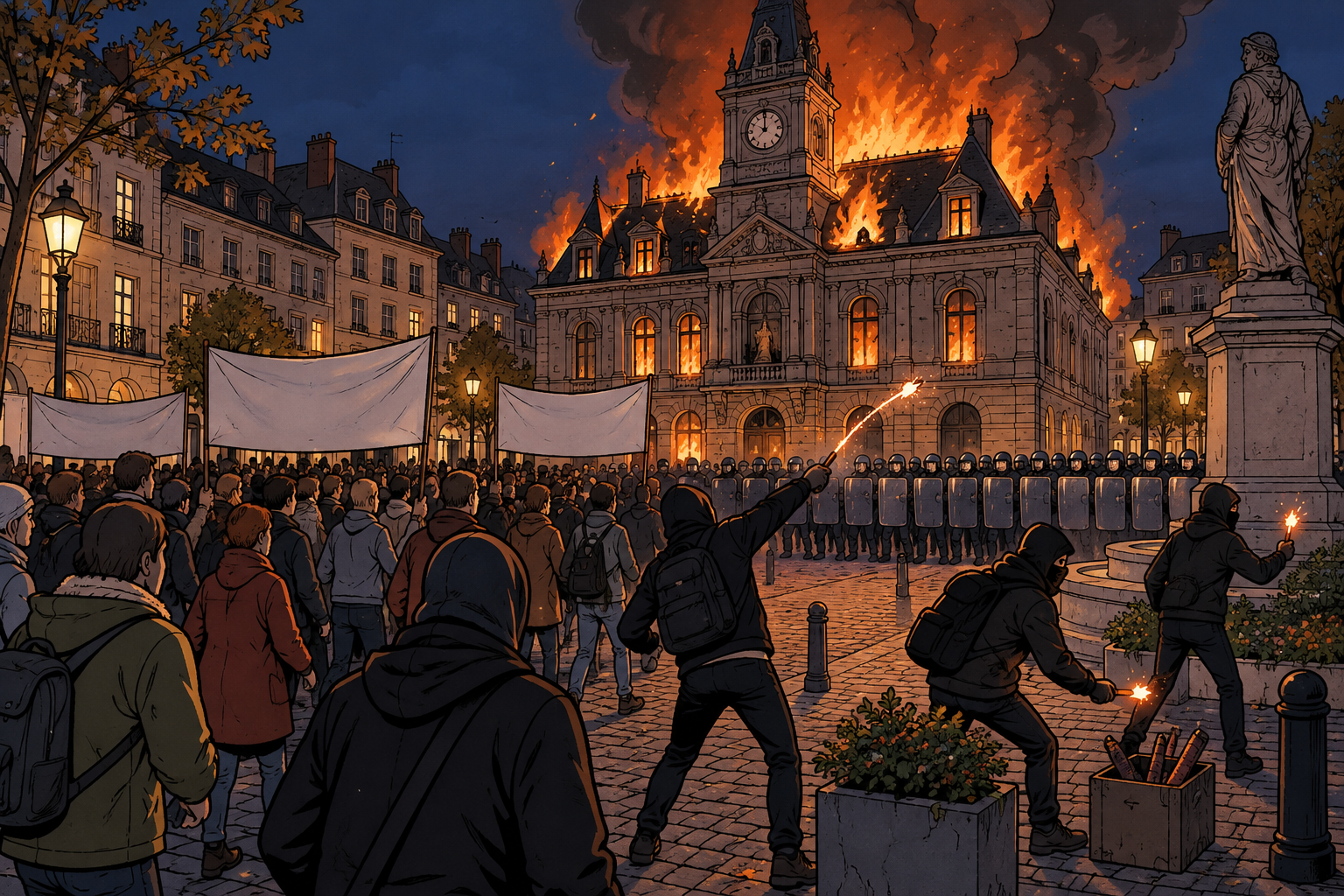
Twenty-four hours after Iran downed a U.S. Army Apache over the Strait of Hormuz, the United States answered. Beginning at 5:00 p.m. ET on June 9, 2026, U.S. Central Command launched what it called “self-defense strikes” against Iran “at the Commander in Chief’s direction” — nearly 20 targets hit in three waves over roughly four hours: air-defense systems, ground control stations, and surveillance radar sites strung along Iran’s Hormuz coastline at Sirik, Jask, Minab, Qeshm Island, and Bandar Abbas.
Iran hit back overnight. The IRGC sent drones at the U.S. Fifth Fleet headquarters in Bahrain and the Ali Al Salem airbase in Kuwait, and fired five missiles at the Muwaffaq Salti Air Base in Azraq, Jordan. Jordan said it intercepted all five — no injuries, no damage — and no impact on any U.S. base has been confirmed. The IRGC claimed it struck 21 American targets and destroyed four, including an F-35 hangar; nothing in the public record supports that.
And then the strangest fact of the week: the talks didn’t stop. A senior White House official told reporters the strikes were “a warning shot” that would not impede negotiations, and on Wednesday morning Qatari mediators arrived in Tehran to try to finalize a U.S.-Iran agreement. Strike, counter-strike, keep talking — that is where the war stands on day 103.
- ~20 targets — Iranian air-defense, ground-control, and radar sites struck in three waves, 5:00–9:00+ p.m. ET June 9 · Source: CENTCOM, CBS News
- 5 for 5 — Iranian missiles fired at Jordan's Muwaffaq Salti Air Base — all intercepted, zero injuries, zero damage · Source: Al Jazeera, CBS News
- 0 confirmed hits — on any U.S. base from Iran's counter-volley, against an IRGC claim of 21 targets struck and 4 destroyed · Source: CBS News, Iran International
- $92.36 — Brent crude at Wednesday's close, up 1.0% — a shrug, by this war's standards, with Hormuz already under a dual blockade · Source: Trading Economics
CENTCOM announced the operation as it began: “U.S. Central Command forces began launching self-defense strikes against Iran at 5 p.m. ET today at the Commander in Chief’s direction, in response to yesterday’s downing of a U.S. Army Apache helicopter,” the command posted, calling the mission “a proportional response to unjustified Iranian aggression.” U.S. Air Force and Navy fighter jets delivered precision munitions against the radar and missile-defense infrastructure that watches the Strait of Hormuz — the same sensor belt that would have tracked the Apache the night before. Explosions were reported first at Sirik, then Jask, Minab, Qeshm Island, and Bandar Abbas as the waves rolled through.
Shortly after 9:00 p.m. ET, CENTCOM declared the strikes complete — nearly 20 targets in roughly four hours. President Donald Trump (R), on the phone with ABC’s Jonathan Karl as the announcement landed, put it plainly: “I think it’s very important to respond. They shot down a helicopter, and we are responding as we speak.” Asked a day earlier what the response would be, CENTCOM commander Adm. Brad Cooper, exiting a classified Hill briefing, had offered two words: “We’ll see.”

Tehran’s answer came within hours, and it was aimed at the American footprint across the Gulf rather than at the strait itself. IRGC drones flew at the Fifth Fleet’s headquarters in Bahrain — where air-raid sirens sounded — and at the Ali Al Salem airbase in Kuwait, whose air defenses reported intercepting “hostile aerial targets.” Five longer-range missiles arced toward the Muwaffaq Salti Air Base at Azraq, Jordan; Amman said its defenses downed all five with no injuries and no damage. Foreign Minister Abbas Araghchi framed the volley as a response “to the US military aggression against Iran and the clear violation of our country’s national sovereignty” — and offered Washington a warning: “Leave our region if you want to be safe.”
The claims war started immediately. The IRGC said 21 U.S. targets were hit and four destroyed, including an F-35 hangar and a command-and-control center; IRGC-linked media said the overnight operation “hit 70% of its targets.” The interception reports from Jordan and Kuwait, and the absence of any confirmed impact on a U.S. base, say otherwise. Notably, the counter-volley drew condemnation not just from Washington but from the Arab League — Iran had just fired on Bahrain, Kuwait, and Jordan, three Arab states, to punish the United States.
“The mission is a proportional response to unjustified Iranian aggression.”
U.S. Central Command · June 9, 2026
Here is the part that separates this exchange from every previous round: both sides kept negotiating through it. “A helicopter was downed yesterday. We have to respond in kind, but at the same time, there’s still a deal trying to be negotiated,” a senior White House official told the Jerusalem Post, while another U.S. official described the entire 20-target operation as “a warning shot.” On Wednesday morning — with Iranian drones barely out of the sky — Qatari mediators landed in Tehran to try to finalize the U.S.-Iran agreement that has been inching forward since late May.
Vice President JD Vance (R) made the administration’s case for staying at the table: “We are in a position to get a deal that is good for the US economically and that really does deal with the Iranian nuclear program… for the long term.” Trump himself said the deal “was very good, and probably will [still be].” Tehran’s line was harder — its Foreign Ministry accused Washington of “contradictory messages” and ceasefire violations — but it did not walk away. Parliament speaker Mohammad-Bagher Ghalibaf captured the posture: “We prefer the language of diplomacy, but we speak other languages far more fluently.”
U.S. Central Command (CENTCOM) forces began launching self-defense strikes against Iran at 5 p.m. ET today at the Commander in Chief's direction, in response to yesterday's downing of a U.S. Army Apache helicopter. The mission is a proportional response to unjustified Iranian aggression.
I was on the phone with Trump as CENTCOM announced US retaliatory strikes against Iran. Here's what he said: 'I think it's very important to respond. They shot down a helicopter, and we are responding as we speak.'
If the Pentagon’s framing was surgical, the president’s was not. On Wednesday Trump (R) declared on Truth Social that “The Bully of the Middle East is DEAD!!!” and warned that because Iran has “taken too long to negotiate a deal that would have been great for them, now they will have to pay the price!!” He told Fox News he “may keep going,” saying he was close to ordering strikes on Iranian power plants and bridges — a categorically different target set from the radar sites CENTCOM just finished hitting. He dismissed Iran’s counter-volley as “all talk, no action” and pronounced the Hormuz blockade “fully effective.”
Iran, for its part, never admitted downing the Apache in the first place — its deputy foreign minister denied involvement even as U.S. investigators attributed the crash to an Iranian Shahed-type drone, with intent still undetermined. That seam matters: the U.S. just struck 20 targets in response to an attack Tehran says it didn’t commit, and Tehran just struck three Arab states in response to strikes it says were unprovoked. Under Supreme Leader Mojtaba Khamenei — elevated in March after his father’s assassination in the war’s opening strikes — the IRGC says its forces “remain fully prepared to deliver a crushing and decisive response to any US military actions.”
The Bully of the Middle East is DEAD!!! They've taken too long to negotiate a deal that would have been great for them, now they will have to pay the price!!
Paraphrased commentary · not a verbatim post
Posted June 10, 2026, hours after CENTCOM declared the strikes complete — text as reported by CBS News and the Times of Israel.
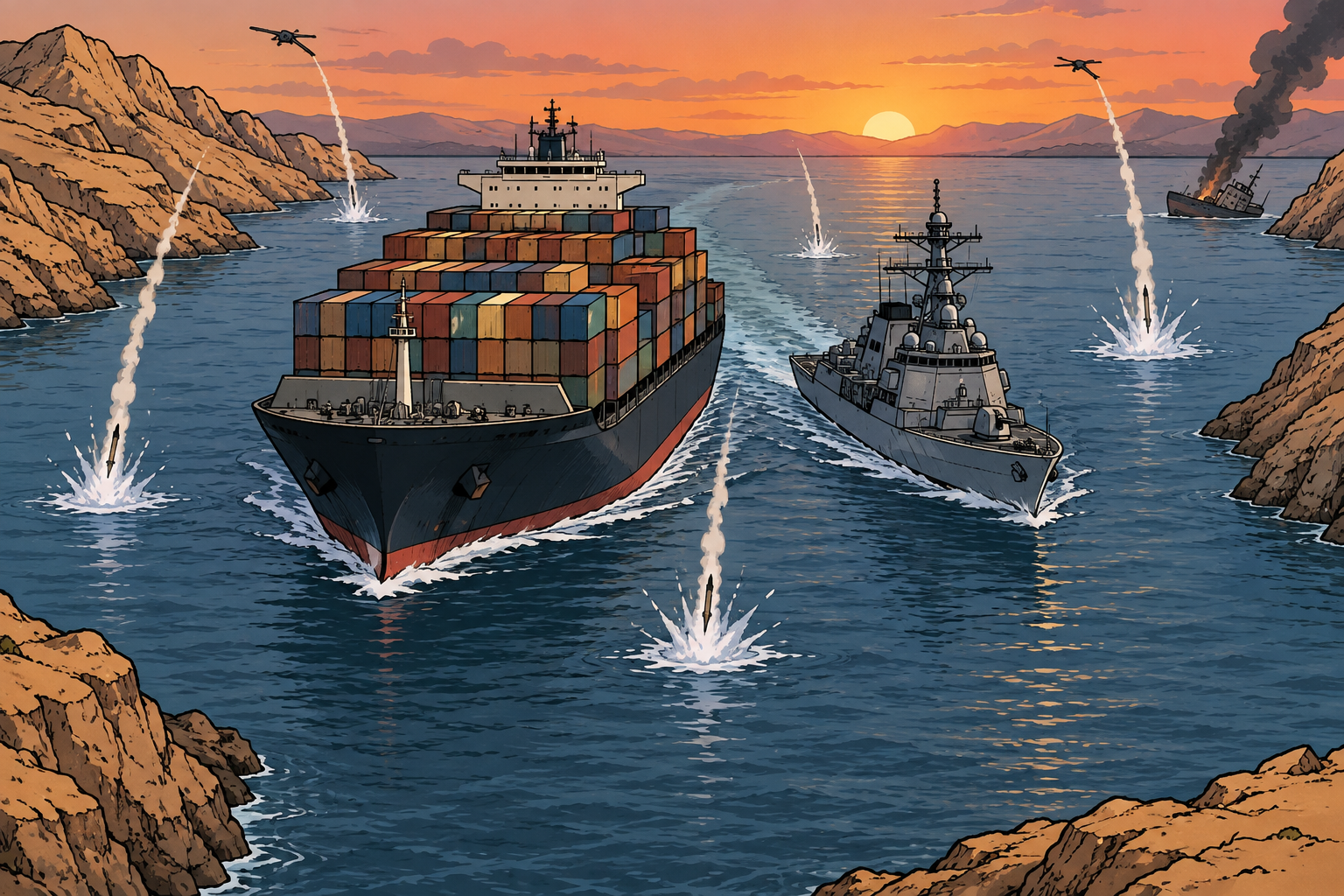
The Strait of Hormuz — the chokepoint this entire exchange orbits — remains effectively closed under what analysts call a dual blockade: Iran restricting traffic since the war began, and the U.S. naval blockade Trump ordered in April. The International Energy Agency has called the disruption the largest supply shock in the history of the global oil market — a characterization the agency issued as the dual blockade took hold this spring. Against that backdrop, Wednesday’s price action was almost anticlimactic: Brent rose about 2% intraday and settled at $92.36, up 1.0% — traders reading the exchange, like the White House, as escalation with an exit. A separate reminder of the strait’s dangers came the same day, per CBS News’s live war coverage: a tanker near Hormuz was struck by a missile, leaving an engine-room fire, two crew missing, and one casualty.
The cumulative ledger of this war keeps growing: 15 Americans killed and 543 wounded since February 28, per the running tallies compiled in Al Jazeera’s day-103 war coverage, with Iranian losses claimed in the thousands. The June 9 strikes reportedly drew no announced Iranian casualties, though Iranian officials said civilian infrastructure, including water facilities, was damaged — claims that, like the IRGC’s, could not be independently verified.
Confirmed: CENTCOM struck nearly 20 Iranian air-defense, ground-control, and radar targets near Hormuz in three waves on June 9, then declared the operation complete. Iran answered with drones at Bahrain and Kuwait and five missiles at Jordan — all five intercepted, no confirmed damage to any U.S. base.
Claimed, unverified: The IRGC says it hit 21 U.S. targets and destroyed four, including an F-35 hangar. Iranian officials report damaged civilian water infrastructure from the U.S. strikes. Neither claim is independently confirmed.
Denied: Iran officially denies downing the Apache at all; U.S. investigators attribute the crash to an Iranian Shahed-type drone, with intent undetermined.
Open: Whether Trump orders the “power plants and bridges” escalation he floated — and whether the Qatar-brokered deal lands first.
The April ceasefire is technically intact and practically threadbare — this is the second tit-for-tat cycle to reach U.S. bases in a week, and the first to follow a downed American aircraft. The variables now are three. Whether Iran’s next response stays performative or draws blood: every round so far has ended with intercepted munitions and zero American casualties, and one unintercepted missile changes the war overnight. Whether Trump’s “power plants and bridges” threat is leverage or a plan. And whether the Qatari mediation in Tehran — chasing the 60-day ceasefire-extension framework that has been “mostly agreed” since late May — can close before the next helicopter, drone, or tanker forces the question.
For now the scoreboard reads: one Apache down and its crew safe, twenty Iranian targets struck, every Iranian munition intercepted, oil barely moved, and negotiators still in the room. That is either the moment the war finally burned itself out — or the quiet bar of a much larger escalation. We will update this page as the facts firm up.
I have just been informed by our Great Military that last night the Iranians shot down one of our highly sophisticated Apache Helicopters while patrolling over the Strait of Hormuz. There were two pilots involved, both are safe and uninjured. Nevertheless, the United States must, of necessity, respond to this attack.
Paraphrased commentary · not a verbatim post
The June 9 post that preceded the strikes — text as reported by The Hill, NPR, and the Jerusalem Post.
Reporters asked Centcom's Adm. Brad Cooper, exiting a classified congressional briefing, what the 'response' would be to the downed U.S. helicopter. 'We'll see.'

- 1.U.S. Central Command (@CENTCOM) — 'CENTCOM forces began launching self-defense strikes against Iran at 5 p.m. ET… at the Commander in Chief's direction,' June 9, 2026
- 2.U.S. Central Command — 'U.S., Partner Forces Defend Against Aggressive Iranian Behavior,' official release, June 2026
- 3.The Jerusalem Post — 'US strikes Iran in response to attack of US helicopter,' June 9, 2026
- 4.The Jerusalem Post — 'US strikes on Iran will not stop negotiations, officials, Donald Trump says,' June 10, 2026
- 5.The Jerusalem Post — Iran war live updates, June 10, 2026
- 6.Al Jazeera — 'US military launches “self-defence strikes” targeting Iran,' June 9, 2026
- 7.Al Jazeera — 'Trump vows retaliation after claiming Iran shot down Apache helicopter,' June 9, 2026
- 8.Al Jazeera — 'Iran strikes Bahrain and Jordan in retaliation for US attacks in Hormuz,' June 10, 2026
- 9.Al Jazeera — 'Iran war day 103: US strikes after helicopter shot down, Tehran hits back,' June 10, 2026
- 10.Al Jazeera — 'Apache down, fighting up: What the latest US-Iran attacks mean,' June 10, 2026
- 11.Al Jazeera — Iran war live blog, June 10, 2026
- 12.CBS News — Iran war live updates: 'Nearly 20 Iranian targets' struck; Jordan intercepts all five missiles, June 10, 2026
- 13.The War Zone — 'AH-64 Apache Shot Down By Iran, U.S. Will Retaliate: Trump,' June 9, 2026
- 14.Iran International — live blog: IRGC claims, Arab League condemnation, Qatari mediators arrive in Tehran, June 10, 2026
- 15.Trading Economics — Brent crude settles at $92.36 (+1.0%) as US-Iran exchange rattles Hormuz shipping, June 10, 2026
- 16.Al Jazeera — 'Iran names Khamenei's son as new supreme leader after father's killing,' March 8-9, 2026 (war background)
Last updated June 10, 2026