Iran Tried to Hit U.S. Forces Again. Every Missile Missed.
Trump’s Retaliation Was Twice the Size of the Last One.
On the evening of July 28, 2026, Iran’s Islamic Revolutionary Guard Corps tried something it had already tried once before: firing ballistic missiles at Muwaffaq Salti Air Base in Jordan, the same base where an Iranian strike in mid-July killed two U.S. service members. This time the outcome was different. Jordan’s air defenses shot down five incoming missiles, and U.S. Central Command confirmed zero American or Jordanian casualties from the roughly 5:45 p.m. Eastern attempt.
The failed attack came hours after President Trump met Israeli Prime Minister Benjamin Netanyahu at the White House, and just two to three days after Trump had personally paused the 13-night U.S. bombing campaign that followed the earlier Jordan strike — a pause explicitly meant to give diplomacy one more chance. Iran used that opening to fire on American forces again. The United States answered less than 24 hours later with a strike wave a U.S. official described as roughly twice the size of anything that came before it.
What follows is what CENTCOM says it hit, what Iran says it lost, and how fast the war is now spilling into countries that were not previously part of it.
- $37.5 billion the Iran war's cumulative cost through July 21, 2026, per Secretary of War Pete Hegseth's testimony to Congress — Hegseth congressional testimony, July 21, 2026
- ~$90.66/barrel Brent crude's spike (up roughly 7-8%) on news of the July 29 U.S. strikes, still trading near $90 a day later — Reuters / CNBC
- Zero American or Jordanian casualties from Iran's July 28 surprise missile attempt — every missile was intercepted — CENTCOM / Jordanian state media
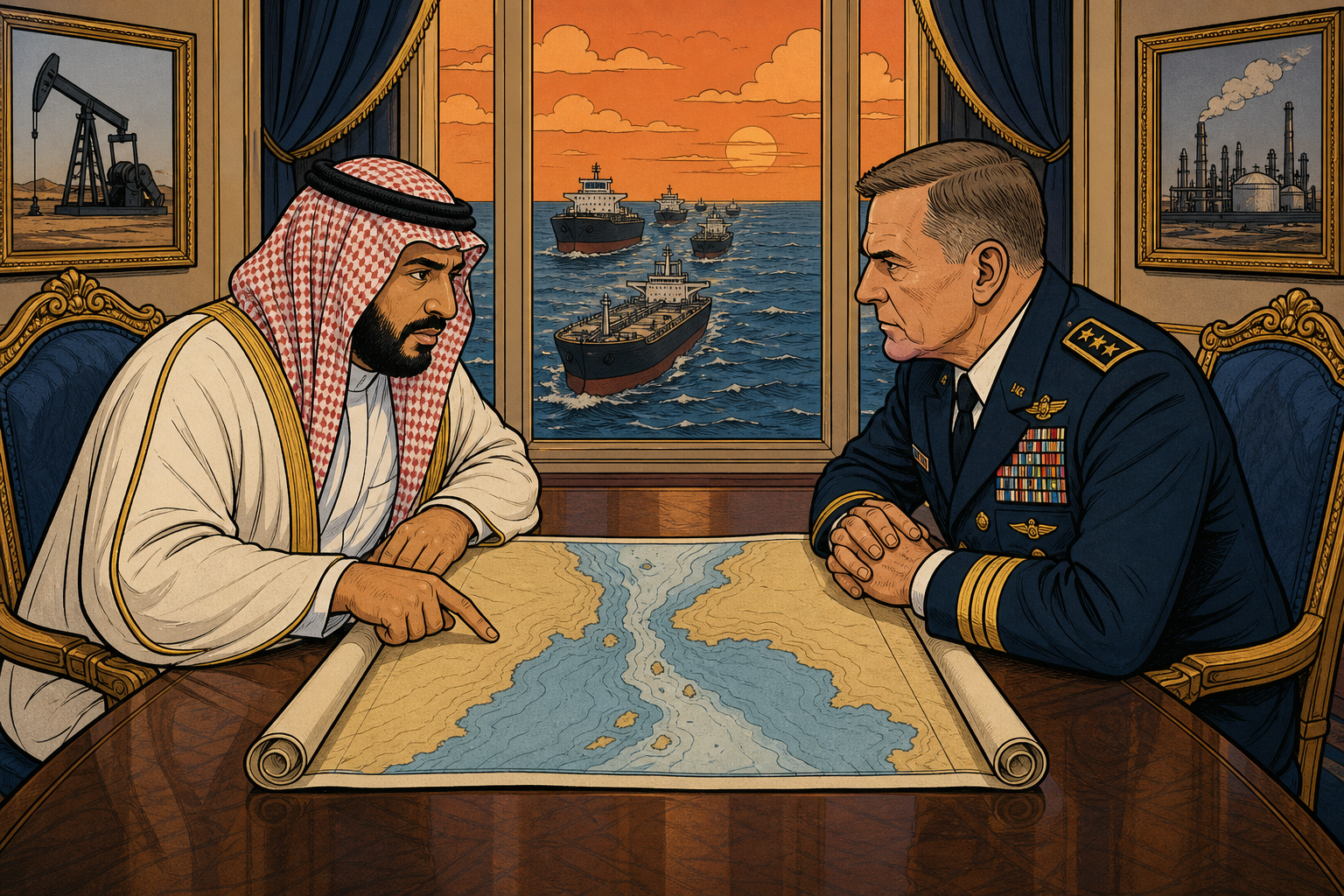
Muwaffaq Salti Air Base has now been targeted twice in this war. In mid-July, an Iranian strike on the base killed two U.S. service members — a loss this site covered in depth at the time. On July 28, the IRGC tried again, launching a surprise ballistic-missile barrage aimed at U.S. forces across the Middle East, including a renewed attempt on that same Jordanian base. This time, Jordan’s air-defense batteries intercepted five incoming missiles before they reached the ground. CENTCOM’s count afterward: zero U.S. casualties, zero Jordanian casualties.
Timing mattered here. The attempted strike landed hours after Trump hosted Netanyahu at the White House, and just two to three days after Trump had personally paused the 13-night U.S. bombing campaign — a pause framed explicitly as room for diplomacy. Iran’s answer to that opening was another missile launch at American troops, not a counterproposal.
CENTCOM’s retaliation came fast. Beginning around 8 p.m. Eastern on Wednesday, July 29, and running roughly two hours, the U.S. launched what one American official called a wave “about twice the size” of any prior round in the campaign. CENTCOM’s own statement — mirrored through the Defense Department’s DVIDS system after centcom.mil blocked outside access — said American forces struck “dozens of Islamic Revolutionary Guard Corps (IRGC) targets in Iran, including military command centers, missile and drone facilities, coastal surveillance and defense sites, and maritime capabilities.”
Reported target areas spanned much of Iran’s Gulf coast and interior: Bushehr province, home to Iran’s only nuclear power plant; Abadan and Ahvaz in Khuzestan; the port city of Bandar Abbas; the islands of Qeshm, Kish, and Abu Musa; and the Fars province area around Kazerun. The same night, the U.S. and Saudi Arabia carried out coordinated strikes on Iran-backed militia positions in Iraq — a separate front entirely. Iraq’s Popular Mobilization Forces say the strikes killed roughly 20 fighters and wounded 32 more, a casualty claim not independently confirmed.
Adm. Brad Cooper, the CENTCOM commander, framed the wave as a proportionate response rather than escalation for its own sake: “The strikes are a powerful response to yesterday’s attempted Iranian attacks on U.S. forces based in the Middle East.” Trump was less clinical. Speaking to Fox News’s Trey Yingst, he said the U.S. was “going to beat the [expletive] out of them,” adding, “We’ll be hitting them hard. They’re going to get a beating.” In the Oval Office separately, he put it in similarly blunt terms: “We’re going to be hitting them very hard because it’s our turn to hit them. They know it’s coming.”
Trump, reporting from Tel Aviv: the U.S. is going to hit Iran hard after last night's attempted attack — 'they're going to get a beating,' he says, and 'it's our turn to hit them.'
OSINT tracking corroborates Trump's on-camera comments about an imminent, larger U.S. strike wave on Iranian IRGC targets following the failed missile attack on U.S. forces.
Iranian state media reported casualties from the American strikes — claims this piece treats as Tehran’s own account, not independently verified: three civilians killed, a couple and a two-year-old child, in a residential building on Qeshm Island, with two more wounded. Separately, the IRGC said three of its own personnel were killed in Zanjan province.
The IRGC’s public response, issued July 30, did not read like an organization looking to de-escalate: “With the help of God Almighty, the aggressor will be punished today.” It went further, warning any country “assisting the aggressor” of a “harsh response” unless they “correct their behavior,” and reasserting a claim it has repeated throughout the war — that “the Strait of Hormuz is our territory.” Iranian President Masoud Pezeshkian added his own call to the public a day earlier, urging citizens to “fight the enemy and stand firm against them so that we do not submit to injustice and oppression.”
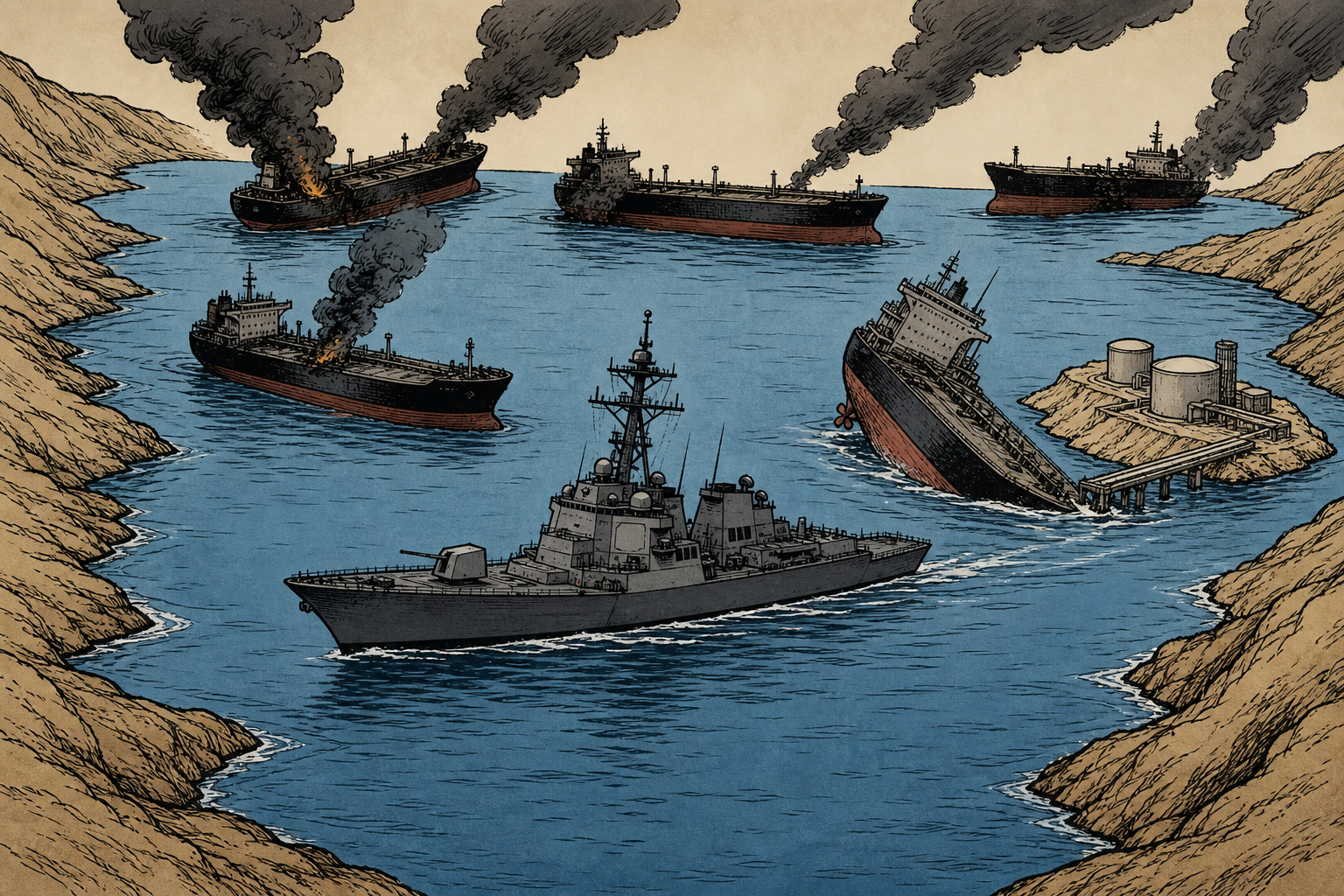
The IRGC’s threat wasn’t only rhetoric. On July 30 alone, Jordan’s air defenses shot down five more Iranian missiles — a second interception in three days at the same U.S. ally. A separate Iranian strike hit a Chinese company’s building in northern Kuwait, killing one worker. And a drone struck gas vessels at Egypt’s Damietta port, including the U.S.-owned tanker Energos Winter — an apparent first spillover of this war into Egyptian territory. No one has claimed the Damietta strike, and it has raised fresh fears for shipping through the Suez Canal.
Three countries hit with variants of the same tactic inside of 48 hours — Jordan twice, Kuwait once, and now Egypt for the first time — is the clearest evidence yet that Iran’s retaliation, whatever damage the American wave inflicted on its own launchers and command sites, is not staying confined to the two militaries directly at war.
Behind the scenes, the U.S. campaign appears to be entering a new phase. Per Wall Street Journal and Washington Examiner reporting, Adm. Cooper briefed Trump aboard Air Force One — during a dignified-transfer ceremony at Dover Air Force Base for four American service members killed earlier in the war — on a “go big” two-week plan aimed at destroying what remains of Iran’s missile-launcher arsenal. Gen. Dan Caine, the Joint Chiefs chairman, was reportedly more skeptical of what further escalation would actually accomplish.
“That means a more risk-tolerant, more confident, perhaps less capable, but more dangerous Iran in the Middle East.”
Behnam Ben Taleblu · Senior Director, Iran Program, Foundation for Defense of Democracies
At $37.5 billion and climbing, with oil still trading near $90 a barrel and a fourth country now hit by strikes tied to this war, the risk Ben Taleblu is describing is no longer abstract — it is the bill American taxpayers and Gulf shipping lanes are already paying while the campaign's next phase gets decided.
Iran tried to hit U.S. forces a second time at the same Jordanian base that cost two American lives in mid-July — and this time every missile was intercepted. The U.S. answer was a strike wave roughly twice the size of any before it, hitting IRGC command, missile, drone, and coastal-defense sites across six Iranian provinces. Iran says civilians died; its Revolutionary Guard has vowed punishment, and within a day that vow reached Jordan again, Kuwait, and — for the first time — Egypt. The war has cost $37.5 billion so far. It is not winding down.