Ukraine’s Drone Campaign Has Pushed Russia Into
a Nationwide Fuel Crisis.
Since late March 2026 alone, Ukraine has struck Russian oil refineries, storage depots, and tankers more than fifty times — the sharpest phase yet of a long-range drone campaign that has been escalating since August 2025. Kyiv’s General Staff says the strikes have disabled as much as 42.7 percent of Russia’s refining capacity; independent estimates from the Financial Times and the International Energy Agency run lower, somewhere between 20 and 40 percent, but they agree on direction. Russian crude processing fell in June to 3.95 million barrels a day, the lowest level in more than twenty years.
The consequences have moved off the battlefield and into ordinary Russian life. Moscow has banned diesel exports through July 31 and jet-fuel exports through November, imposed odd-even license-plate gas rationing in at least seven regions, and started importing emergency fuel from India — the kind of measure a major oil-exporting nation does not take lightly. President Vladimir Putin himself has acknowledged “a certain shortage.”
The campaign has also widened beyond refineries on land. A July 6–7 raid in the Sea of Azov hit ten vessels, eight of them tankers, from the “shadow fleet” that supplies occupied Crimea — part of a squeeze that has left the peninsula selling fuel by electronic voucher only. This page traces how a drone war aimed at refineries became a fuel crisis felt at the pump, in the Kremlin, and in Washington.
- 50+ — Russian refineries, depots, and tankers struck by Ukraine since late March 2026 alone, part of a campaign escalating since August 2025 · Source: AP tally, via wire reporting
- 42.7% — of Russia's refining capacity disabled, per Ukraine's General Staff; independent FT/IEA estimates run lower, roughly 20–40% · Source: Ukraine General Staff; Financial Times
- 3.95M bbl/day — Russian crude processing in June 2026 — the lowest level in more than 20 years · Source: Moscow Times, Bloomberg
- $13.5 billion — in cumulative Russian oil-industry losses estimated since the campaign escalated in August 2025 · Source: Kyiv Independent
- 7 regions — running odd-even license-plate gas rationing as of July 10, 2026 · Source: The Moscow Times
The refineries: 50+ strikes since late March alone knock out up to 42.7% of capacity, per Kyiv.
The exports: Moscow bans diesel exports through July 31, jet-fuel exports through November.
The rationing: odd-even license-plate gas sales spread across at least seven Russian regions.
The shadow fleet: a July 6–7 raid hits ten vessels supplying occupied Crimea, which now sells fuel by voucher only.
The money: an estimated $13.5 billion in cumulative industry losses since August 2025 — and emergency fuel imports from India.
Ukraine’s long-range strike campaign against Russian energy infrastructure did not begin this summer. It has been building since August 2025, when Kyiv began systematically targeting the refineries, pipelines, and depots that keep Russia’s war economy fueled and that generate the export revenue funding it. What changed by late March 2026 is the pace: the Associated Press’s running tally counts more than fifty separate strikes on refineries, storage depots, and tankers in that window alone — a tempo that has not let up since.
Ukraine’s General Staff puts the cumulative damage at 42.7 to 43 percent of Russia’s total refining capacity disabled. That is Kyiv’s own figure, and it is the most aggressive one in circulation. Independent estimates run lower: the Financial Times reported on July 9 that the strikes had likely knocked out somewhere in the range of 20 to 40 percent of capacity, depending on the month and which refinery outages are counted as active at any given time, and International Energy Agency market commentary has tracked a similarly wide band. The two sets of numbers do not need to be reconciled into one to make the point — Ukraine’s claim and the independent range both describe the same direction of travel, just with different confidence intervals.
The clearest single data point is Russia’s own processing volume. Crude throughput fell to 3.95 million barrels a day in June 2026 — the lowest level in more than two decades, according to figures reported by the Moscow Times and Bloomberg. That is not a wartime inconvenience; it is a structural hit to the amount of gasoline, diesel, and jet fuel Russia can produce for its own population and military, on top of whatever it still tries to export.
The clearest example of the campaign’s reach came the night of July 6–7, when Ukrainian drones struck the Omsk refinery in western Siberia — Russia’s single largest refining complex — alongside facilities at Yaroslavl and Ust-Luga and the Kerch oil terminal in occupied Crimea, all in the same 48-hour window. President Volodymyr Zelenskyy confirmed the strikes directly, framing them as a deliberate strategy rather than opportunistic hits: “We have long proposed that Russia end this war, and every day of delay should bring the feeling of war to where it all began — to Russia.”
“We have long proposed that Russia end this war, and every day of delay should bring the feeling of war to where it all began — to Russia.”
President Volodymyr Zelenskyy of Ukraine, July 2026
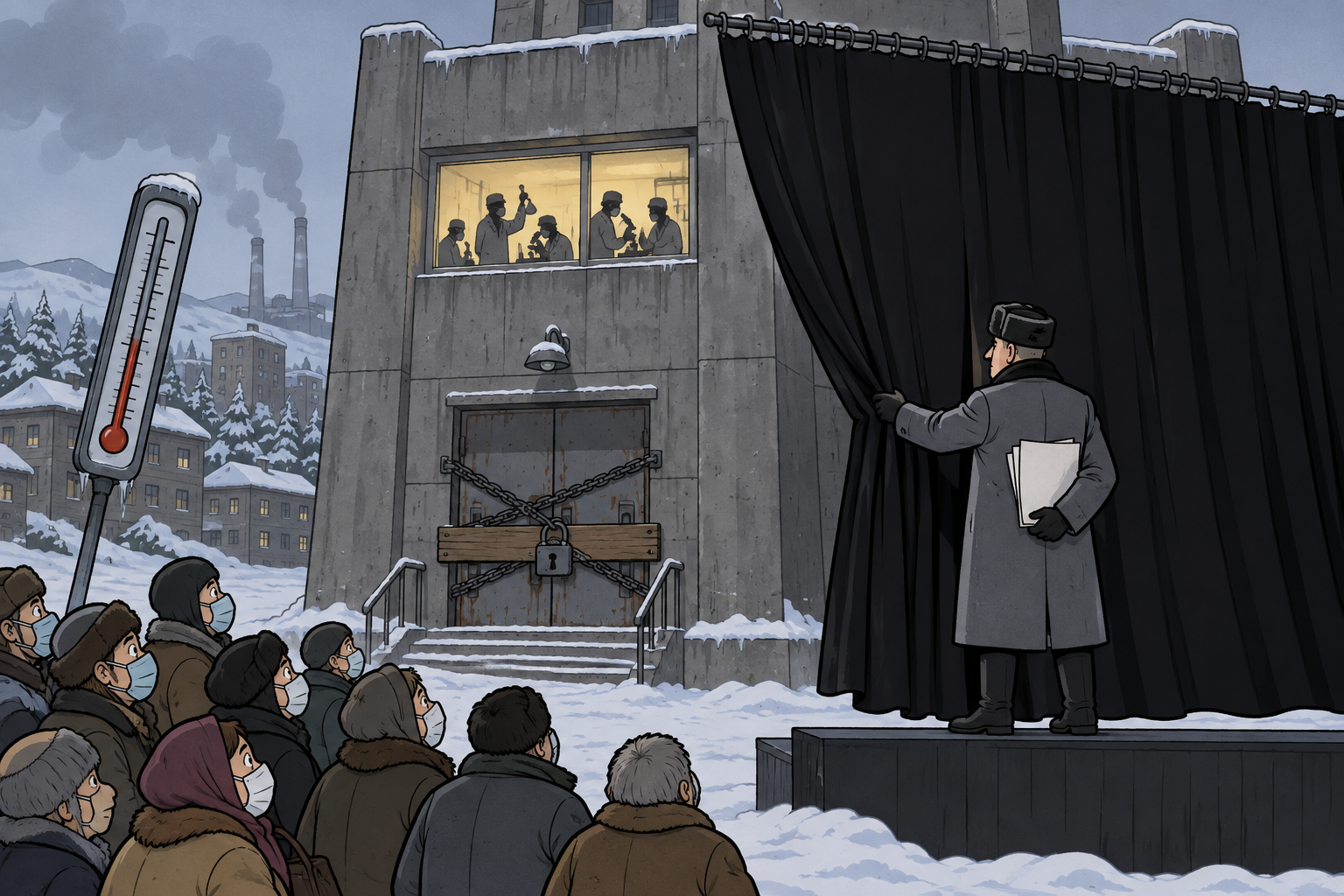
Russia’s government has responded the way a country manages a genuine shortage, not a public-relations problem. On July 8, 2026, Deputy Prime Minister Alexander Novak announced a ban on diesel exports through July 31, extending a jet-fuel export ban that has been in place since June 1 and now runs through November. Novak did not dress up the reasoning: “The current situation at filling stations is causing concern among the public.”
Export bans only address one side of the supply problem — keeping fuel inside the country doesn’t help if refineries can’t produce enough of it in the first place. That gap has forced regional governments into rationing at the pump. By this site’s count, based on regional government notices and wire reporting, at least seven regions have adopted odd-even license-plate rationing, restricting which vehicles can buy gasoline on a given day based on the last digit of their plate: Oryol, Nizhny Novgorod, Mordovia, Astrakhan, Pskov, Lipetsk, and Kirov.
Oryol Region Governor Andrei Klychkov was among the first to introduce the system, on June 30, and reached for a comparison that would resonate with anyone who lived through the early days of the Covid pandemic: “The situation resembles the panic buying of buckwheat and toilet paper during the pandemic.”
“The situation resembles the panic buying of buckwheat and toilet paper during the pandemic.”
Andrei Klychkov, Governor, Oryol Region, Russia, June 30, 2026
A Russian in Krasnodar Krai wanted to show off that their gas stations still have fuel and no queues - but it didn't quite go as planned.
That clip is a small, almost comic data point next to export bans and refinery strikes, but it captures something the official statistics can’t: ordinary Russians are now paying enough attention to gas-station lines to film them, boast about their absence, or complain about their length. A rationing system built for a single region in late June had, by the second week of July, become a fact of life in a growing share of the country.
The campaign has not stayed confined to refineries on Russian soil. On the night of July 6–7, Ukrainian forces carried out a raid in the Sea of Azov against the “shadow fleet” of tankers that supplies occupied Crimea, hitting ten vessels — eight of them tankers. The operation was led by Robert “Magyar” Brovdi, commander of Ukraine’s Unmanned Systems Forces and the 414th Brigade, whose unit has built a reputation over the past year for exactly this kind of maritime drone operation far from the front line.
Ukrainian Navy spokesperson Dmytro Pletenchuk framed the raid as an attempt to close off one of the last routes Russia has for supplying the peninsula, now that overland logistics into Crimea run through contested and heavily monitored territory: “They had few options left. It’s either a land corridor or a sea connection.”
“They had few options left. It's either a land corridor or a sea connection.”
Dmytro Pletenchuk, Ukrainian Navy spokesperson, July 2026
Crimea itself was already under strain before the Sea of Azov raid. Russian authorities declared a state of emergency in Crimea and Sevastopol on June 26, and on July 3, Ukrainian strikes hit Crimean airfields, destroying seven aircraft according to reporting on the operation. The peninsula’s fuel squeeze has become tight enough that gas stations there have moved to selling fuel by electronic voucher only — a rationing mechanism stricter than the odd-even license-plate systems spreading across mainland Russia, and one that gives Russian authorities direct control over who receives fuel and how much.
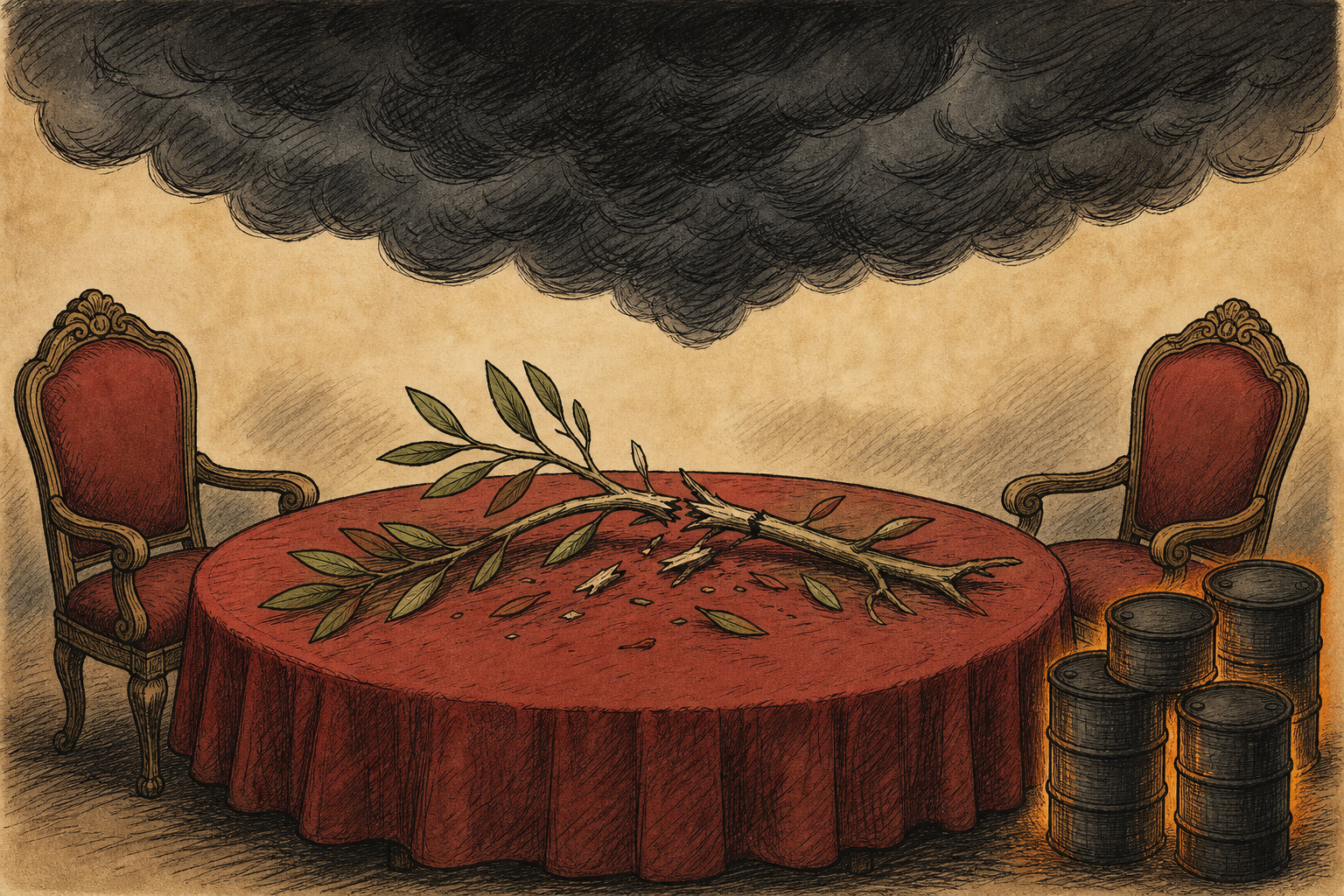
No single strike caused this crisis. It is the compounding effect of ten months of sustained pressure, with the pace accelerating sharply in the campaign’s final weeks. Laid out in sequence, the timeline shows a strategy that escalated deliberately rather than a single lucky hit that got out of hand.
August 2025: Ukraine's long-range strike campaign against Russian refineries, depots, and pipelines begins escalating.
Late March 2026: the Associated Press's running tally begins; it will reach 50+ strikes on refineries, depots, and tankers by early July.
June 1: Russia's jet-fuel export ban takes effect, later extended through November.
June 16 & 18: the Moscow Oil Refinery is struck twice in one week; it remains offline until 2027.
June 25: roughly 50 Russian regions report some form of fuel restriction.
June 26: Crimea and Sevastopol declare a state of emergency over fuel supply.
June 30: Oryol's governor proposes odd-even rationing; the fuel crisis has reached an estimated 78 of Russia's 83 regions.
July 3: Ukrainian strikes hit Crimean airfields, destroying seven aircraft.
July 6–7: Yaroslavl, Ust-Luga, and the Omsk refinery (Russia's largest) are struck; the Kerch oil terminal is hit; the Sea of Azov raid disables ten shadow-fleet vessels.
July 8: Russia bans diesel exports through July 31; Trump and Zelenskyy both address the strikes at the NATO summit in Ankara.
July 9: depots in Tver and Stavropol and a pumping station in Ufa are struck; the Financial Times reports refining capacity down by as much as 40%.
July 10: at least seven Russian regions are running odd-even rationing.
The Tyumen refinery, roughly 2,000 kilometers from Ukrainian territory, is the clearest illustration of how far the campaign now reaches. A strike that deep inside Russia is not a border skirmish spilling over — it requires drones with the range, guidance, and survivability to cross nearly the width of European Russia and still find a specific industrial target. The Moscow Oil Refinery, struck twice in a single week in June and now not expected back online until 2027, sits at the other end of that spectrum: a target close enough to the capital that its repeated loss functions almost as a message.
Last night, our long-range sanctions once again reached the Moscow region – for the second time this week, the Moscow oil refinery was hit... Targets were also struck in the Rostov region...
For months, Russian officials described fuel disruptions as isolated and temporary. That framing became harder to sustain once the crisis reached dozens of regions and forced rationing. President Vladimir Putin himself acknowledged the problem directly, in language notably plainer than the Kremlin's usual messaging: “Unfortunately, there are still lines at gas stations, and the right grade of gasoline isn’t always available.”
“Unfortunately, there are still lines at gas stations, and the right grade of gasoline isn't always available.”
President Vladimir Putin of Russia, July 2026
An admission from the head of state that gas stations are running lines and the right grade of fuel isn’t always in stock is a meaningful shift from denial to damage control — and it lines up with the broader diplomatic reaction out of Moscow, where officials have started pushing back publicly on how Washington is characterizing the strikes.
Kremlin spokesman Dmitry Peskov called President Trump’s framing that the escalation “helps peace” a “mistaken view”: “We see certain misconceptions within the White House administration.”
That pushback came directly after Trump's own July 8 remarks at the NATO summit in Ankara, detailed below.
The strikes and their fallout came up directly at the NATO summit in Ankara on July 8, 2026. President Donald Trump (R) offered a framing that doubled as a bet on where the pressure campaign leads: “It’s an escalation, but it’s also an escalation that can help lead to an end.”
“It's an escalation, but it's also an escalation that can help lead to an end.”
President Donald Trump (R), NATO summit, Ankara, July 8, 2026
Secretary of State Marco Rubio (R) put the same idea in blunter terms, telling reporters the strikes are “changing the course of the war” — a description that treats the fuel crisis less as collateral economic damage and more as a battlefield lever in its own right, on par with territory or equipment losses. Moscow, unsurprisingly, does not accept that framing. Kremlin spokesman Peskov's dismissal of Trump’s "helps peace" comment, quoted above, is as close as either government has come to arguing openly, in public, about what the strikes actually mean for the war’s trajectory.
It is worth being precise about what is, and isn’t, agreed upon here. Both Washington and Kyiv describe the fuel crisis as strategically significant. Moscow disputes the interpretation that it helps end the war faster, not the underlying fact that the crisis exists — Putin's own comments settle that part of the argument. What remains genuinely contested is whether a Russia running short on diesel and gasoline is a Russia closer to the negotiating table, or a Russia more entrenched in a war it now frames as a fight for basic economic survival.
Ukrainian officials describe the strategy behind the campaign in explicitly cumulative terms — not one knockout blow, but a stack of simultaneous problems Russia has to manage at once. Ukrainian official Mykhailo Fedorov put it this way: “A large number of crises are beginning to pile up, and it’s becoming increasingly difficult for the Russians to resolve one crisis after another.”
“A large number of crises are beginning to pile up, and it's becoming increasingly difficult for the Russians to resolve one crisis after another.”
Mykhailo Fedorov, Ukrainian official, July 2026
The scale of that pile-up is now measurable. The Kyiv Independent estimates cumulative losses to Russia’s oil industry at roughly $13.5 billion since the campaign escalated in August 2025 — a figure that captures destroyed and damaged infrastructure, lost export revenue from the diesel and jet-fuel bans, and the cost of emergency workarounds like importing fuel from India to cover the domestic shortfall. An oil-exporting power importing fuel to meet its own population's needs is, on its own, one of the more telling data points in this entire story.
Jade McGlynn, an analyst at King’s College London, frames the strategic logic in terms of what it does to ordinary Russians’ relationship to the war: “Fuel rationing across Russia ends that: when you are sitting in a petrol queue for the better part of a day, the war stops being an abstraction.”
“Fuel rationing across Russia ends that: when you are sitting in a petrol queue for the better part of a day, the war stops being an abstraction.”
Jade McGlynn, analyst, King's College London, July 2026
That distinction — between a war reported on state television and a war experienced firsthand in a gas-station line — is the entire theory behind targeting refineries instead of only front-line positions. Battlefield losses can be minimized, delayed, or kept out of view in official messaging. A dry pump and a rationing card cannot. Whether that pressure ultimately shortens the war, as Trump and Rubio argue, or simply hardens Russian resolve, as the Kremlin's public statements suggest it wants the world to believe, is the open question the coming months will answer.
Whether the diesel export ban is extended past July 31. A rollover would signal Moscow doesn't expect refining capacity to recover on the timeline it originally hoped.
Whether rationing spreads beyond the current seven regions. The crisis reportedly touched an estimated 78 of Russia's 83 regions in some form by late June — formal rationing programs have so far covered a smaller subset.
Whether India's emergency fuel imports become a recurring arrangement. A one-off purchase is a stopgap; a standing supply deal would be a structural admission that domestic refining can't keep up.
Whether the Sea of Azov raids continue. Ukraine has signaled the shadow-fleet campaign is a new, deliberate front — not a one-time operation.
A drone campaign built over ten months has done what battlefield reporting alone rarely accomplishes: it has made the war impossible for ordinary Russians to ignore. Fifty-plus strikes since late March, a refining sector down by a fifth to nearly half depending on whose count you trust, export bans on diesel and jet fuel, rationing by license plate in at least seven regions, a squeezed Crimea buying fuel by voucher, and emergency imports from India all point the same direction. Putin has admitted the shortage. The Kremlin disputes that it helps end the war. Washington is betting that it does. Nobody in a Russian gas line this week is arguing about the framing.